
Oil Prices Fall Despite Hormuz Strait Closure
 Vortixel
17 minutes read
Vortixel
17 minutes read
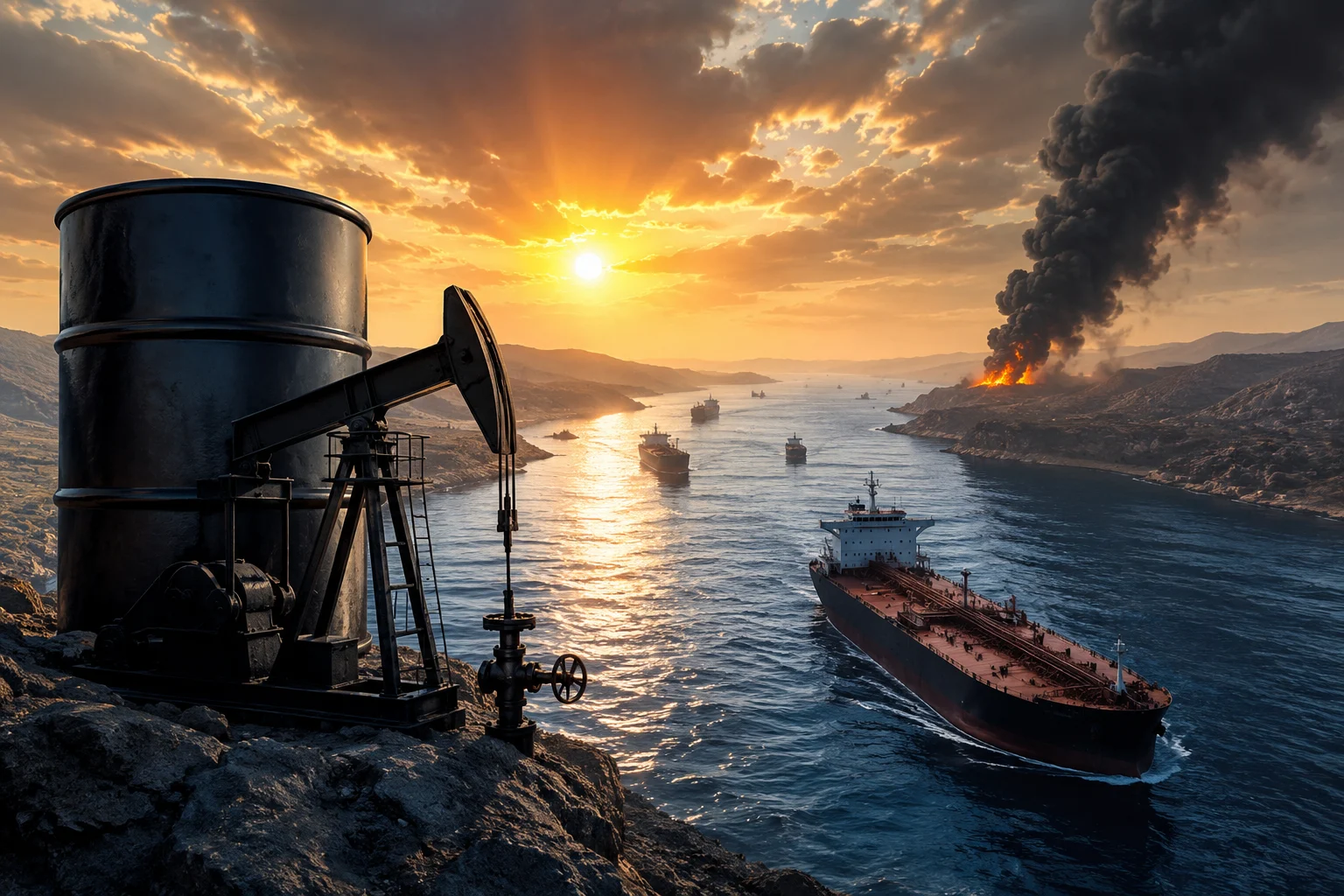
Oil prices are supposed to hate uncertainty, especially when that uncertainty sits right on top of the Strait of Hormuz, one of the most important energy chokepoints on the planet. Yet the latest market mood feels almost upside down: crude is easing, traders are calmer than expected, and the panic trade that many people predicted has not fully taken over. On paper, a closed or severely restricted Hormuz route should scream supply shock, higher shipping risk, tighter barrels, and expensive fuel. In reality, the market is acting more complicated than that, because oil never moves on one headline alone. It moves on inventories, demand expectations, alternative flows, political signals, speculative positioning, currency trends, and the quiet math of how much fear is already priced in.
That is why the phrase “oil falls despite Hormuz being closed” feels like a market paradox, but it is not random. It shows how deeply energy markets have changed after years of shale growth, strategic reserves, electric vehicle adoption, slower demand in some major economies, and a financial market that now reacts faster than physical supply chains can adjust. Traders are not ignoring the risk. They are asking whether the worst-case scenario is actually happening, whether governments can cushion the blow, and whether the global economy is strong enough to absorb higher prices in the first place. In that environment, oil prices can fall even when the geopolitical backdrop looks intense. The story is less about oil being safe and more about the market deciding that fear alone is not enough to keep crude elevated forever.
Why Oil Prices Are Falling During a Hormuz Shock
The biggest reason oil prices can slide during a Hormuz crisis is that traders are forward-looking, not headline-looking. They do not only ask what happened today; they ask what happens next week, next month, and next quarter. If the market believes the disruption is temporary, partially offset, or likely to push governments into a diplomatic deal, prices can soften even while the physical situation remains fragile. This is especially true when crude has already rallied on fear before the latest move lower. Once the market realizes that supply is disrupted but not completely frozen, speculative buyers may take profit, and that selling can drag prices down fast.
Another reason is that oil traders often separate “headline closure” from “usable supply loss.” A chokepoint can be politically closed, restricted, dangerous, or operating under unusual conditions, but some barrels may still move through alternative routes, emergency channels, rerouted shipments, stockpile releases, or quiet commercial workarounds. Energy markets are full of imperfect substitutes, and those substitutes matter when prices get stressed. If refineries can switch grades, if buyers can pull from storage, or if producers outside the region can increase supply, the shock becomes less explosive than the headline suggests. That does not make the situation harmless, but it prevents the market from behaving as if every barrel has disappeared at once.
The demand side is also doing heavy lifting. Oil is not only a supply story; it is a growth story. If investors believe global demand is cooling, especially in manufacturing-heavy economies, crude can struggle even during a geopolitical crisis. A weaker demand outlook lowers the ceiling for oil because refiners become less willing to chase expensive barrels. It also makes traders question whether consumers can handle another energy inflation wave. When demand anxiety meets supply fear, the result is not always a huge rally; sometimes it is a choppy market where every bullish headline gets challenged by worries about consumption.
The Strait of Hormuz Is Still a Market Giant
The Strait of Hormuz matters because it is not just another shipping lane. It is a narrow gateway connecting Gulf producers with global buyers, and it sits at the center of the modern energy system. Crude oil, condensates, and liquefied natural gas flows linked to the region have long shaped pricing expectations far beyond the Middle East. When traders talk about Hormuz, they are really talking about transportation risk, insurance cost, naval security, refinery planning, and the credibility of global supply chains. That is why even a rumor about disruption can move markets before a single physical cargo is delayed.
Still, the market reaction today looks more restrained than old playbooks would suggest. In past cycles, a serious threat around Hormuz could trigger a sharp and lasting risk premium almost immediately. Now, the reaction is more layered because the world has more data, more financial hedging tools, more emergency planning, and more production outside the Gulf than it did decades ago. The United States, Brazil, Canada, Guyana, and other non-Gulf suppliers have become more important in the supply conversation. The market still respects Hormuz, but it no longer treats the chokepoint as the only variable that matters.
That shift does not mean the Strait has lost its power. It means traders are trying to price a crisis with more nuance. A full, long-lasting disruption would still be a huge event for energy markets, shipping companies, airlines, chemical producers, and households. But a disruption that appears temporary, partially bypassed, or politically negotiable does not always create a straight-line oil rally. The current decline in oil prices is therefore not a sign that Hormuz is irrelevant. It is a sign that the market is balancing the chokepoint risk against every other force pressing on crude.
Stockpiles Are Quietly Changing the Story
Strategic and commercial stockpiles are one of the biggest reasons the market has not fully lost control. When buyers have inventories, they do not need to panic-buy every barrel at any price. Governments can release reserves, refiners can draw down tanks, and large consuming nations can delay purchases while waiting for prices or politics to settle. This creates a buffer between the immediate shock and the retail-level pain that consumers eventually feel. It also gives policymakers time to negotiate, coordinate supply, and calm expectations before the market spirals.
But stockpiles are not magic. They are a bridge, not a permanent replacement for normal trade flows. If the Hormuz disruption lasts long enough, inventories can become a new source of anxiety because every drawdown reduces future protection. Traders watch that balance closely. At first, reserves can pressure oil prices lower because they reduce urgency. Later, if tanks fall too far, the same reserve drawdowns can become bullish because the world has less cushion left for the next shock.
This is why the current market feels calm but not comfortable. The decline in crude does not mean the risk has disappeared. It means the first wave of fear has met the first wave of buffers. If the closure or restriction drags on, those buffers become thinner, and the price conversation can flip quickly. For investors, that makes this market less like a clean bearish trend and more like a pressure cooker with a temporarily working safety valve.
Demand Anxiety Is Capping the Rally
The market is also watching demand with a colder eye than usual. Higher oil prices can act like a tax on consumers, businesses, and transport-heavy sectors. If gasoline, diesel, jet fuel, and petrochemical feedstock costs rise too quickly, demand can weaken even more. That creates a self-correcting mechanism: expensive crude can destroy the very demand needed to support expensive crude. Traders know this, so they are hesitant to price oil as if buyers will absorb unlimited pain.
China is especially important in this conversation because it has been one of the biggest engines of oil demand growth for years. When investors see signs of slower industrial momentum, stronger electric vehicle penetration, or softer consumer activity, they rethink how much crude the world actually needs. Even if supply is under pressure, weaker demand can keep rallies from becoming runaway events. The same logic applies to Europe, where energy-sensitive industries remain careful, and to the United States, where consumers are still sensitive to fuel prices. A Hormuz shock is bullish, but a demand slowdown is bearish, and right now both forces are fighting inside the same chart.
This demand anxiety also affects broader markets. If crude rises too much, inflation fears return, central banks become less relaxed, and equity investors get nervous. If crude falls too fast during a crisis, traders may interpret it as a sign that global growth is weaker than expected. That is why oil prices sit at the intersection of energy, macroeconomics, and investor psychology. Crude is not only a commodity; it is a mood ring for the global economy.
Why Traders Are Watching Diplomacy So Closely
Diplomacy can move oil almost as powerfully as military action because markets price probabilities. If traders think a deal is possible, they reduce the geopolitical premium even before the deal is finalized. If talks collapse, that premium can return in minutes. The current weakness in oil prices suggests that at least part of the market believes there is still a path toward reopening, partial normalization, or a managed shipping framework. That belief may be fragile, but it is enough to make some investors cut bullish bets.
For energy traders, the key question is not whether the situation is tense. It clearly is. The real question is whether the tension gets worse, stabilizes, or starts moving toward a settlement. Markets are ruthless about this distinction. A bad situation that stops getting worse can be bearish if prices were already reflecting disaster. A tense situation with improving diplomatic signals can pressure crude lower, even if the physical market remains tight. That is why oil sometimes sells off on “less bad” news rather than truly good news.
The problem is that diplomatic pricing can reverse violently. If negotiators fail, if shipping incidents increase, or if regional conflict expands, the market could rebuild the risk premium quickly. That makes the current decline feel unstable. It is not a normal calm; it is a conditional calm based on expectations. Investors who treat it like a guaranteed trend may be underestimating how fast energy markets can change when politics moves from negotiation back to confrontation.
The Inflation Angle Investors Cannot Ignore
Oil matters because it feeds directly and indirectly into inflation. Crude affects fuel prices, freight costs, airline expenses, plastics, agriculture, industrial production, and consumer expectations. When energy spikes, inflation narratives come back fast, and central banks become more cautious. That is why the decline in oil prices is important beyond the commodities desk. It gives equity investors, bond traders, and policymakers temporary breathing room at a moment when geopolitical risk could have easily made inflation fears louder.
For the Federal Reserve and other central banks, lower crude can be helpful, but only if the decline lasts. A short-term dip caused by profit-taking does not change the policy outlook much. A sustained drop in energy prices, however, can reduce pressure on headline inflation and improve consumer sentiment. The challenge is that central banks cannot base policy on one commodity move during a geopolitical crisis. They have to look at whether energy costs are stabilizing or simply waiting for the next escalation.
This makes oil a major input for monetary policy expectations. If crude stays contained, markets may feel more confident that rate cuts or easier financial conditions remain possible. If crude surges again, bond yields could rise, inflation breakevens could widen, and risk assets could face pressure. That is why a commodities story quickly becomes a stock market story. Energy prices are not isolated; they travel through every corner of the financial system.
What This Means for the Stock Market
For stocks, falling oil during a crisis can be both relief and warning. It is relief because lower energy costs support consumers, airlines, logistics companies, manufacturers, and inflation-sensitive growth stocks. It is a warning because crude weakness can also suggest softer demand, slower trade, or a market that expects economic cooling. Investors have to read the context, not just the direction. A lower oil price caused by easing supply risk is bullish; a lower oil price caused by demand destruction is more complicated.
Energy stocks may feel the tension most directly. Producers benefit from higher prices, but they also need stable investment conditions and predictable demand. If crude falls while geopolitical risks remain high, energy equities may struggle to find a clean narrative. Refiners, meanwhile, care about crude input costs, product demand, and margins, so their reaction can differ from upstream producers. This is why the commodities market can influence the stock market in several directions at once.
Growth stocks may benefit if falling crude reduces inflation stress and supports lower yields. But that benefit depends on whether investors believe the broader economy remains healthy. If oil is falling because traders expect weaker global demand, then the boost to tech and consumer shares may be limited. In a market like this, investors are not simply buying “oil down equals stocks up.” They are asking why oil is down, who benefits, who gets hurt, and whether the decline is durable enough to matter.
Crypto Feels the Macro Ripple Too
Crypto may seem far away from the Strait of Hormuz, but it is tied to the same macro currents. Bitcoin and major digital assets often respond to liquidity expectations, dollar strength, risk appetite, and inflation fears. If lower oil prices reduce inflation pressure, that can support the idea of easier monetary conditions, which may help risk assets. But if oil is falling because global demand looks weak, crypto can still struggle as investors reduce exposure to volatile assets. The connection is indirect, but it is real.
Bitcoin investors also watch geopolitical stress differently than traditional commodity traders. Sometimes Bitcoin is treated like a risk asset, moving with tech stocks and liquidity expectations. Other times, supporters frame it as a hedge against geopolitical instability and currency debasement. In practice, the short-term reaction often depends on leverage, ETF flows, dollar movement, and market positioning. A Hormuz shock can therefore create mixed signals for crypto instead of one clean direction.
For Market Vortixel readers, the takeaway is that crypto does not exist outside the macro world. Oil affects inflation. Inflation affects central banks. Central banks affect liquidity. Liquidity affects crypto risk appetite. That chain may not move perfectly every day, but it shapes the environment that digital assets trade in. When crude falls during a major geopolitical event, crypto traders should pay attention because it may change the market’s expectations for rates, the dollar, and global risk sentiment.
The Shipping and Insurance Layer Matters
Oil prices are not only about barrels in the ground. They are also about ships, routes, insurance, crews, ports, and payment systems. When a critical route like Hormuz is restricted, shipping risk can rise even if benchmark crude prices fall. Insurance premiums may increase, rerouting can add time, and buyers may prefer safer suppliers. These costs do not always appear instantly in the headline oil price, but they can show up later in refined products, freight rates, and corporate margins.
This is one reason consumers may not feel immediate relief even when crude slips. Retail fuel prices depend on refining margins, taxes, distribution costs, local inventories, and timing. A lower Brent or WTI price does not automatically mean cheaper gasoline tomorrow. If shipping costs, insurance costs, or refinery disruptions remain elevated, the final price paid by households and businesses may stay sticky. The market headline can look calm while the real-world supply chain remains expensive.
Companies that rely on fuel, petrochemicals, or long-distance shipping should not treat the drop in oil prices as a full reset. Risk management still matters. Hedging, supplier diversification, inventory planning, and freight flexibility become more valuable when the physical system is stressed. This is especially true for airlines, logistics firms, agricultural businesses, manufacturers, and retailers with complex global supply chains. The benchmark price tells one story, but operational costs can tell another.
Alternative Supply Is Keeping the Market Grounded
Another major factor behind the calmer oil market is the growth of alternative supply outside the immediate crisis zone. The global oil system has become more diversified than it used to be. U.S. shale changed the market by making supply more responsive, while producers in the Americas and other regions have added more barrels to the global mix. This does not fully replace Gulf flows, but it gives buyers more options than they had in previous eras. More options mean less panic, at least in the early stages of a disruption.
There is also a difference between crude availability and crude quality. Not all oil is the same, and refineries are designed around specific grades. If a refinery loses access to one type of crude, it may not be able to switch instantly to another without margin pressure or operational adjustments. That is why alternative supply helps but does not erase the problem. Traders must price both the number of barrels and the quality of those barrels.
This quality issue can create hidden tightness even when the headline market looks supplied. Some grades may become scarce while others remain available. Some regions may feel stress faster than others depending on refinery configurations and import patterns. This is why a broad decline in oil prices does not mean every part of the oil market is relaxed. Under the surface, grade spreads, freight rates, and refinery margins may still be sending warning signals.
How Investors Should Read This Move
Investors should avoid the easy mistake of assuming that lower oil equals lower risk. In this case, lower oil may reflect optimism, demand concern, profit-taking, reserve usage, alternative supply, or some combination of all of them. The right approach is to separate price action from risk conditions. Price action says crude is under pressure. Risk conditions say the market is still exposed to a major chokepoint, diplomatic uncertainty, and fragile shipping flows. Both things can be true at the same time.
For short-term traders, volatility is the main story. A market that falls despite bullish headlines can trap both sides. Bears may get squeezed by sudden escalation, while bulls may get punished if diplomacy improves or demand data weakens. Stop-loss discipline matters because oil can move aggressively around political headlines. Position sizing matters even more because geopolitical markets can gap before traders have time to react.
For long-term investors, the bigger lesson is diversification. Energy shocks can hit portfolios through inflation, sector rotation, currency moves, bond yields, and consumer spending. Owning only one narrative can be dangerous. A balanced portfolio may include exposure to quality equities, inflation-aware assets, cash reserves, and selective commodities depending on risk tolerance. The goal is not to predict every oil headline perfectly; it is to avoid being overexposed to one outcome.
The Practical Insight for Market Watchers
The practical insight is simple: watch the spread between fear and reality. If Hormuz remains closed or restricted while inventories keep falling, the market may eventually stop acting calm. If diplomatic progress becomes more credible, crude may keep softening because the risk premium fades. If demand data weakens sharply, oil may decline for the wrong reason, creating pressure on cyclical stocks and commodity-linked currencies. The direction matters, but the reason behind the direction matters more.
Market watchers should also track refined products, not only crude benchmarks. Gasoline, diesel, jet fuel, and petrochemical feedstocks often reveal stress before casual observers notice it. If crude falls but diesel stays firm, that says something important about real-world supply. If crude falls and product cracks also weaken, demand may be the bigger story. These details help investors avoid being fooled by a single headline number.
Currency moves are another key signal. A stronger dollar can pressure oil prices because crude is priced globally in dollars. If the dollar rises during geopolitical stress, it can make oil more expensive for non-U.S. buyers and weigh on demand expectations. At the same time, safe-haven flows can support the dollar when risk appetite fades. That means oil traders have to watch foreign exchange markets almost as closely as tanker movements.
Could Oil Still Spike From Here?
Yes, oil can still spike from here, and that possibility should not be dismissed just because prices are currently lower. The market is calm only as long as traders believe supply buffers, alternative routes, and diplomacy can keep the crisis manageable. If that belief breaks, the reaction could be fast. A serious shipping incident, a breakdown in talks, a wider regional conflict, or signs that inventories are running too low could rebuild the geopolitical premium. In energy markets, complacency can disappear in one trading session.
However, a spike is not guaranteed. If a reopening framework emerges, if supply gradually normalizes, or if weak demand continues to dominate, crude may struggle to sustain a rally. The market could also face a strange scenario where reopening releases delayed supply and pressures prices lower. That would be painful for producers who benefited from crisis pricing but helpful for consumers and inflation-sensitive assets. The next major move depends on whether the market receives more supply relief or more geopolitical stress.
This is why investors need scenarios instead of slogans. One scenario is a diplomatic thaw that pushes oil lower and supports risk assets. Another is a prolonged disruption that drains inventories and sends crude higher later. A third is a demand-led slowdown where oil falls but equities also struggle. Good market analysis does not pretend only one path exists. It prepares for several and watches which one the data begins to confirm.
Conclusion: Oil Is Calm, Not Safe
The decline in oil prices despite the Hormuz closure is one of those market moments that looks confusing until the layers are pulled apart. Traders are not saying the Strait of Hormuz does not matter. They are saying that inventories, alternative supply, demand worries, diplomacy, and financial positioning are currently strong enough to challenge the panic trade. That balance can hold for a while, but it is not permanent. If the physical disruption deepens or political optimism fades, the market can reprice quickly.
For investors, the smartest takeaway is to respect both sides of the story. Lower crude gives markets breathing room, especially on inflation and consumer cost pressure. But the underlying risk remains real because a major energy chokepoint is still at the center of global uncertainty. The market is calm, but it is not safe in the casual sense of the word. In a world where energy, stocks, crypto, and central banks are all connected, oil prices are still one of the most important signals to watch.