
Dow Record High Signals a New Market Mood
 Vortixel
14 minutes read
Vortixel
14 minutes read
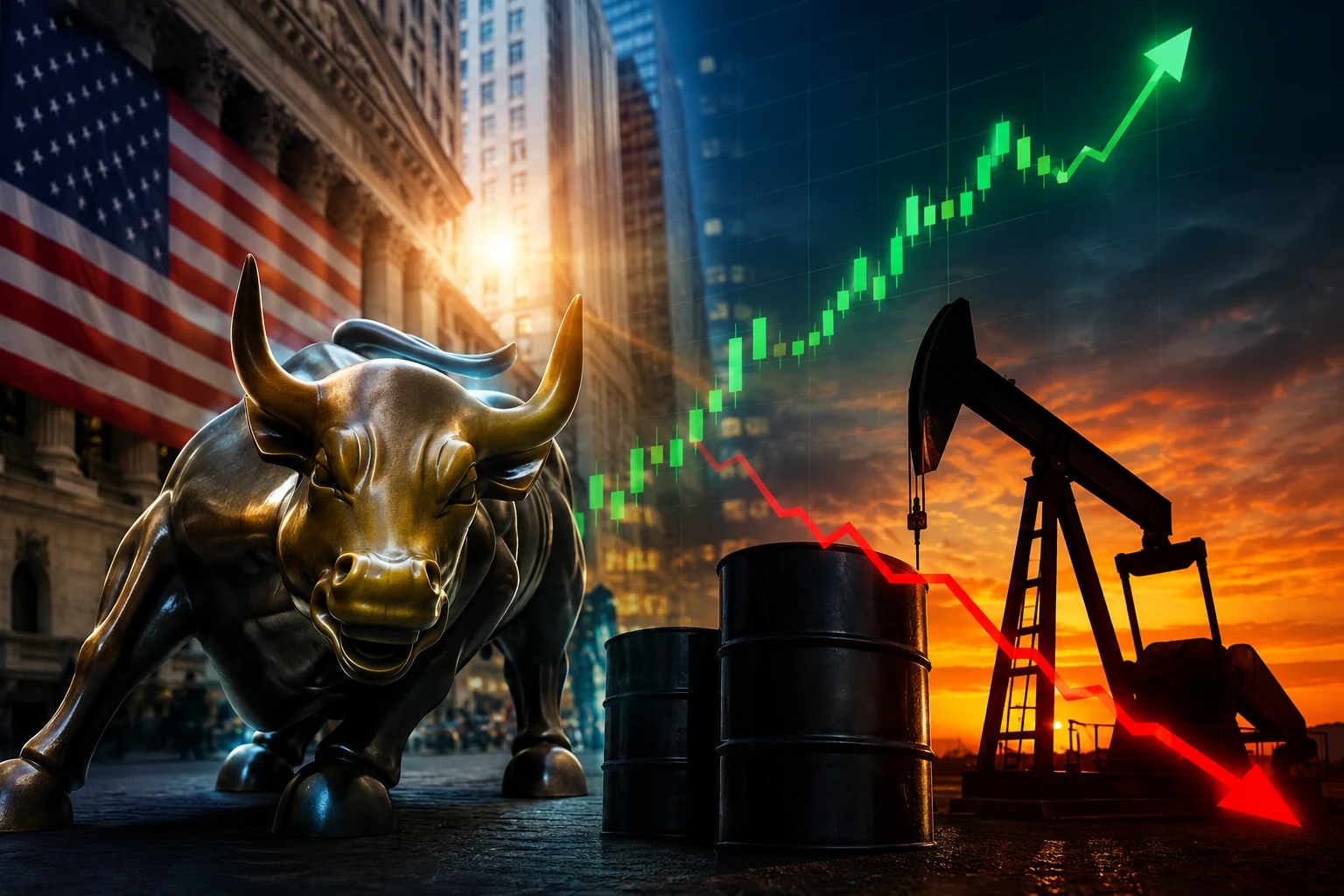
The market did not just blink at the latest geopolitical headline; it turned it into a full reset of investor mood. The Dow record high came as traders responded to fresh optimism around a preliminary U.S.-Iran agreement that could ease one of the biggest energy risks hanging over global markets. At the same time, crude oil prices dropped sharply as investors began pricing in the possibility of smoother supply flows through the Strait of Hormuz. That combination created a rare moment where stocks, bonds, oil-sensitive sectors, and inflation expectations all moved around the same story. For a market that has spent months bouncing between fear, policy uncertainty, and geopolitical stress, the reaction felt less like a simple rally and more like a collective exhale.
The headline number is easy to understand: the Dow Jones Industrial Average climbed to a record close while oil fell to its lowest level in months. But the deeper story is about how fast markets can rewrite the script when a major risk starts to fade. Investors had been living with the possibility that conflict in the Middle East could keep energy prices elevated, squeeze consumers, and push central banks into a tougher policy stance. When the U.S.-Iran framework appeared to offer a path toward de-escalation, the market reaction was immediate because the risk premium built into oil and defensive positioning suddenly looked too high. That is why this Dow record high matters beyond one trading session: it shows how strongly investors still want to believe in a softer landing.
Why the Dow Record High Hit at the Same Time Oil Fell
At first glance, a stock market rally and a crude oil selloff may look like two separate events, but this time they were tightly connected. Oil had been carrying a geopolitical premium because traders feared that conflict could disrupt shipping lanes and reduce the flow of crude and refined products into the global market. The Strait of Hormuz is one of the world’s most important energy corridors, so even a partial disruption can make investors nervous about supply. When hopes rose that the passage could reopen more fully under a U.S.-Iran arrangement, crude prices quickly adjusted lower. That lower oil price became bullish for the broader stock market because cheaper energy can reduce inflation pressure, protect consumer spending, and support profit margins across several industries.
The Dow benefited because its mix of industrial, financial, consumer, and health care names tends to respond well when recession fears cool and policy risk looks more manageable. A falling oil price can be tricky for energy producers, but it is often welcome news for transportation firms, manufacturers, retailers, and consumers. It also gives investors more room to believe that inflation may slow without requiring another painful hit to growth. That is why the move was not just about traders buying stocks because oil went down. It was about a broader repricing of risk, where investors started to imagine a market environment with less energy shock, less geopolitical panic, and slightly more flexibility for monetary policy.
The rally also showed how much cash has been waiting for a reason to rotate back into risk assets. In recent months, many investors stayed cautious because the market had too many unresolved questions at once. Energy prices were volatile, central bank policy was still in focus, and global growth signals were mixed. Once oil began falling on the back of diplomatic optimism, that wall of worry looked less intimidating. The result was a wave of buying that pushed the Dow into record territory and pulled attention back toward cyclical sectors that benefit when confidence improves.
The Energy Shock That Markets Wanted to Avoid
Oil prices have a special place in financial markets because they touch almost everything. When crude climbs quickly, it can raise gasoline prices, shipping costs, airline expenses, manufacturing inputs, and food distribution costs. Those price pressures eventually show up in household budgets and corporate earnings. Investors were worried that a prolonged Middle East conflict could keep that pressure alive long enough to complicate the inflation outlook. The drop in oil after the U.S.-Iran deal hopes gave markets a reason to believe that one of the most dangerous inflation channels might be calming down.
This does not mean the oil market is suddenly risk-free. Shipping concerns can linger even when diplomacy improves, especially when major trade routes have recently been threatened or disrupted. Traders also know that political agreements can be fragile, and a framework is not the same thing as a fully executed settlement. Still, markets move on probabilities, not perfect certainty. If the probability of a severe supply shock falls, crude prices can decline quickly even before every detail is finalized.
That is exactly what seemed to happen as Brent and U.S. crude moved sharply lower. The fall suggested that traders were removing some of the war premium that had been embedded in energy prices. It also showed how sensitive oil remains to headlines involving the Gulf, shipping lanes, and export capacity. In the short term, the market may continue to swing as investors judge whether the agreement can hold. In the medium term, lower oil could become a tailwind for the broader economy if supply conditions normalize and fuel costs stay contained.
What the Rally Says About Investor Psychology
The latest market move says a lot about investor psychology in 2026. Traders are not ignoring risk, but they are showing a strong willingness to buy when uncertainty starts to break in a favorable direction. The Dow record high became a symbol of that shift because it happened during a moment when investors were balancing geopolitical relief, inflation hopes, and expectations around central bank policy. In other words, this was not a random jump based on one optimistic headline. It was a reaction to a possible change in the macro setup that has dominated markets for months.
Markets had already been dealing with a complicated rotation beneath the surface. Some investors were questioning whether the artificial intelligence trade had become too crowded. Others were looking for value in financials, industrials, and other areas that had lagged during earlier growth-led rallies. When oil dropped and the Dow broke higher, it gave that rotation more fuel. The market seemed to say that the next phase of gains may not belong only to mega-cap technology, but also to companies tied to real-world economic activity.
That matters because a healthier bull market usually needs broader participation. If only a handful of tech stocks are carrying the indexes, investors eventually worry that the rally is narrow and fragile. A Dow breakout can send a different message because the index includes companies tied to banks, health care, manufacturing, consumer brands, and global trade. When those names join the move, it suggests confidence is spreading beyond one theme. That does not guarantee the rally will continue, but it does make the market tone feel more balanced.
The Fed Angle Investors Are Watching Closely
Lower oil prices can change the conversation around monetary policy because energy is a major input into inflation expectations. If crude stays lower, headline inflation may cool faster than it would have under a prolonged supply squeeze. That gives the Federal Reserve more room to avoid sounding aggressively hawkish, especially if growth remains steady and labor market conditions do not overheat. Investors are always trying to anticipate the next policy signal, and falling oil can influence those expectations. This is why the stock rally was not just about peace hopes; it was also about the idea that inflation risk may become easier to manage.
Still, the Fed will not base its decisions on one day of oil trading. Policymakers usually focus on broader inflation trends, wage growth, consumer demand, and financial conditions. If stock prices rally too aggressively, that can also loosen financial conditions in a way that complicates the Fed’s job. The central bank may welcome lower energy prices, but it will still want evidence that inflation is moving sustainably in the right direction. Investors should therefore treat the oil drop as a supportive signal rather than a complete policy green light.
The market’s optimism makes sense, but it also creates a higher bar for future data. If inflation numbers remain sticky, the excitement around lower oil could fade quickly. If economic data weakens too much, the rally could shift from relief to concern about growth. The cleanest outcome for investors would be lower energy prices, steady demand, and a Fed that can stay patient without threatening more tightening. That is the soft-landing story behind much of the excitement around the Dow record high.
Winners and Losers From the Oil Price Slide
When crude falls this sharply, the market does not reward every sector equally. Airlines, cruise operators, delivery firms, retailers, and manufacturers often benefit because fuel and input costs can ease. Consumers may also get relief if lower crude eventually flows through to gasoline prices, though that pass-through can take time and vary by region. Financial stocks may benefit if investors see a lower risk of an inflation shock damaging credit conditions. These are the kinds of groups that can gain attention when the market shifts from crisis mode to recovery mode.
Energy producers can face a tougher setup when crude drops because revenue expectations may come under pressure. Oil majors are usually more resilient than smaller producers because they have diversified operations, stronger balance sheets, and integrated businesses. Even so, falling crude can reduce enthusiasm for the sector if investors believe the supply shock is fading. Refiners can have a mixed response because lower crude helps feedstock costs, but weaker fuel margins can offset that benefit. The key point is that oil declines are not automatically good or bad for the whole market; they redistribute expectations across sectors.
For investors, this is where sector awareness becomes important. A stock market rally can look broad at the index level, but the details underneath often reveal very different stories. Some companies benefit directly from lower energy costs, while others lose pricing power or face falling commodity-linked revenue. The best way to read a day like this is not simply to ask whether stocks were up or oil was down. It is to ask which earnings stories improved, which margins were protected, and which risks were removed from the market’s checklist.
Why Global Markets Care About This Deal
The U.S.-Iran deal hopes matter far beyond Wall Street because energy is a global pricing mechanism. Europe, Asia, and emerging markets all respond when oil prices move sharply, especially countries that import a large share of their energy. Lower crude can reduce pressure on trade balances, help contain inflation, and give policymakers more breathing room. It can also improve consumer confidence because fuel costs are one of the most visible prices in daily life. That is why global equities can rally when an energy shock appears to fade.
Oil-importing economies are often among the biggest beneficiaries of a crude price decline. When energy costs drop, businesses may face lower production and transportation expenses. Governments may also experience less pressure to subsidize fuel or shield households from sudden price spikes. Currency markets can react too, especially when lower import bills improve a country’s external position. This global ripple effect explains why the U.S. market rally was part of a wider risk-on mood rather than a purely domestic event.
However, the international picture remains complicated. A lower oil price can hurt exporters that rely heavily on energy revenue. It can also change the balance of power inside commodity markets, especially if additional supply returns faster than demand improves. Meanwhile, any renewed tension around shipping lanes could quickly rebuild the risk premium that just came out of prices. Markets are celebrating the direction of travel, but they are not completely dismissing the chance of another reversal.
The Practical Takeaway for Investors
The first practical takeaway is that investors should avoid treating the Dow record high as a single signal that everything is safe. Record highs can happen during strong markets, but they can also happen during emotional relief rallies that need confirmation from earnings, inflation data, and policy signals. The better approach is to study what changed and whether that change is durable. In this case, the market is responding to lower perceived energy risk and a potentially better inflation outlook. Those are meaningful developments, but they still depend on whether diplomacy holds and oil remains contained.
The second takeaway is that portfolio balance matters more when headlines are moving fast. Investors who were only positioned for higher oil may have been caught off guard by the sudden price drop. Investors who were only chasing mega-cap growth may have missed the rotation into more economically sensitive names. A diversified approach can help reduce the risk of being too exposed to one narrative. Markets can change direction quickly when the macro story shifts, and this week’s move is a clean example of that.
The third takeaway is to watch confirmation signals instead of chasing the first reaction. If lower oil begins to show up in inflation expectations, transportation margins, consumer sentiment, and central bank commentary, the rally may have stronger legs. If crude rebounds because the agreement stalls or shipping risks remain unresolved, the market could give back some of the relief move. Investors should also watch bond yields because they can reveal whether the market truly believes inflation pressure is cooling. A strong equity rally backed by calmer yields and lower energy prices is more convincing than a stock rally standing alone.
What Could Challenge the Market Rally Next
The biggest near-term risk is that the U.S.-Iran agreement remains more fragile than investors hope. Markets often move before political details are fully settled, which means disappointment can hit quickly if negotiations slow down or conditions become unclear. The Strait of Hormuz remains a critical focus because even small signs of renewed disruption can lift oil prices again. A single headline about shipping delays, sanctions uncertainty, or military tension could change the tone. That is why traders may continue to price geopolitical risk even after the first wave of optimism.
Another challenge is valuation. When the Dow reaches a record high, investors naturally ask whether prices are already reflecting too much good news. If earnings growth does not match the optimism, stocks can become vulnerable to pullbacks. This is especially true if bond yields rise or if the Fed pushes back against the idea that lower oil automatically means easier policy. A rally built on relief can become unstable if the next set of economic data does not cooperate.
There is also the question of demand. Oil prices can fall because supply risks ease, which is generally positive for the economy. But oil can also fall because demand expectations weaken, which is a much less bullish signal. Investors need to separate those two stories carefully. Right now, the market is mostly reading the crude decline as a supply-risk relief event, but that interpretation could change if global growth data deteriorates.
A Market Reset, Not a Market Finish Line
The most important thing about this moment is that it resets expectations, but it does not end the debate. The Dow record high tells us that investors are willing to reward lower geopolitical risk and a more favorable energy backdrop. The oil selloff tells us that traders are removing some fear from crude pricing. Together, those moves create a cleaner environment for stocks, especially if inflation pressure continues to cool. But markets still need follow-through from policy, earnings, and real economic data.
This is why the rally feels powerful but not guaranteed. It is powered by a real macro shift, yet the details behind that shift remain unfinished. Investors have seen enough volatility in recent years to know that optimism can fade when the next complication arrives. Still, there is a clear reason the market reacted so strongly. Lower oil, calmer geopolitical risk, and a record Dow create a narrative that investors have been waiting to buy.
For everyday market watchers, the lesson is to look beyond the headline and understand the chain reaction. A diplomatic breakthrough can move oil. Oil can move inflation expectations. Inflation expectations can move bond yields and central bank pricing. Those forces can then move stocks, sectors, currencies, and investor behavior across the entire global market.
Conclusion: Why This Dow Record High Matters
The Dow record high matters because it captures a major change in market psychology at a critical time. Investors were not simply celebrating a stronger index; they were responding to the possibility that one of the largest energy risks facing the global economy may be easing. The drop in oil prices added force to the rally because it reduced fears of another inflation shock and gave risk assets a cleaner path higher. That does not mean the market is free from danger, but it does mean the balance of risks looked better than it did before the deal headlines. In a year defined by policy questions, geopolitical stress, and shifting sector leadership, this moment could become a key turning point if the underlying peace process holds.
Investors should stay excited but disciplined. The market has given a strong signal that lower geopolitical tension and cheaper energy can unlock fresh risk appetite. At the same time, record highs require stronger confirmation because expectations rise along with prices. The next phase will depend on whether oil stays lower, whether inflation continues to ease, and whether earnings can support the optimism now priced into stocks. For now, the Dow record high stands as a reminder that markets can change fast when fear begins to unwind and confidence starts leading the story again.