
Oil Prices Slide as Iran Deal Lifts Stocks
 Vortixel
15 minutes read
Vortixel
15 minutes read
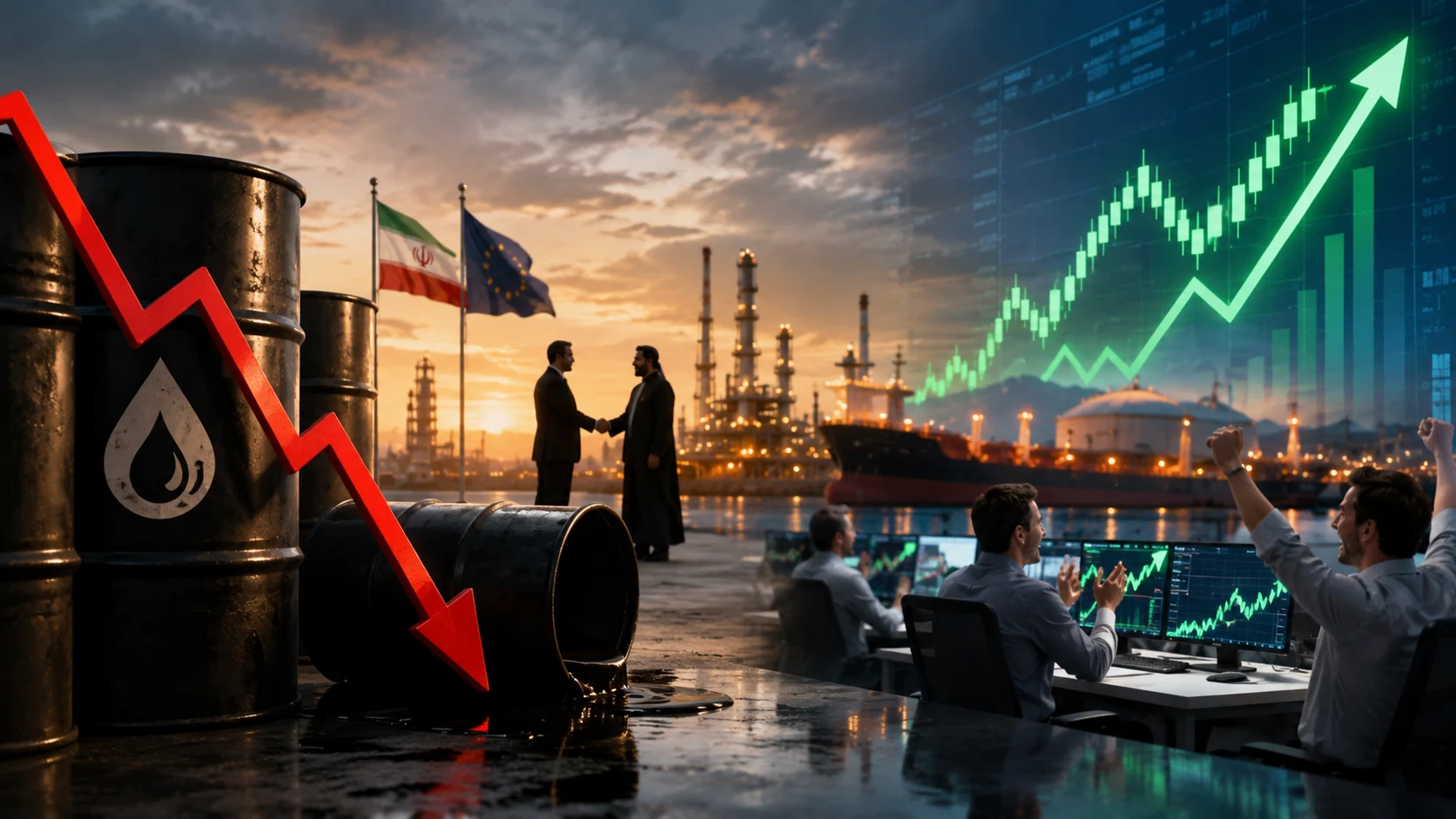
Oil prices suddenly became the main character of the global market story after a fresh Iran deal cooled the fear premium that had been hanging over traders for months. The move was fast, sharp, and loud enough to pull attention away from the usual Wall Street noise about earnings, interest rates, and AI stocks. Crude fell as investors started pricing in a lower risk of major supply disruption around the Strait of Hormuz, one of the world’s most important energy chokepoints. At the same time, equities found fresh oxygen because cheaper energy can ease pressure on inflation, corporate margins, and consumer spending. For anyone watching oil prices and global stocks, this was the kind of market reset that can change the mood of an entire trading week.
The story is not just about barrels, tankers, or diplomats shaking hands behind closed doors. It is about how quickly markets can flip when geopolitical tension starts to look less explosive. For weeks, traders had been adding a war-risk premium into crude as tensions around Iran, shipping routes, and energy security created a nervous backdrop. Then, as the deal pointed toward a reopening path and smoother maritime movement, that premium began to unwind. The result was a classic relief trade: oil dropped, stocks pushed higher, and investors who had been hiding in defensive corners began reaching for risk again.
Why Oil Prices Fell After the Iran Deal
The key reason oil prices fell is simple: markets hate uncertainty, and the deal reduced one of the biggest uncertainties in the energy complex. When the Strait of Hormuz looks threatened, crude traders immediately start thinking about supply disruption, insurance costs, shipping delays, and emergency rerouting. That matters because a huge share of the world’s oil and liquefied natural gas moves through that narrow corridor. Even a partial disruption can force buyers to compete harder for available barrels and push prices higher before any physical shortage is fully visible. Once the market began to believe that the route could reopen or operate more freely, traders had less reason to pay extra for panic protection.
This is why the sell-off in crude was not random profit-taking. It was a repricing of risk. Oil had been carrying a geopolitical premium because the market was not only buying energy demand, but also buying fear. When that fear softened, the premium had to come out of the price. That does not mean the market suddenly became calm or predictable, because oil is never that generous. It simply means traders shifted from “what if supply gets worse?” to “what if supply comes back faster than demand can absorb?”
The second part of the move was about supply expectations. If more tankers can move, more crude can reach buyers, and more supply can return to pricing screens. That can pressure both spot prices and near-term contracts, especially if refiners in Asia and Europe are not rushing to buy immediately. Some refiners may wait for cheaper barrels rather than chase a market that is already falling. This creates a feedback loop where lower prices invite more patience from buyers, and that patience can keep short-term pressure on crude.
There is also a psychological layer that matters in commodities trading. Oil traders do not wait for every ship to move perfectly before reacting. They price the possibility of change first, then adjust as real-world flows confirm or challenge the narrative. That is why crude can drop before every logistical issue is solved. The market is basically saying, “The worst-case scenario looks less likely now,” and that alone can be enough to trigger a major move.
Why Stocks Rallied as Crude Pulled Back
Stocks rose because lower crude prices can act like a pressure valve for the broader economy. Energy costs are buried inside almost everything, from airline tickets and shipping bills to food distribution and factory operations. When oil drops, investors start to imagine less pressure on inflation and better margins for companies that depend heavily on fuel. That is especially supportive for transport, consumer, technology, and industrial stocks. It does not magically fix every market problem, but it gives equity traders a cleaner reason to buy after weeks of geopolitical stress.
The rally also had a relief-trade flavor. Investors had been dealing with a messy combination of war headlines, inflation anxiety, central bank caution, and expensive equity valuations. When one of those worries cooled, the market responded with a visible shift in appetite. Growth stocks, especially those tied to technology and semiconductors, often benefit when investors feel more comfortable taking risk. A lower oil price can also help reduce fears that inflation will force central banks into a more aggressive stance.
That connection between energy and interest rates is one of the most important pieces of the story. If oil stays high for long enough, it can feed into gasoline prices, freight costs, and household inflation expectations. Central banks do not respond to every oil move, but they do care when energy shocks start spilling into broader inflation. When crude falls sharply, bond and equity traders may start to believe that policymakers have a little more room to breathe. That belief can support stocks even if officials are still talking tough about inflation.
However, this rally should not be mistaken for a full all-clear signal. The deal still needs follow-through, shipping flows need time to normalize, and political risk can return faster than traders want to admit. Markets often celebrate first and ask deeper questions later. That is why a strong stock rally after falling crude can be real but still fragile. The move reflects improved odds, not guaranteed stability.
The Strait of Hormuz Remains the Market’s Nerve Center
The Strait of Hormuz is not just another shipping lane on a map. It is one of the most sensitive arteries in the global energy system. When traffic through that corridor looks uncertain, oil markets react because supply chains are built around timing, access, and predictable flows. A disruption there can affect Middle Eastern exports, Asian refinery planning, European energy costs, and global inflation expectations. That is why the Iran deal created such a big market response before the week was even fully digested.
For traders, the strait represents a rare case where geography directly becomes price action. A few miles of water can influence fuel costs across continents. If the route is open, the market sees supply. If the route looks threatened, the market sees scarcity. That binary logic creates sharp moves because energy traders do not have the luxury of ignoring chokepoint risk.
The deal’s impact is also bigger because markets had already spent weeks preparing for worse scenarios. Companies were thinking about shipping delays, governments were thinking about reserves, and traders were thinking about volatility. When expectations are that tense, even a partial diplomatic breakthrough can create an outsized reaction. The price does not only reflect what happened today. It also reflects all the stress that had been built into the market before today.
Still, logistics will matter from here. Reopening a route or easing restrictions does not instantly reset months of disruption. Tankers need schedules, insurers need confidence, buyers need cargo clarity, and producers need stable terms. If the process moves smoothly, crude could remain under pressure. If delays or new threats appear, the market could quickly add some of that fear premium back.
What This Means for Inflation and the Fed
Lower oil prices can help the inflation story, but the effect depends on how long the decline lasts. A one-day drop looks great on a chart, but policymakers care more about sustained pressure across fuel, transport, and consumer prices. If crude continues to slide or stabilizes at lower levels, gasoline and diesel costs could soften over time. That would be a welcome development for households and businesses that have been squeezed by higher energy expenses. It could also reduce the risk that inflation expectations become sticky again.
For the Federal Reserve, the oil move creates a more complicated but potentially helpful backdrop. Officials are still focused on the broader inflation trend, wage growth, services inflation, and the strength of demand. Yet energy prices are too important to ignore because they shape consumer psychology in a direct way. When drivers see gasoline prices fall, they feel it immediately. That can influence spending behavior, political pressure, and market expectations around monetary policy.
The stock market’s reaction suggests investors believe lower crude could reduce the need for harsher rate policy. That does not mean rate cuts automatically return to the table or that hawkish commentary becomes irrelevant. It means one of the inflation risks that had been making traders nervous has cooled for now. Bond yields can respond quickly to that kind of shift, and equity valuations can get support when discount-rate fears ease. This is why a commodity move can ripple through the entire financial system.
There is one catch that investors should not ignore. If stocks rally too aggressively, financial conditions can loosen, which may complicate the central bank’s job. A market boom can support confidence, spending, and risk-taking. That can be helpful for growth, but it can also keep inflation from cooling as fast as policymakers want. In other words, cheaper oil is helpful, but it does not erase the larger tug-of-war between growth and inflation.
Winners and Losers From the Oil Slide
The biggest winners from falling crude are usually sectors that suffer when fuel costs rise. Airlines, logistics companies, cruise operators, retailers, and parts of the consumer sector can benefit from lower energy expenses. If oil remains lower, these companies may see margin relief over the next few quarters. Investors often move quickly into these names because the math is easy to understand. Lower input costs can make earnings forecasts look less stretched.
Technology stocks can also benefit indirectly. Tech companies are not always heavy fuel users in the same way airlines are, but their valuations are sensitive to interest-rate expectations. If falling oil reduces inflation fear, the market may become more comfortable paying higher multiples for growth. That helps explain why growth-heavy indexes can respond positively when crude slides. The move is less about direct fuel savings and more about the macro environment turning slightly friendlier.
The losers are easier to spot in the energy sector. Oil producers, exploration companies, and energy services firms can come under pressure when crude falls quickly. Lower oil prices can reduce cash flow expectations, especially for companies with higher production costs. Energy stocks may still hold up if prices remain profitable, but the sector usually loses momentum when the market stops paying for scarcity. This is why broader indexes can rise while oil-linked equities lag behind.
Commodity currencies and oil-exporting economies may also feel the shift. Countries that depend heavily on energy exports can see budget pressure if prices fall too far. Their currencies may weaken if traders believe export revenue will decline. On the other hand, oil-importing economies can receive a boost because cheaper crude lowers import bills. That split is one reason the oil move matters far beyond Wall Street.
How Investors Should Read the Rally
Investors should read the rally as a meaningful relief move, not a permanent market guarantee. The Iran deal changed the immediate risk map, and that deserves attention. But markets often move faster than facts on the ground, especially when geopolitical headlines are involved. A headline can lift indexes in the morning and be questioned by traders before the week ends. The smartest approach is to respect the move without assuming the story is finished.
For short-term traders, volatility may remain elevated because oil is now being pulled by both diplomacy and supply mechanics. Every update about shipping, compliance, negotiations, and regional security could move prices. A surprise delay could send crude higher again, while smoother flows could push prices lower. That makes stop discipline and position sizing more important than usual. Chasing the first move without a plan can be risky in a market this headline-sensitive.
For long-term investors, the bigger lesson is about diversification. Energy shocks can hurt some sectors while helping others, and geopolitical relief can reverse those moves quickly. A portfolio that only leans into one macro narrative can become vulnerable when the story changes. The recent move shows why balancing growth, defensive sectors, commodities exposure, and cash flexibility can matter. Markets are not just numbers on a screen; they are living systems reacting to politics, supply chains, and human emotion.
Investors should also avoid confusing lower oil with weaker demand too quickly. Sometimes crude falls because the global economy is slowing, which can be bad for stocks. This time, the move was driven largely by supply-risk relief, which is why equities responded positively. That difference matters. A supply-driven oil decline can support risk assets, while a demand-driven oil decline can warn of trouble ahead.
What to Watch Next in Global Markets
The first thing to watch is whether crude continues to fall or finds a floor. If prices stabilize near lower levels, the market may treat the Iran deal as a durable relief event. If crude snaps back quickly, investors may conclude that the sell-off was too optimistic. The shape of the futures curve will also matter because it can reveal whether traders expect short-term oversupply or lingering tightness. A softer near-term curve would support the idea that supply anxiety is fading.
The second thing to watch is the reaction in bond markets. If lower oil reduces inflation expectations, Treasury yields may ease, which could support equities further. But if central bank officials continue to sound hawkish, the benefit from cheaper crude may be limited. Markets are always balancing price action against policy language. That balance will shape whether the rally becomes broader or starts to lose energy.
The third thing to watch is sector rotation. A healthy rally would not only lift mega-cap technology stocks but also support industrials, transports, consumer shares, and small caps. If the move remains narrow, investors may become more cautious. Broad participation suggests confidence is spreading across the market. Narrow leadership suggests traders are still hiding in familiar winners while pretending to be more optimistic than they really are.
The fourth thing to watch is currency movement. A stronger dollar can complicate the story because it can pressure commodities and weigh on multinational earnings. If the dollar rises while oil falls, emerging markets may not benefit as much as expected. If the dollar weakens, risk appetite could broaden globally. That makes foreign exchange a quiet but important part of this market setup.
The Bigger Trend Behind the Market Move
The bigger trend is that markets are becoming more sensitive to geopolitical de-escalation. For years, investors were trained to focus mostly on inflation data, central banks, earnings, and technology growth. Now, shipping routes, energy security, and diplomatic agreements can move indexes just as powerfully. This does not mean fundamentals no longer matter. It means the definition of fundamentals has expanded.
Energy is still the bridge between geopolitics and the everyday economy. When oil spikes, consumers feel it at the pump, companies feel it in transport bills, and central banks feel it in inflation data. When oil falls for the right reason, that pressure can ease across multiple layers of the economy. This is why today’s move reached stocks, bonds, currencies, and commodities at the same time. Oil is never just oil when the world is this connected.
The rally also shows how much cash may still be waiting for a reason to enter the market. Investors who had been cautious because of war risk suddenly had a cleaner entry point. That does not guarantee a straight-line rally, but it explains the strength of the reaction. When fear is crowded, relief can become powerful. A single geopolitical shift can force traders to reposition quickly.
At the same time, this market remains vulnerable to disappointment. If the deal weakens, if tensions restart, or if energy flows recover more slowly than expected, crude could regain support. Stocks could then give back part of the rally, especially if valuations already priced in too much good news. The market is celebrating a better path, not a perfect one. That distinction will matter in the days ahead.
Practical Insight for Market Watchers
For everyday market watchers, the practical takeaway is to follow the chain reaction, not just the headline. The headline says oil fell and stocks rose, but the real story moves through inflation, interest rates, margins, currencies, and sector leadership. If crude keeps falling while transport and consumer stocks strengthen, the market may be signaling real confidence. If crude falls but defensive assets still attract money, investors may be less convinced. The quality of the rally matters as much as the size of the rally.
It is also smart to separate short-term trading energy from long-term investment logic. A sudden move in oil can create opportunities, but it can also trap late buyers and sellers. Traders may focus on momentum, while investors should focus on whether the macro setup actually improves earnings and inflation trends. Those are different games. Mixing them can lead to emotional decisions at exactly the wrong time.
Anyone exposed to energy stocks should think carefully about why they own them. If the thesis is income, strong balance sheets, and disciplined production, a pullback may not destroy the long-term case. If the thesis was purely based on war-driven price spikes, the Iran deal changes the equation. The same logic applies to airlines, industrials, and consumer names that may benefit from lower fuel. The question is not just whether a sector moves, but whether the reason behind the move can last.
This is also a moment to watch consumer sentiment. Lower fuel costs can improve mood faster than many economic indicators. People may not read every inflation report, but they notice what it costs to fill a tank, book a flight, or receive shipped goods. If that pressure eases, spending patterns could improve at the margin. That would give the stock rally a more grounded economic base.
Conclusion: Oil Relief Gives Stocks a Fresh Pulse
The fall in oil prices after the Iran deal gave global markets something they badly needed: a reason to breathe. Crude dropped because the market saw less immediate danger around supply routes, especially the Strait of Hormuz. Stocks climbed because cheaper energy can soften inflation pressure, support corporate margins, and improve investor appetite for risk. The move was powerful because it connected geopolitics, commodities, central banks, and equities in one clean market narrative. For now, lower oil prices have turned fear into relief, but the next chapter depends on whether diplomacy can hold and real oil flows can match the optimism already priced into markets.