
Gold Price Outlook: Why $4,000 Still Matters
 Vortixel
13 minutes read
Vortixel
13 minutes read
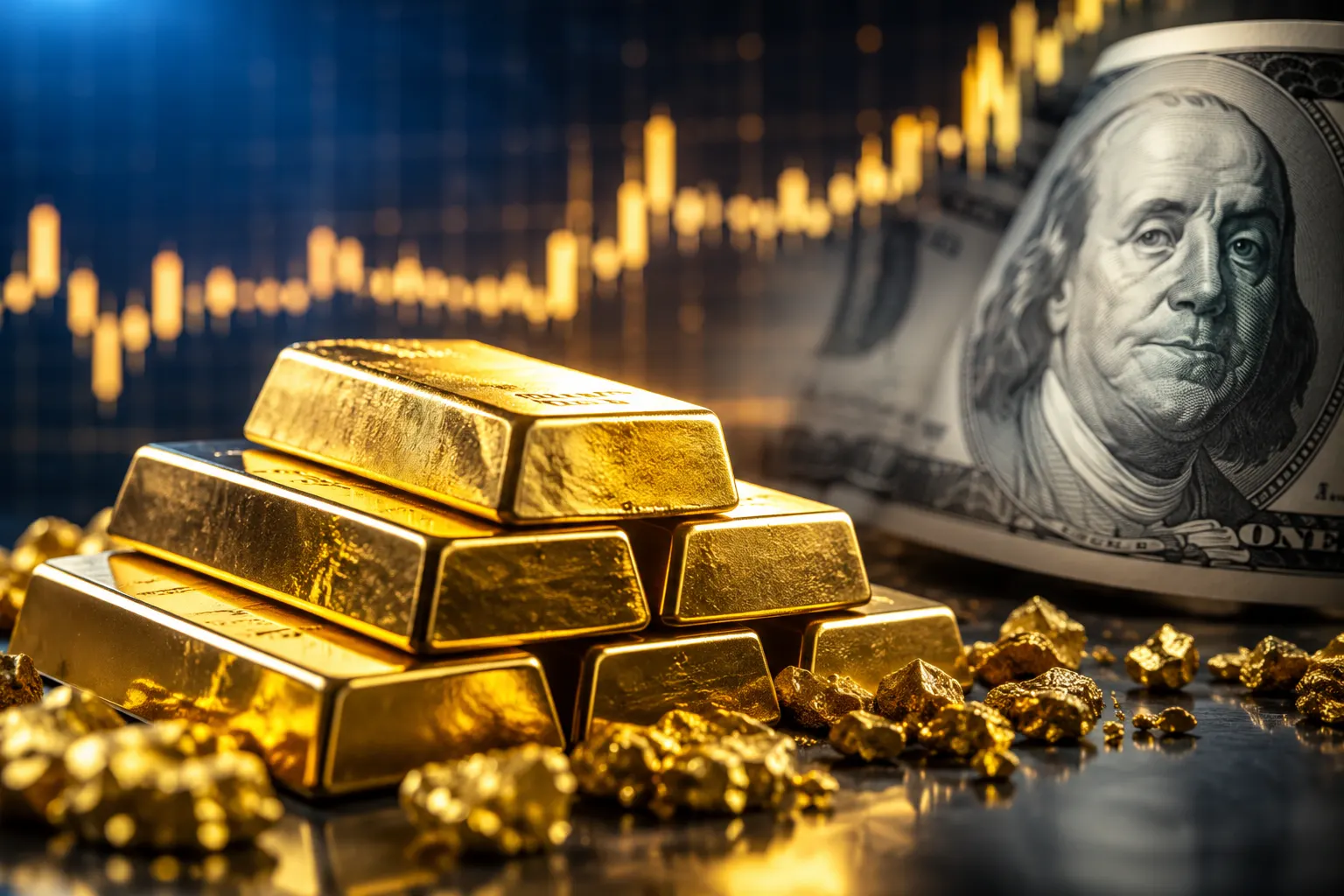
Gold did not crash, but it did blink. That is the mood around the metal as gold price outlook conversations turn more complicated near the $4,000 level. After a massive run that made bullion one of the most watched assets on the planet, the latest pause above $4,000 feels less like a breakdown and more like a market holding its breath. The dollar is firmer, Treasury yields are elevated, and traders are staring at the Federal Reserve for the next clue on where money flows next. For investors who have treated gold as a safe place to hide from inflation, war risk, and currency stress, this moment is not boring at all.
The headline looks simple: gold stalls while the dollar firms. Under the surface, though, the story is really about confidence, fear, and timing. Gold is still trading at a level that would have sounded wild to many investors a few years ago, yet the tone has shifted from “how high can it go” to “can it defend this zone.” That change matters because markets often move first through emotion before the data catches up. When an asset sits near a big round number, every small move suddenly feels bigger than it is.
The Gold Price Outlook Turns Cautious
The best SEO keyword for this story is gold price outlook, because it captures what investors are really searching for right now. People are not only asking where gold is trading today; they want to understand what the next chapter could look like. That makes the current pause above $4,000 important, even if the day-to-day percentage move looks small. Gold slipped modestly as the U.S. dollar strengthened and Treasury yields pushed higher, both of which usually make bullion less attractive in the short term. The metal is still expensive, still relevant, and still deeply tied to the bigger macro story.
Gold does not pay interest, dividends, or coupons. That is not a flaw, but it becomes a big deal when bond yields rise. When investors can earn more from U.S. Treasuries, the opportunity cost of holding gold increases. A stronger dollar adds another layer of pressure because gold is priced in dollars, which makes it more expensive for buyers using other currencies. So even when global uncertainty remains high, a firmer dollar can cool momentum in the gold market.
That is why today’s gold setup feels like a tug-of-war. On one side, investors still see plenty of reasons to own bullion, from geopolitical tension to inflation risk and shaky confidence in financial assets. On the other side, higher yields and a stronger dollar are telling traders not to get too comfortable. This is not a clean bullish or bearish moment. It is a messy middle zone where gold bulls are still defending the trend, but they are no longer moving without resistance.
Why the Dollar Is Pressuring Gold
The dollar matters because it is the main pricing language of global commodities. When the dollar gets stronger, gold often becomes harder to buy for international investors. That can slow demand, especially among short-term traders who are sensitive to currency moves. The effect is not always instant or perfectly predictable, but it remains one of the clearest relationships in commodity markets. When the dollar firms before a major central bank decision, gold tends to lose some of its shine.
This does not mean gold is suddenly weak as a long-term asset. It means the market is repricing the near-term path. A firm dollar tells the world that investors are still willing to hold U.S. assets, even with political, fiscal, and inflation concerns floating around. That confidence competes directly with gold’s safe-haven appeal. If the dollar keeps climbing, gold may need fresh fear, softer yields, or stronger physical demand to break higher.
The current setup also shows how sensitive gold has become to Federal Reserve expectations. Traders are not only watching what policymakers do at one meeting. They are watching the language, the vote split, and the tone around inflation. A hold can still sound hawkish if officials warn that higher energy prices or sticky inflation may force tighter policy later. That is the kind of message that can support the dollar and keep gold stuck near resistance.
The Fed Is Still the Main Character
The Federal Reserve sits at the center of this story because rate expectations shape nearly every major market. Gold investors care about the Fed because interest rates influence real yields, the dollar, liquidity, and risk appetite. If the Fed signals that rates could stay higher for longer, gold faces a tougher climb. If policymakers sound more relaxed about inflation, gold could get room to breathe again. This is why even a small change in wording can move precious metals, stocks, crypto, and currencies at the same time.
Right now, the market is dealing with a tricky mix. Inflation has cooled in some areas, but energy prices are adding pressure again. Oil shocks can make central banks nervous because fuel costs feed into transportation, production, and consumer expectations. If oil keeps rising, investors may fear that inflation will not fade as smoothly as hoped. That fear can lift yields and support the dollar, which is exactly the combination that can stall gold above $4,000.
Gold bulls do not need the Fed to become aggressively dovish overnight. They simply need the market to believe that the peak in real rates is close. Once investors start thinking that yields have limited room to rise, gold usually gets more space to perform. The problem is that the latest macro backdrop does not offer a clean green light. The economy is still absorbing higher energy costs, geopolitical tension, and uneven signals from risk assets.
Why $4,000 Is More Than Just a Number
Round numbers matter because humans trade markets, and humans love psychological anchors. The $4,000 level is not magical, but it has become a major reference point for gold traders. When gold holds above it, bulls can argue that demand remains strong despite pressure from the dollar. When gold slips toward it, bears can argue that the rally is losing force. This is why the current pause feels bigger than a normal sideways session.
A price like $4,000 also changes the type of buyers watching the market. Long-term investors may see it as proof that gold has entered a new valuation era. Short-term traders may see it as a place to test stops, chase momentum, or fade crowded positioning. Central banks, funds, jewelers, and retail investors all read the level differently. That mix can create choppy price action, especially when macro news is moving fast.
The bigger question is whether $4,000 becomes a floor or a ceiling. If gold keeps attracting dip-buyers around this zone, the market may treat the level as support. If every bounce fails quickly, traders may start seeing it as a warning sign. The answer will likely depend less on gold itself and more on the dollar, yields, inflation data, and geopolitical risk. That makes this a market where context matters more than a single price print.
Safe-Haven Demand Has Not Disappeared
Even with pressure from the dollar, safe-haven demand has not vanished. Gold remains a core hedge for investors worried about war risk, currency debasement, fiscal stress, and financial market volatility. The reason it is holding above $4,000 instead of collapsing is that the world still feels uncertain. Investors may complain about gold’s lack of yield, but they still return to it when trust in paper assets gets shaky. That emotional and institutional demand is a powerful part of the modern gold trade.
At the same time, gold is not a perfect hedge every single day. It can fall during periods of stress if investors rush into cash, if the dollar spikes, or if yields rise sharply. This is the part many newer investors learn the hard way. Gold protects against certain risks, but it does not protect against every short-term market move. That is why the commodities market often feels simple from far away and complicated up close.
Safe-haven demand also competes with profit-taking after big rallies. When an asset has already climbed dramatically, some investors naturally lock in gains near major levels. That selling does not always mean the long-term story is broken. It can simply mean the market needs time to digest a major move. In gold’s case, the pause above $4,000 looks like a digestion phase until the next macro signal arrives.
What This Means for Investors
For everyday investors, the key lesson is not to treat gold as a one-direction trade. The metal can be a useful portfolio diversifier, but buying only because the headline number looks impressive can be risky. A stronger dollar and higher yields can pressure gold even when the long-term narrative remains bullish. That means position size, time horizon, and entry point matter. Investors should think of gold less like a hype trade and more like a strategic asset with its own rhythm.
If someone already owns gold, this moment may be more about patience than panic. A small stall above $4,000 does not erase the broader role gold can play in a portfolio. However, it does remind investors to check whether their allocation still matches their risk tolerance. Too much gold can make a portfolio overly exposed to one macro theme. Too little gold can leave investors vulnerable if inflation or geopolitical risk suddenly jumps again.
For traders, the setup is more tactical. The $4,000 zone can become a key line for momentum, support, and stop-loss behavior. A clean hold above that area could invite another push higher if the dollar weakens or the Fed sounds less aggressive. A decisive break below it could trigger faster selling, especially if yields rise at the same time. The smartest traders will not only watch gold; they will watch the dollar index, Treasury yields, oil, and inflation data together.
The Bigger Trend Behind Precious Metals
Gold is not moving in isolation. Silver, platinum, and palladium are also reacting to the same macro forces, though each has its own supply and demand story. Silver often carries both precious-metal and industrial-metal behavior, making it more volatile when growth expectations shift. Platinum and palladium are tied more closely to industrial demand, especially in automotive and emissions-related uses. When gold pauses but silver rises or industrial metals fall, it shows how fragmented the commodity landscape can be.
The bigger precious metals trend is being shaped by three forces. The first is monetary policy, because rates and real yields influence the appeal of non-yielding assets. The second is geopolitical risk, because conflict can push investors toward hard assets. The third is investor positioning, because crowded trades can reverse quickly when expectations change. Gold above $4,000 sits right at the intersection of all three forces.
This is also why gold has become a mainstream market story again. It is no longer just something followed by commodity specialists or old-school inflation hawks. Younger investors are watching it alongside Bitcoin, AI stocks, oil, and the dollar. That crossover matters because it changes how gold is discussed and traded. In today’s market, gold is part safe haven, part macro signal, and part sentiment gauge.
How Oil Prices Complicate the Gold Trade
Oil is one of the sneakiest variables in the gold story right now. Higher oil prices can increase inflation pressure, which should sound bullish for gold at first. But if inflation pressure makes the Fed more hawkish, the result can actually hurt gold through higher yields and a stronger dollar. That is the contradiction investors are dealing with today. Inflation fear can support gold, but rate-hike fear can cap it.
This is why the market reaction to energy shocks can feel confusing. In a classic safe-haven scenario, rising geopolitical tension might push gold higher. In a central-bank-driven market, that same tension can raise oil prices, lift inflation expectations, and make rate cuts less likely. When that happens, gold may struggle even while the headlines look scary. The market is not ignoring risk; it is deciding which risk matters most today.
Investors should keep an eye on whether oil strength becomes persistent or temporary. A short spike may create noise, but a sustained move higher can reshape inflation expectations. That would affect bonds, currencies, equities, and gold at the same time. If oil keeps pushing central banks into a defensive stance, gold may remain range-bound. If oil cools and yields ease, gold could regain momentum quickly.
What Could Push Gold Higher Again
Gold could regain momentum if the dollar weakens meaningfully. A softer dollar would make bullion cheaper for international buyers and could bring fresh demand into the market. Lower Treasury yields would also help because they reduce the opportunity cost of holding gold. If inflation cools without damaging growth too much, investors may become more comfortable betting that the Fed is near the end of its tightening path. That kind of macro mix would be supportive for gold.
Geopolitical escalation could also push gold higher, especially if investors become more worried about financial stability or supply disruptions. Gold tends to benefit when people want assets that do not depend on a company balance sheet or government promise in the same way stocks and bonds do. Central bank buying could add another layer of support if official institutions continue diversifying reserves. Strong ETF inflows would also signal that investor appetite is returning. In that case, $4,000 could become a launchpad instead of a ceiling.
Another bullish factor would be a shift in market psychology. If traders begin to believe that every dip near $4,000 gets bought, confidence can build quickly. Markets often move on patterns before fundamentals fully confirm them. A defended level can attract momentum funds, retail buyers, and institutional allocators at the same time. That is how sideways action can turn into the next leg higher.
What Could Pull Gold Lower
The bearish case starts with a stronger dollar and higher real yields. If the Fed sounds more aggressive than expected, gold could lose support from investors who were betting on easier policy. A hot inflation reading could make that pressure worse if it pushes the market to price in more rate hikes. In that scenario, gold’s safe-haven appeal may not be enough to offset the rise in opportunity cost. The market could then test whether buyers are truly committed around $4,000.
Another risk is simple exhaustion. After a huge rally, markets often need a reset. That reset can come through time, where prices move sideways for weeks, or through price, where the asset drops enough to attract fresh buyers. Gold has already carried a lot of bullish expectations, and crowded positioning can become fragile. If too many traders are leaning the same way, even a modest disappointment can trigger a sharper move.
A calmer geopolitical backdrop could also reduce the urgency to hold gold. If investors feel safer taking equity risk or holding dollar assets, some money may rotate away from bullion. That does not mean gold becomes irrelevant. It means the premium investors pay for protection may shrink. When fear fades, safe-haven assets often have to rely more heavily on monetary policy support.
Practical Insight for Market Watchers
The most useful way to read gold right now is through a dashboard approach. Watch the dollar first, because a strong dollar can cap rallies. Watch the 10-year Treasury yield second, because rising yields can make gold less attractive. Watch oil third, because energy prices can reshape inflation expectations and Fed policy. Watch the $4,000 level last, because price action around that zone reveals whether buyers are still confident.
Investors should also avoid turning one day of market action into a grand conclusion. Gold stalling above $4,000 is a signal, but it is not a full verdict. The market is waiting for confirmation from central banks, inflation data, and currency movement. A patient investor should care more about the direction of real yields than one intraday move in gold. A trader, however, may care deeply about whether the metal closes firmly above or below its key psychological level.
For content creators, analysts, and market-focused readers, this story has strong long-tail potential. Searches around gold, the dollar, Fed policy, safe-haven assets, and inflation are all connected. The current setup gives readers a reason to care even if they do not trade commodities directly. Gold is acting like a mirror for the entire macro environment. When gold pauses, it is often because the whole market is unsure what happens next.
Conclusion: Gold Is Paused, Not Forgotten
The gold price outlook remains one of the most important market stories because gold is sitting at the crossroads of inflation, policy, currency strength, and fear. A stall above $4,000 does not automatically mean the rally is over, but it does show that the easy momentum phase has cooled. The stronger dollar and higher yields are real headwinds, especially while the Federal Reserve remains cautious about inflation. Still, safe-haven demand, geopolitical uncertainty, and long-term diversification needs continue to support the metal. Gold is paused for now, but in a market this tense, paused does not mean powerless.