
Europe Inflation Rises, Investors Rush to Safe Havens
 Vortixel
8 minutes read
Vortixel
8 minutes read
Introduction: Europe’s Price Pressure Is Back
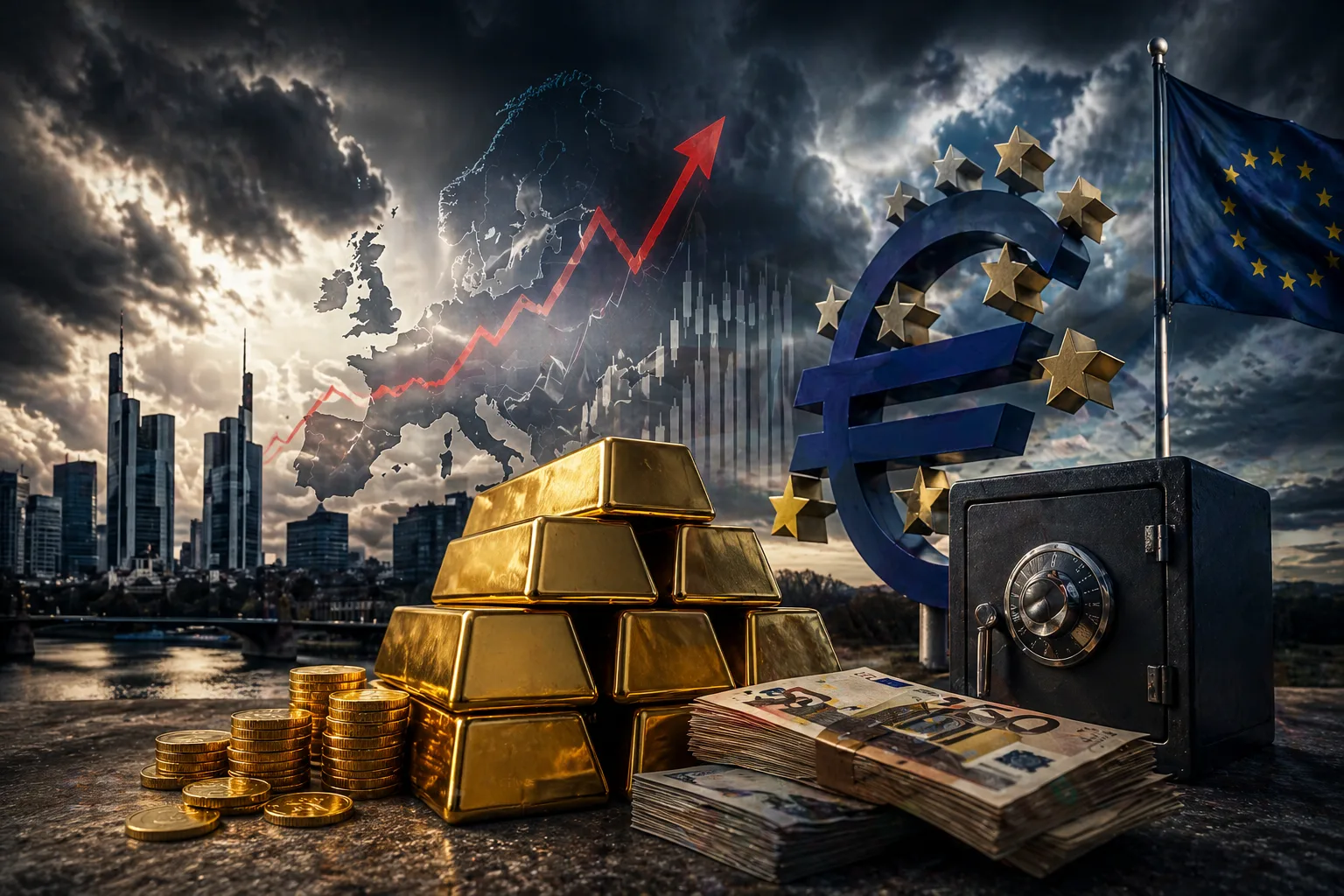
Europe is dealing with a fresh wave of inflation, and global investors are paying close attention. After months of cautious optimism that price growth was finally cooling, the latest data shows inflation across several European economies moving higher again. That shift is creating a new mood in the market. Confidence is getting replaced by caution, and risk appetite is starting to fade. As a result, investors are moving capital into traditional safe haven assets like gold, government bonds, the US dollar, and defensive sectors.
The return of inflation is not just another economic headline. It matters because inflation influences almost every major financial decision. It impacts interest rates, stock valuations, consumer spending, business margins, housing demand, and currency strength. When inflation rises faster than expected, markets often reprice quickly. That is exactly what is happening now across Europe.
For traders, portfolio managers, and everyday investors, the question is simple: is this a temporary spike, or the beginning of a larger macro shift? If inflation remains sticky, central banks may need to keep rates higher for longer. If growth slows at the same time, Europe could face a difficult combination of weak expansion and elevated prices. That is why capital is rotating into safer assets now.
Why Europe Inflation Is Rising Again
Several forces are driving the latest inflation rebound in Europe. The biggest factor is energy. Europe remains sensitive to oil and gas price movements, especially after years of geopolitical supply disruptions. When crude oil rises or transport costs increase, that pressure quickly moves through supply chains. Consumers feel it through fuel, utilities, food delivery, airline tickets, and retail pricing.
Food inflation is also proving stubborn. Even if headline numbers cool in some months, grocery costs remain elevated in many countries. Agricultural inputs, logistics costs, weather disruptions, and wage pressure are keeping food prices from normalizing quickly. For households already stretched by rent and mortgage payments, that adds stress.
Services inflation is another problem. This category includes hotels, restaurants, travel, healthcare, entertainment, and personal services. Because wages are a major cost in services, inflation can stay sticky when labor markets remain tight. Even if energy cools, services can keep the broader inflation trend alive.
Europe is also dealing with fragmented growth conditions. Some countries are stabilizing, while others remain sluggish. That makes policy responses harder. A one-size-fits-all interest rate approach can help one economy while hurting another.
Why Investors Are Searching for Safe Havens
Whenever inflation rises unexpectedly, uncertainty rises with it. Markets dislike uncertainty more than almost anything else. Investors begin asking hard questions. Will the European Central Bank stay hawkish? Will consumer spending slow? Will company profits shrink? Will recession risk return?
That uncertainty pushes money into safe haven investments. These assets are considered relatively stable during volatile periods. They may not always deliver explosive returns, but they are valued for preserving capital when markets become unstable.
Common safe havens include:
1. Gold
Gold remains one of the most trusted inflation hedges in the world. When fiat currencies weaken in purchasing power, gold often benefits. It also attracts buyers during geopolitical stress and central bank uncertainty.
2. Government Bonds
High-quality sovereign bonds, especially US Treasuries and some core European debt, can gain demand when investors reduce risk exposure. If growth weakens later, bonds may also benefit from future rate cut expectations.
3. US Dollar
The dollar often strengthens during global stress events because it remains the dominant reserve currency. Even when inflation is a US issue too, global investors frequently move into dollars during uncertain times.
4. Defensive Stocks
Utilities, healthcare, consumer staples, and some dividend-paying sectors often perform better than speculative growth names during inflation-driven volatility.
ECB Pressure Is Growing
The European Central Bank now faces a difficult balancing act. If inflation rises too much, it may need to keep monetary policy tighter for longer. That usually means maintaining elevated interest rates or delaying cuts markets were expecting.
Higher rates can help cool inflation by reducing borrowing demand and slowing spending. But they also increase financing costs for households and businesses. Mortgages stay expensive. Credit demand weakens. Corporate expansion slows. Real estate activity softens.
That creates a policy trap. If the ECB acts too aggressively, growth may weaken sharply. If it acts too softly, inflation could become embedded again. Markets are now reacting to this uncertainty in real time.
Bond yields, currency pairs, and equity indexes all move based on changing expectations around what the ECB may do next. One inflation print can reshape rate forecasts instantly.
How Stocks React to Rising Inflation
Equity markets usually become selective when inflation rises. Not every company suffers equally. Some businesses can pass higher costs to customers. Others cannot.
Companies that often struggle include:
- Retailers with thin margins
- Consumer discretionary brands
- Highly leveraged growth companies
- Real estate firms dependent on cheap financing
- Small caps with weak pricing power
Companies that may hold up better include:
- Energy producers
- Commodity-linked businesses
- Utilities
- Healthcare leaders
- Premium brands with pricing power
- Large dividend payers
This is why indexes can look mixed even during inflation scares. Money exits weaker sectors and rotates into stronger ones rather than leaving equities completely.
European Consumers Are Feeling the Heat
Inflation is not only a market issue. It is a lifestyle issue. When prices rise faster than wages, purchasing power falls. Consumers buy less, delay upgrades, reduce travel, and trade down to cheaper alternatives.
That behavior matters because consumption is a major driver of economic activity. If households become cautious, business revenues can slow across multiple industries.
We are already seeing shifts in behavior across Europe:
- More price comparison shopping
- Increased private-label grocery demand
- Slower restaurant spending
- Delayed home purchases
- Preference for savings over discretionary spending
- Lower appetite for large financed purchases
When consumers turn defensive, markets notice quickly.
Why Gold Is Back in Focus
One of the biggest winners in inflation headlines is usually gold. Investors view gold as protection against currency erosion and policy uncertainty. If real interest rates fall or markets expect future instability, demand often rises.
Gold also benefits psychologically. It has centuries of reputation as a store of value. In modern digital markets full of leverage and rapid sentiment shifts, that reputation still matters.
Institutional buyers, central banks, and retail investors often increase exposure during inflation spikes. Even if gold can be volatile short term, it remains a key symbol of defensive positioning.
Currency Markets Are Turning More Volatile
The euro can face pressure when inflation rises in a weak-growth environment. If markets believe the ECB cannot raise rates enough without harming growth, confidence may soften. On the other hand, if the ECB becomes aggressively hawkish, the euro may strengthen temporarily.
That means currency direction is not simple. It depends on whether markets focus more on inflation risk or growth risk.
Pairs to watch include:
- EUR/USD
- EUR/GBP
- EUR/CHF
- EUR/JPY
Safe haven currencies like the Swiss franc often gain attention during European uncertainty.
Could Europe Face Stagflation Risk?
One of the most feared macro scenarios is stagflation. That means slow economic growth combined with persistent inflation. It is difficult to solve because tools that fight inflation can hurt growth, while tools that stimulate growth can worsen inflation.
Europe is not officially in stagflation, but investors are discussing the risk again. If inflation stays elevated while industrial output weakens and consumers pull back, concern could rise sharply.
Markets price future risk before economists officially label it. That is why asset rotation into safe havens often starts early.
What Smart Investors Are Doing Now
Professional investors are not simply panicking. They are adjusting exposures. Typical moves during inflation uncertainty include:
1. Reducing Overvalued Growth Names
Stocks priced for perfect conditions become vulnerable when rates stay high.
2. Increasing Cash Positions
Cash provides optionality. It allows investors to wait and deploy later.
3. Adding Commodities
Energy, metals, and resource exposure can hedge inflation risk.
4. Owning Quality Dividend Stocks
Stable cash-generating companies become more attractive.
5. Diversifying Globally
If Europe slows, opportunities may appear elsewhere.
Retail Investors Need Strategy, Not Fear
For everyday investors, inflation headlines can trigger emotional decisions. Selling everything after a scary headline often leads to poor timing. Instead, the better approach is structured portfolio management.
That may include:
- Reviewing sector concentration
- Checking debt-heavy holdings
- Maintaining emergency savings
- Averaging into quality assets gradually
- Avoiding leverage during volatility
- Staying diversified across asset classes
Inflation cycles can last longer than people expect. Patience matters more than dramatic moves.
What to Watch Next
The next few months will be critical. Markets will track several indicators closely:
- Monthly CPI inflation data
- Core inflation trends
- ECB speeches and policy meetings
- Wage growth reports
- Energy prices
- Consumer confidence surveys
- GDP growth data
- Manufacturing PMIs
If inflation cools again, risk assets may rebound strongly. If it accelerates, safe havens may continue attracting flows.
Why This Story Matters Globally
Europe is one of the world’s largest economic blocs. What happens there affects global bond markets, commodities, currencies, tourism, luxury goods, and multinational earnings.
US investors watch Europe because it influences global sentiment. Asian markets watch Europe because trade demand matters. Emerging markets watch Europe because capital flows can shift rapidly.
That means Europe inflation rises is not a local story. It is a worldwide market signal.
Gen Z Perspective: Money Is Getting Real Again
For younger investors, this moment feels different. The era of easy money and nonstop speculative rallies is fading. Now markets care about fundamentals again: inflation, rates, margins, debt, earnings, and policy credibility.
That is actually healthy long term. It rewards research over hype and discipline over impulse. The new investing era may be less flashy, but it can create smarter habits.
Instead of chasing random momentum, more investors are learning macro trends, portfolio balance, and risk management. That shift may be one of the best outcomes from a tougher market environment.
Final Verdict
Europe’s latest inflation rise has changed the tone across financial markets. Investors are rotating into safe haven assets because uncertainty around rates, growth, and purchasing power is increasing. Gold, bonds, defensive sectors, and the US dollar are gaining fresh attention as markets reassess risk.
Whether this becomes a short-term flare-up or a deeper macro challenge depends on incoming data and central bank responses. But one thing is clear: inflation is back at the center of the conversation.
For investors, the winning move now is not panic. It is preparation. In a market driven by inflation headlines, discipline becomes the real safe haven.