
Bitcoin Price Drop Deepens as U.S.-Iran Tensions Rise
 Vortixel
16 minutes read
Vortixel
16 minutes read
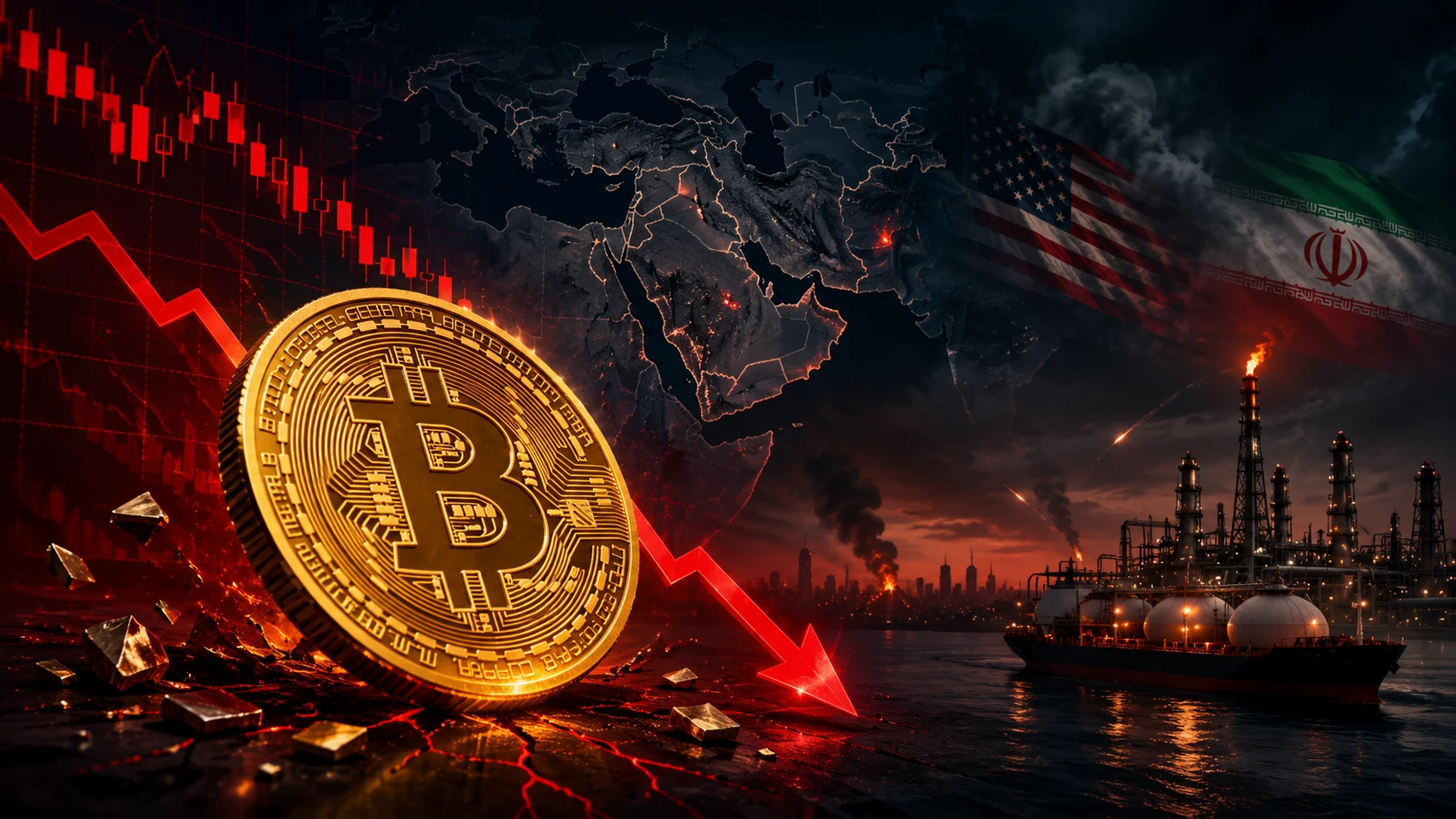
The latest Bitcoin price drop arrived with the kind of speed that reminds traders how quickly geopolitics can rewrite the mood of a market. Bitcoin slipped as renewed military tension between the United States and Iran pushed investors away from riskier assets and back toward defensive positions. The decline was not isolated to crypto, as global stocks weakened, oil prices climbed, and demand for the U.S. dollar increased. For anyone watching the market from a quiet screen, the move may have looked like another red candle, but behind it was a much larger story involving energy security, inflation, interest rates, and global capital flows. Bitcoin was once again being tested not only as a digital asset, but also as a supposed alternative financial system during a moment of international stress.
The immediate market reaction followed renewed exchanges of military action and growing concern that an earlier pause in hostilities could collapse. Traders began pricing in the possibility that shipping routes, oil exports, and regional infrastructure could face further disruption. That possibility matters because the Middle East remains deeply connected to the global energy system, especially through the Strait of Hormuz. Any credible threat to the movement of oil through that corridor can rapidly lift crude prices and reshape expectations for inflation. Once those expectations move, nearly every major asset class, including Bitcoin, is forced to respond.
Why the Bitcoin Price Drop Happened So Quickly
The Bitcoin price drop was driven first by a familiar market instinct: reduce exposure before the full consequences of an uncertain event become clear. During sudden geopolitical escalations, investors often sell assets with high volatility because those positions can become difficult to manage if markets move sharply overnight. Bitcoin trades continuously, unlike traditional stock exchanges that close for several hours each day, so it frequently becomes one of the first places where fear appears. Crypto holders can react immediately to headlines, military announcements, and changes in commodity prices. This around-the-clock structure makes Bitcoin highly liquid, but it also turns the asset into a real-time emotional scoreboard for global risk.
Bitcoin’s decline also reflected its continuing relationship with technology stocks and other growth-sensitive investments. Although crypto supporters often describe Bitcoin as independent from traditional finance, its short-term price behavior still tends to resemble that of a high-beta risk asset. When investors become optimistic, they may buy Bitcoin alongside semiconductor shares, software companies, and speculative equities. When fear enters the market, many of those same positions are reduced together. The result is that Bitcoin can fall even when the original crisis has little direct connection to blockchain technology.
Leverage made the movement more intense because many crypto traders use borrowed funds to increase the size of their positions. A moderate decline can force leveraged long positions to close automatically when account collateral falls below required levels. Those liquidations create additional market sell orders, which can push prices lower and trigger another wave of forced exits. This chain reaction often makes a geopolitical sell-off appear more dramatic in crypto than in less leveraged markets. The first downward move may come from caution, but the next stage is frequently powered by market mechanics rather than fresh information.
Oil Became the Center of the Global Market Story
Oil prices were central to the market response because renewed conflict raised fears about supply disruptions in one of the world’s most important energy regions. Crude moved higher as traders considered the risk of attacks on vessels, export restrictions, damaged facilities, or reduced traffic through the Strait of Hormuz. Even when physical supply has not yet fallen, oil markets can add a geopolitical premium to reflect the possibility of future disruption. That premium raises costs for transportation, manufacturing, agriculture, and electricity generation across multiple economies. Higher energy prices then spread through the financial system, influencing currencies, bonds, corporate earnings, and household spending.
For Bitcoin, the oil surge created a complicated chain of negative signals rather than one simple cause. More expensive crude can revive inflation just as central banks are trying to keep price growth under control. If inflation remains high, policymakers have less room to cut interest rates and may even consider tighter monetary conditions. Higher rates make government bonds and cash-based instruments more attractive compared with assets that do not generate predictable income. Bitcoin therefore faces pressure when an oil shock causes investors to expect that money will remain expensive for longer.
The connection between oil and crypto may feel indirect, but modern markets are tied together through liquidity and expectations. A portfolio manager who expects rising inflation may reduce exposure to speculative assets, increase cash, buy energy shares, or adjust bond holdings. A hedge fund may close crypto positions to cover losses elsewhere or to lower the overall risk of its portfolio. Retail traders may respond to the same headlines by moving funds into stablecoins instead of holding volatile tokens. These separate decisions combine into a broader shift away from risk, which can deepen a Bitcoin decline without any change to the Bitcoin network itself.
Bitcoin Still Struggles to Act Like Digital Gold
The sell-off reopened a debate that has followed Bitcoin for years: whether it is truly a safe-haven asset. Supporters often call it digital gold because its total supply is limited, its issuance follows a predictable schedule, and no central bank can create additional Bitcoin during a crisis. Those characteristics make it fundamentally different from government-issued currencies. However, a scarce supply does not automatically guarantee that investors will buy an asset during every moment of fear. Safe-haven status is built through repeated market behavior, deep liquidity, institutional trust, and a long history of holding value during extreme events.
Gold has spent centuries developing that reputation, while Bitcoin remains a relatively young global asset. During a sudden crisis, large investors usually prioritize the ability to protect capital over the possibility of earning a large future return. They may choose the dollar, short-term government debt, or other established instruments because those markets have clear legal structures and enormous liquidity. Bitcoin can still benefit later if the crisis leads to currency debasement, financial restrictions, or declining confidence in institutions. In the first hours of panic, however, it often trades like a volatile technology investment rather than a defensive reserve.
This does not mean the digital-gold thesis has failed completely, because Bitcoin can play different roles across different time horizons. Its immediate reaction to a military escalation may be negative, while its longer-term reaction to expanding government debt or monetary instability could be positive. Investors sometimes sell what they can sell quickly during the initial stage of a crisis, including assets they still believe in over the long run. Bitcoin’s global liquidity makes it useful for raising cash at any hour, which can paradoxically increase selling pressure when other markets are unavailable. The important distinction is between Bitcoin as an emergency haven today and Bitcoin as a hedge against structural monetary risk over several years.
The Dollar and Interest Rates Added More Pressure
The U.S. dollar strengthened as investors responded to the renewed conflict, creating another challenge for Bitcoin and the wider crypto market. Bitcoin is commonly priced in dollars, so a stronger dollar can make the asset more expensive for buyers using other currencies. Dollar strength also signals that global investors are seeking liquidity in the world’s dominant reserve currency. When that demand rises, capital often leaves emerging markets, commodities, and speculative investments. Bitcoin can struggle in this environment because the market is being pulled toward the same currency that it was designed to offer an alternative to.
Bond yields and expectations for future interest-rate policy were equally important. If higher oil prices threaten to increase inflation, central banks may need to delay rate cuts or maintain restrictive policy longer than investors previously expected. That scenario reduces the amount of cheap capital available for speculative trading and makes yield-producing assets more competitive. Crypto markets performed strongly during previous periods of abundant liquidity because investors were more willing to take risk in search of returns. A return to inflation anxiety can reverse that behavior, especially when geopolitical uncertainty is already making investors cautious.
The combination of a stronger dollar, higher oil prices, and tighter rate expectations creates a difficult macroeconomic setup for Bitcoin. Each factor can place pressure on crypto independently, but together they encourage a broad defensive shift across portfolios. Traders are no longer asking only whether Bitcoin adoption is growing or whether blockchain activity remains strong. They are also asking whether the global economy can absorb another energy shock without renewed inflation. That broader question can dominate price action even when developments inside the crypto industry remain constructive.
Altcoins Faced an Even Harder Sell-Off
Bitcoin was not the only digital asset affected, as major altcoins also moved lower during the risk-off response. Assets such as Ether and Solana generally carry more volatility than Bitcoin because they have smaller market values, different token structures, and more exposure to speculative activity. When traders become defensive, they often reduce altcoin positions before selling their core Bitcoin holdings. This behavior causes Bitcoin’s share of the total crypto market to rise even while its own dollar price is falling. The pattern shows that investors may still view Bitcoin as the strongest part of crypto, even when they do not consider it a true safe haven.
Smaller tokens can experience sharper declines because their order books are thinner and their investor bases are less stable. A relatively modest amount of selling can move their prices more dramatically than it would move Bitcoin. Many altcoins are also connected to decentralized finance platforms where collateral values, lending positions, and automated liquidations interact. As token prices decline, borrowers may need to add collateral or repay loans, creating additional pressure. A geopolitical shock can therefore travel through crypto’s internal financial system and become larger than the original headline might suggest.
Stablecoin activity can offer useful clues during these periods because traders often move into dollar-linked tokens rather than withdrawing completely from crypto platforms. Rising stablecoin balances may indicate that investors are waiting for a better entry point instead of abandoning the market. Large transfers to exchanges, meanwhile, can signal that holders are preparing to sell or use funds as collateral. None of these indicators provides certainty on its own, but together they help reveal whether fear is temporary or becoming more deeply established. Watching capital movement is often more informative than reacting to one dramatic price candle.
Institutional Participation Changed the Reaction
Bitcoin’s market structure is more institutional than it was during earlier geopolitical crises. Spot exchange-traded products, regulated futures, corporate treasury holdings, and professional custody services have made the asset easier for traditional investors to access. This expansion provides deeper liquidity and stronger long-term demand, but it also connects Bitcoin more closely to conventional portfolio decisions. When an institution reduces risk across stocks, commodities, and alternative assets, Bitcoin may be included in the same trade. Greater legitimacy has brought more capital into crypto, yet it has also exposed the market to the same global forces that shape Wall Street.
Fund flows are therefore worth monitoring after the initial decline. Consistent withdrawals from Bitcoin investment products could suggest that institutional investors expect prolonged instability or tighter financial conditions. Stable or recovering inflows would indicate that larger buyers see the lower price as an opportunity rather than the beginning of a structural breakdown. Daily flow numbers can be noisy, especially during a fast-moving news cycle, so several sessions matter more than one isolated result. The behavior of long-term capital will help determine whether the sell-off remains a short-term shock or develops into a broader trend.
Corporate Bitcoin holders create another layer of market attention because investors may worry about balance-sheet losses when the price declines. Companies with significant digital-asset exposure can see their shares fall faster than Bitcoin due to concerns about debt, financing costs, or future purchases. Crypto exchanges and trading platforms may also weaken because lower asset prices can reduce customer activity and transaction revenue. These companies act as a bridge between the crypto market and the stock market, transmitting fear in both directions. The result is a connected ecosystem in which Bitcoin, crypto equities, and technology shares can reinforce one another during a sell-off.
Key Market Levels Matter, but Context Matters More
Technical traders will naturally focus on nearby support levels, recent lows, trading volume, and Bitcoin’s ability to recover after the first wave of selling. A strong rebound above a broken level can show that buyers remain willing to absorb panic-driven supply. Continued weakness with heavy volume may suggest that the market is still reducing leverage and searching for a more stable base. Moving averages and momentum indicators can help organize the price action, but they cannot predict the next military or diplomatic announcement. In a headline-driven market, technical analysis works best when combined with an understanding of the event risk behind each move.
Volatility is another important signal because rising options prices can reveal how much uncertainty traders expect in the coming days. When demand for downside protection increases, it often shows that professional participants are preparing for larger moves. The balance between bearish puts and bullish calls can provide insight into positioning, although it should not be treated as a guaranteed forecast. Funding rates in perpetual futures also deserve attention because extremely negative readings may indicate crowded bearish bets. If the political situation stabilizes unexpectedly, those bearish positions can unwind quickly and produce a sharp recovery.
Trading volume should also be examined across both spot and derivatives markets. A price decline on limited volume can reflect temporary caution, while sustained selling across major exchanges may indicate a deeper shift in investor behavior. Exchange reserves, long-term holder activity, and realized losses can help show which groups are selling. Investors should avoid drawing conclusions from a single data point because crypto information is fragmented across multiple venues. The strongest analysis comes from combining price structure, derivatives positioning, blockchain activity, and the macroeconomic environment.
What Could Happen Next for Bitcoin
The first possible scenario is a limited escalation followed by renewed diplomacy, which would likely reduce the geopolitical premium in oil and improve risk appetite. Under that outcome, Bitcoin could recover as traders reverse defensive positions and return to assets with higher growth potential. A decline in crude prices would ease inflation concerns and reduce pressure on interest-rate expectations. Short sellers might then close positions, adding momentum to any rebound. This scenario would not erase broader market risks, but it could turn the latest sell-off into another temporary shock.
A second scenario involves prolonged tension without a major disruption to global energy supply. Bitcoin could remain volatile in a broad range as investors respond to each new military, diplomatic, or economic development. Oil prices might stay elevated enough to influence inflation expectations without reaching levels that cause a severe global slowdown. In that environment, macroeconomic data and central-bank communication would become especially important. Bitcoin would likely continue moving between its identity as a scarce long-term asset and its short-term behavior as a leveraged risk trade.
The most bearish scenario would involve a serious interruption to oil shipping or a wider regional conflict. A large energy shock could lift consumer prices, weaken economic growth, and force central banks into an uncomfortable choice between inflation control and financial stability. Investors could rush into cash and highly liquid government securities, placing further pressure on Bitcoin and other speculative markets. Crypto leverage would likely unwind more aggressively, especially if key technical support levels failed. Even in that case, the longer-term response would depend on whether governments answered the crisis with tighter policy, emergency spending, or renewed monetary expansion.
Practical Lessons for Crypto Investors
The latest decline offers a reminder that position size matters more than confidence when markets become unpredictable. An investor can believe strongly in Bitcoin’s long-term future and still suffer unnecessary losses by using too much leverage or committing funds needed for near-term expenses. Geopolitical events can develop while traditional markets are closed, leaving crypto positions exposed to rapid overnight changes. Maintaining cash reserves and avoiding forced decisions can be more valuable than trying to predict every headline. A portfolio designed to survive uncertainty has a better chance of benefiting when conditions eventually improve.
Investors should also separate their time horizons before reacting to the crypto market volatility. A short-term trader may need strict exit levels because the goal is to control risk during rapid price movement. A long-term investor may focus instead on allocation size, custody security, recurring purchases, and the fundamental case for holding Bitcoin. Mixing these approaches often creates confusion, such as buying for the long term but selling emotionally after a short-term decline. A written strategy can reduce the temptation to change plans every time international news becomes alarming.
Diversification remains useful even for investors who view Bitcoin as their highest-conviction asset. Holding a mixture of cash, productive businesses, bonds, commodities, and digital assets can reduce dependence on one market outcome. Diversification does not guarantee profit, and correlations often rise during panic, but it can make a portfolio more resilient. Investors can follow broader developments through the Crypto Market section while comparing Bitcoin’s movement with oil, stocks, bonds, and currencies. Understanding those relationships is increasingly necessary because crypto no longer trades in isolation from the global financial system.
Security should not be ignored during periods of elevated market stress because scammers often exploit fear and urgency. Fake breaking-news accounts, fraudulent token launches, phishing links, and impersonated exchange messages can spread quickly when traders are searching for updates. Investors should verify announcements through official channels and avoid connecting wallets to unfamiliar websites. Hardware-wallet users should confirm transaction details carefully rather than rushing to move funds during volatile conditions. Protecting capital includes both managing market risk and preventing avoidable operational losses.
A Bigger Test of Bitcoin’s Place in Global Finance
The current episode reveals how far Bitcoin has traveled from its early years as a niche experiment discussed mostly by developers and libertarian communities. Its price is now influenced by oil shipping routes, central-bank policy, institutional portfolio flows, corporate balance sheets, and military developments. That integration gives Bitcoin greater relevance, but it also means the asset cannot escape the pressures affecting the rest of the financial world. The market increasingly treats Bitcoin as part of the global liquidity system rather than a separate universe. Its future performance will depend on both blockchain fundamentals and the economic environment surrounding them.
At the same time, Bitcoin continues to offer features that distinguish it from stocks, bonds, and national currencies. The network operates across borders, settlement remains available around the clock, and monetary issuance is governed by code rather than discretionary policy. Those characteristics may become more valuable if geopolitical fragmentation leads to capital controls, payment restrictions, or declining trust between governments. However, unique technology does not eliminate volatility or guarantee immediate demand during a crisis. Bitcoin can be structurally different from traditional assets while still responding to the same human emotions of fear, greed, and uncertainty.
The market will now watch whether diplomatic efforts return, whether oil transportation remains secure, and whether inflation expectations continue to rise. Traders will also follow the dollar, bond yields, institutional fund flows, and leveraged positioning across major crypto exchanges. A stabilization in those indicators could help Bitcoin build a base, while further escalation would likely keep risk appetite fragile. No single headline will permanently define Bitcoin’s role, because that identity is being formed through many cycles of panic and recovery. Each crisis adds another chapter to the question of whether Bitcoin will ultimately behave as digital gold, a technology asset, an alternative currency, or some combination of all three.
Conclusion: Bitcoin Faces Another Global Stress Test
The latest Bitcoin price drop was more than a reaction to frightening headlines from the Middle East. It reflected a chain of market forces that began with geopolitical risk, moved through oil prices and inflation expectations, and reached crypto through the dollar, interest rates, leverage, and investor sentiment. Bitcoin’s decline showed that the asset still behaves like a risk-sensitive investment during the first stage of global panic, even as its supporters continue to build a longer-term case for monetary independence. The next move will depend not only on charts or blockchain activity, but also on diplomacy, energy security, and the direction of global liquidity. For investors, the clearest lesson is not to predict every turn of the conflict, but to build a strategy capable of surviving uncertainty without losing sight of long-term goals.