
Weakening U.S. Dollar Faces Iran Tension Test
 Vortixel
16 minutes read
Vortixel
16 minutes read
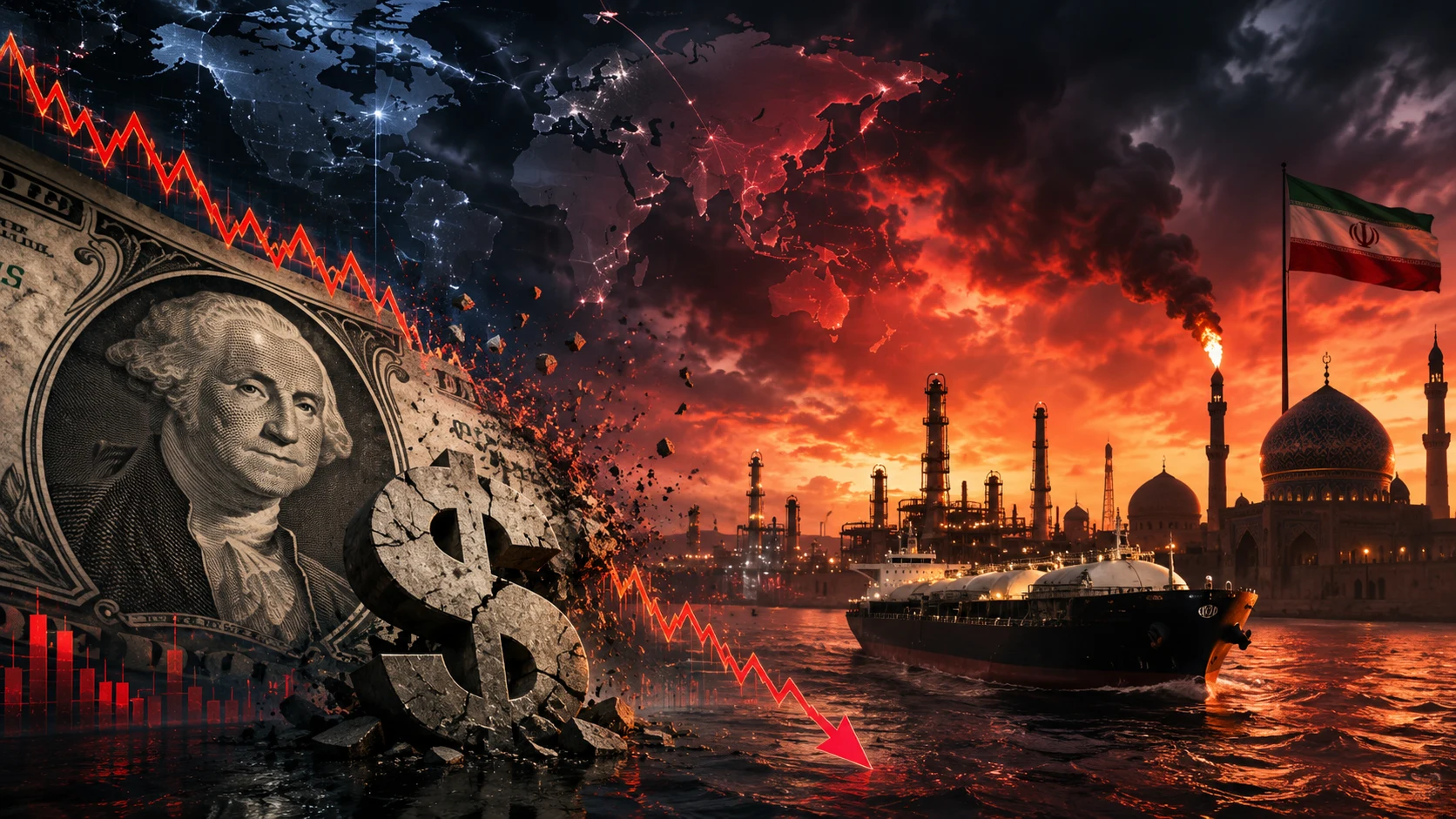
The weakening U.S. dollar is becoming one of the most important market stories as tension around Iran heats up and traders try to understand what comes next. At first glance, the move may look simple: investors get nervous, oil reacts, currencies shift, and everyone watches the Federal Reserve more closely. But the real story is more layered than that, because the dollar is not just another asset on a trading screen. It is the world’s main reserve currency, the default safety valve in global stress, and the pricing backbone for oil, gold, debt, and cross-border trade. When the dollar starts losing momentum during a geopolitical shock, it tells investors that the market is not only scared of conflict, but also uncertain about America’s inflation path, rate outlook, and economic staying power.
This is why the latest pressure on the greenback feels different from a normal currency dip. Middle East tension has pushed energy risk back into the spotlight, yet the dollar has not enjoyed the kind of clean safe-haven rally that many traders might expect during a crisis. Instead, the market is juggling two competing ideas at the same time: geopolitical fear may support the dollar in the short run, while higher oil prices and policy confusion may weaken confidence in the broader U.S. outlook. That tension creates a messy but fascinating setup for global markets. For readers following weakening U.S. dollar trends, this moment is less about one daily move and more about how money behaves when uncertainty stops being theoretical.
Why the Weakening U.S. Dollar Matters Now
The dollar matters because it sits at the center of almost every major market conversation. Oil is priced in dollars, many emerging-market debts are paid in dollars, and global investors often use the dollar as a shelter when the world gets noisy. So when the dollar weakens while Iran-related tension rises, investors have to ask whether the traditional playbook is changing. A stronger dollar usually signals demand for liquidity and safety, especially when geopolitical risk climbs. A softer dollar, on the other hand, may suggest that traders are looking past the immediate shock and focusing more on inflation, Federal Reserve uncertainty, fiscal concerns, or better opportunities outside the United States.
The current market mood reflects that kind of split thinking. Oil prices have been sensitive to headlines because any disruption around the Persian Gulf can quickly trigger fears about shipping, supply, and energy security. At the same time, investors are watching whether energy inflation could complicate the Fed’s next steps. If oil stays high, inflation expectations may rise, and the central bank could face more pressure to keep policy tight for longer. But if tighter policy damages growth or makes investors nervous about the U.S. economy, the dollar can still struggle despite the possibility of higher rates.
That is the uncomfortable part of this market setup. The dollar can rise when rates go up, but only if investors believe those rates are attached to a strong and credible economy. If higher rates begin to look like a defensive reaction to inflation pressure rather than a sign of strength, the story changes. Traders may start buying gold, rotating into other currencies, or reducing exposure to dollar-sensitive assets. This is why a weakening U.S. dollar during geopolitical stress deserves attention, especially from investors who track commodities, crypto, and global stocks.
Iran Tension Puts Oil Back in the Driver’s Seat
Iran matters to markets because the country sits near one of the most important energy corridors on the planet. Any escalation that raises doubts about oil flows can immediately affect crude prices, shipping costs, inflation expectations, and consumer confidence. Even if physical supply is not disrupted, markets often price risk before the real-world impact becomes visible. That means oil can jump simply because traders fear what could happen next. Once oil starts moving sharply, the currency market has to adjust because energy prices influence trade balances, inflation, central-bank policy, and risk appetite.
For the United States, higher oil prices can create a tricky macro mix. America is a major energy producer, but consumers and businesses still feel the pressure when gasoline, diesel, transportation, and input costs rise. If energy inflation moves higher, households may spend less on other goods, companies may protect margins, and investors may become more cautious about future earnings. This can weaken the growth narrative behind U.S. assets. A dollar that might normally benefit from crisis demand can therefore face resistance if the oil shock looks like a tax on growth.
The oil-dollar relationship is not always linear, but it is powerful. A strong dollar can make commodities more expensive for buyers using other currencies, which may cool demand. A weaker dollar can support commodity prices because dollar-priced assets become cheaper for non-dollar buyers. In a tense Iran environment, this feedback loop can become even more intense. If oil rises while the dollar falls, the market may interpret the move as a sign that inflation anxiety and geopolitical risk are feeding each other.
The Federal Reserve Is Still the Main Character
Even with geopolitics dominating headlines, the Federal Reserve remains central to the dollar story. Currency traders care deeply about interest-rate expectations because yield is one of the main reasons investors hold a currency. When markets think the Fed will raise rates or keep them elevated, the dollar often finds support. But the reaction depends on why those rates are expected to stay high. If rates are high because the economy is strong, that can be dollar-positive, while rates that stay high because inflation is sticky and growth is fragile can create a more complicated reaction.
The Fed is also dealing with a communication challenge. Officials need to show that they are serious about inflation without making markets believe they are willing to over-tighten into a slowdown. That balance becomes harder when oil prices are volatile because energy shocks can lift headline inflation even when underlying demand is not overheating. If the Fed sounds too hawkish, stocks may wobble and recession worries may return. If the Fed sounds too relaxed, inflation expectations may drift higher and weaken confidence in the dollar’s purchasing power.
This is where the weakening U.S. dollar becomes a signal rather than just a price move. It reflects a market that is no longer convinced there is one easy policy path ahead. Traders are looking for clues in bond yields, oil charts, labor data, inflation prints, and Fed commentary. They are also watching whether foreign central banks look more credible, more flexible, or better positioned than the Fed. In that sense, the dollar’s softness is not only about Iran; it is about the credibility battle between inflation control and economic resilience.
Gold and Commodities Feel the Currency Shift
When the dollar weakens, commodities usually become more interesting. Gold often gets the first wave of attention because it has no central bank, no earnings report, and no default risk. In times of geopolitical stress, investors may see gold as a store of value that sits outside the political system. A weaker dollar can add fuel to that move because gold becomes more attractive to buyers using other currencies. This is why gold often becomes a headline asset when the market feels uncertain about both geopolitics and monetary policy.
Oil is more complicated because it is driven by both supply risk and demand expectations. Iran tension can support crude prices by raising fears about disruption, but a weaker global growth outlook can pull in the opposite direction. If traders believe conflict will be contained, oil may cool even if headlines remain tense. If they believe shipping routes or regional energy infrastructure could face pressure, crude can move higher quickly. This tug-of-war makes energy one of the hardest markets to read during a currency shift.
Industrial commodities such as copper also deserve attention because they sit between growth expectations and currency effects. A weaker dollar can support copper prices, but only if investors still believe global demand is healthy. If geopolitical risk damages confidence, industrial metals may not benefit as much as gold. Agricultural commodities can also move because currency shifts affect export competitiveness and global purchasing power. For Market Vortixel readers browsing commodities, the key is to separate safe-haven buying from real demand strength.
Stocks Are Reading the Dollar in Two Ways
For the stock market, a weaker dollar can be both helpful and worrying. It can help large U.S. companies that earn revenue overseas because foreign sales translate into more dollars when the greenback falls. This is especially relevant for multinational technology, industrial, and consumer brands with global customer bases. A softer dollar can also improve risk appetite if investors see it as a sign that financial conditions are easing. In that version of the story, equities can hold up even while the currency market looks unstable.
But the bearish interpretation is also easy to understand. If the dollar is weakening because investors are losing confidence in the U.S. macro outlook, then stocks may not enjoy the move for long. Higher oil prices can pressure margins, cautious consumers can slow revenue growth, and sticky inflation can keep valuations under pressure. The problem becomes especially clear for sectors that depend on stable input costs. Airlines, logistics companies, manufacturers, and retailers can all feel the squeeze if energy costs rise while demand softens.
Technology stocks add another layer to the story. Mega-cap tech can benefit from global revenue exposure and strong balance sheets, but high valuations are sensitive to interest-rate expectations. If geopolitical stress pushes bond yields around, growth-stock multiples can become volatile. Investors may still buy AI and chip names because the long-term narrative remains powerful, yet the broader market can become more selective. That means the dollar’s weakness may not lift every stock equally, even if headline indexes remain resilient.
Crypto Watches the Dollar for Liquidity Clues
Crypto investors often watch the dollar because digital assets are deeply connected to global liquidity. When the dollar weakens and financial conditions feel easier, Bitcoin and other major crypto assets can attract more attention. The logic is simple: a softer dollar may push investors toward scarce, alternative, or higher-beta assets. Bitcoin, in particular, is often framed as a hedge against currency debasement, even though it can still behave like a risk asset during market stress. That dual identity makes crypto highly sensitive to moments like this.
However, geopolitical tension does not automatically create a clean bullish setup for crypto. If investors become nervous enough, they may sell risky assets first and ask questions later. Crypto markets can also face liquidity shocks when volatility rises across stocks, bonds, and commodities at the same time. A weaker dollar can help the long-term narrative, but short-term price action may still be choppy. This is why crypto traders should avoid treating every dollar decline as an automatic buy signal.
The more useful signal is whether the dollar’s weakness comes with improving liquidity, falling real yields, and stronger risk appetite. If those ingredients appear together, crypto can benefit from a broader rotation into alternative assets. If the dollar weakens because of concern about U.S. credibility, inflation risk, or geopolitical instability, the reaction may be more uneven. Bitcoin may attract safe-haven-style narratives, while smaller tokens may struggle if traders reduce risk. In other words, crypto needs the right kind of dollar weakness to build a durable rally.
Emerging Markets Could Get a Short-Term Break
A weakening U.S. dollar can offer relief to emerging markets because many countries and companies borrow in dollars. When the dollar rises, those debts become more expensive to service in local currency terms. When the dollar falls, financial pressure can ease, capital flows can improve, and local assets may look more attractive. This can help emerging-market bonds, equities, and currencies, especially in countries with credible central banks and manageable inflation. The effect is not guaranteed, but the direction matters.
Iran tension complicates that benefit because higher oil prices can hurt energy importers. Countries that rely heavily on imported fuel may face current-account pressure even if the dollar softens. Their currencies can still struggle if the oil bill rises faster than the dollar declines. On the other hand, energy exporters may benefit from higher crude prices and improved revenue outlooks. This creates a split emerging-market landscape where currency performance depends heavily on each country’s energy exposure.
Investors should also watch central-bank behavior in emerging markets. Some policymakers may use a softer dollar to rebuild reserves, stabilize currencies, or reduce the need for aggressive intervention. Others may remain cautious because imported inflation can return quickly if oil keeps rising. The countries that manage this balance well may attract capital while weaker economies remain under pressure. That is why the dollar move should be read alongside oil prices, inflation data, and local policy credibility.
What This Means for Everyday Investors
For everyday investors, the main lesson is that currency moves are not background noise. The dollar can influence stock earnings, commodity prices, crypto sentiment, travel costs, import prices, and global fund flows. When the dollar weakens during a geopolitical shock, it is worth slowing down and asking what the market is really pricing. Is this about lower confidence in the U.S. economy, a temporary correction after a strong run, or a broader shift toward other assets? The answer can shape portfolio decisions across multiple asset classes.
Investors do not need to trade currencies directly to care about the dollar. A stock portfolio with multinational companies already has currency exposure. A crypto allocation reacts to liquidity and dollar sentiment. A commodity position is tied to dollar pricing and global demand. Even a simple index fund can be affected if dollar moves change earnings expectations for large global companies.
The practical move is not to panic, but to map exposure. Investors can review how much of their portfolio depends on oil prices, interest rates, global growth, or dollar strength. They can also think about whether they are too concentrated in assets that all benefit from the same macro outcome. Diversification becomes more valuable when the market is dealing with several moving parts at once. A weaker dollar can create opportunity, but it can also hide risk if investors only focus on the headline move.
Signals to Watch Next
The first signal to watch is oil. If crude prices keep climbing because traders fear deeper conflict or supply disruption, inflation concerns may become more serious. That would put pressure on the Fed and could reshape expectations for interest rates. If oil calms down, the dollar may trade more on growth data and central-bank messaging. Either way, energy remains the fastest-moving part of the story.
The second signal is Treasury yields. If yields rise because inflation fears are building, the dollar may not get the same benefit it would normally receive from higher rates. If yields rise because growth looks strong and demand for U.S. assets remains healthy, the dollar could stabilize. If yields fall because investors are seeking safety or pricing slower growth, the dollar’s reaction may depend on whether other currencies look more attractive. This is why bond-market context matters more than the yield number alone.
The third signal is market breadth. If stocks rise only because a few mega-cap names are carrying the indexes, the broader market may still be fragile. If gains spread across sectors, investors may be more comfortable looking through geopolitical tension. Currency weakness can help certain exporters and global companies, but it cannot fix weak fundamentals everywhere. A healthy market should show more than just headline index strength.
The fourth signal is gold. If gold keeps attracting demand while the dollar weakens, investors may be expressing concern about real rates, inflation credibility, or geopolitical risk. If gold fades while the dollar stabilizes, the market may be moving back toward a calmer risk environment. Gold is not perfect as a signal, but it is useful because it often captures fear that does not show up neatly in equity indexes. In this environment, it deserves a place on the watchlist.
The Bigger Trend Behind the Dollar’s Slide
The bigger trend is that the dollar’s dominance is still intact, but its short-term path is becoming more contested. Investors continue to rely on the dollar because no other currency offers the same combination of depth, liquidity, and global acceptance. However, dominance does not mean the dollar rises in every crisis. Markets can respect the dollar’s role while still questioning its near-term value. That is exactly what makes this moment so interesting.
Part of the issue is that the world is more multipolar than it used to be. Capital can move quickly between U.S. tech stocks, European equities, Asian currencies, gold, oil, Bitcoin, and short-duration bonds. Investors are not locked into one story, and they can change their minds fast when headlines shift. The dollar still anchors the system, but it competes for attention with more alternatives than before. This creates a market where safe-haven behavior can look less predictable.
Another part of the issue is inflation memory. After years of aggressive price swings, investors are less willing to assume that every shock will fade quickly. Oil spikes, shipping disruptions, labor-market surprises, and policy mistakes can all revive inflation concerns. If the market believes inflation risk is rising again, the dollar’s reaction may depend on whether investors trust the Fed to handle it without damaging growth. That trust is important, and currency markets are often quick to test it.
Market Insight: This Is a Confidence Trade
The dollar’s weakness during Iran tension is ultimately a confidence trade. Investors are not only judging the conflict itself; they are judging how the conflict might affect inflation, policy, growth, and global capital flows. If the United States looks resilient, the dollar can recover quickly. If the market sees rising energy costs, policy uncertainty, and softer growth, the dollar may remain under pressure. That makes every new data point feel more important than usual.
This also explains why the same headline can move different assets in different directions. A geopolitical shock can lift oil, support gold, pressure stocks, and still fail to strengthen the dollar in a lasting way. The market is not confused; it is pricing several scenarios at once. Some traders are buying protection, some are chasing commodity momentum, some are rotating through equities, and others are watching the Fed. The result is a market that feels unstable even when daily moves look controlled.
For content creators and investors alike, this is the kind of story that deserves careful framing. It is not enough to say the dollar fell because Iran tension rose. The more accurate read is that the dollar weakened as geopolitical risk collided with oil volatility, inflation anxiety, and shifting rate expectations. That combination can influence nearly every major market category. It also gives Market Vortixel a strong angle for ongoing coverage across currencies, commodities, stocks, crypto, and macro policy.
Conclusion: The Weakening U.S. Dollar Is a Warning Signal
The weakening U.S. dollar is not just a currency headline; it is a warning signal from a market trying to price a more complicated world. Iran-related tension has pushed energy risk back into focus, but the dollar’s softer tone shows that investors are also worried about inflation, growth, and the Federal Reserve’s next move. A traditional safe-haven rally is not guaranteed when the shock itself threatens to make the U.S. economic picture harder to read. That is why this moment feels bigger than a normal dip in the dollar index.
For investors, the smartest approach is to watch the connections rather than chase one headline. Oil, gold, Treasury yields, stocks, crypto, and emerging-market currencies are all reacting to the same macro puzzle from different angles. If oil stabilizes and the Fed keeps credibility intact, the dollar may find support again. If tension escalates and inflation pressure builds, the dollar could remain vulnerable even if fear stays high. Either way, the weakening U.S. dollar has become one of the clearest signals that global markets are entering a more sensitive phase.