
Boeing China Deal Reshapes Global Aviation Market
 Vortixel
12 minutes read
Vortixel
12 minutes read
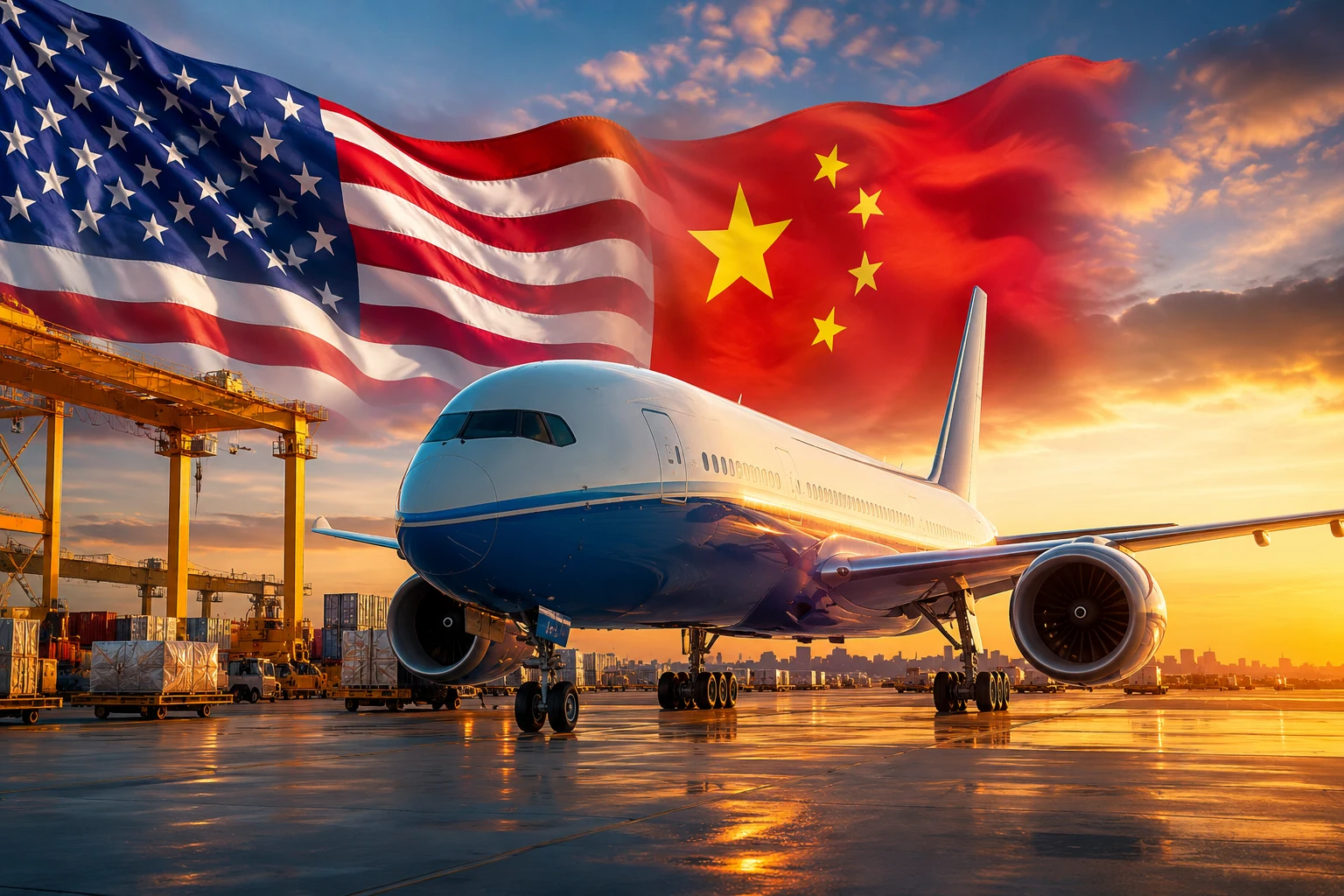
The global aviation industry has been waiting for a moment like this for years. After a long stretch of political tension, trade restrictions, delayed aircraft deliveries, and uncertainty around international supply chains, Boeing is suddenly back in the spotlight for one massive reason: China may finally be ready to place another historic aircraft order. The possibility of a huge commercial agreement between Boeing and Chinese airlines is not just another corporate headline. It feels more like a signal that the balance of power in the aviation world could be shifting once again. Investors, airline executives, and governments are all watching closely because this move could redefine the future of global aerospace markets.
For Boeing, the stakes could not be higher. The company has spent years trying to recover from the aftermath of the 737 MAX crisis, production slowdowns, and growing competition from Airbus and China’s own aircraft manufacturer, COMAC. At the same time, China remains one of the largest aviation markets on Earth, with millions of new passengers entering the air travel ecosystem every single year. If Boeing successfully secures a large-scale agreement with Chinese carriers, the deal would not only boost aircraft deliveries but also restore confidence in the American aerospace giant. Reports suggest the potential agreement could include hundreds of narrowbody aircraft and dozens of widebody jets, making it one of the biggest commercial aviation stories of the decade.
The timing also makes the situation even more interesting. Political leaders from the United States and China are once again discussing economic cooperation after years of unstable relations. Aviation has always been deeply connected to diplomacy, and aircraft deals often carry symbolic meaning far beyond transportation. A successful Boeing-China agreement would represent more than planes and contracts. It would show that economic interests still have the power to overcome geopolitical tension, even in a world increasingly divided by trade wars and strategic competition.
What makes this story even more fascinating is how fast the aviation industry is changing right now. Passenger demand across Asia continues to rise rapidly, especially in China, where domestic and international travel are recovering at a strong pace. Airlines are under pressure to modernize fleets, improve fuel efficiency, and expand routes to meet growing demand. Boeing sees this moment as a critical opportunity to reclaim market share before Airbus and COMAC dominate the next era of aviation growth. That is exactly why the potential Boeing China deal matters far beyond the aerospace sector itself.
Why China Still Matters to Boeing
China has always been one of Boeing’s most important markets. Before political tensions escalated and trade disputes disrupted relations, Chinese airlines represented a huge percentage of Boeing’s commercial aircraft business. The country’s rapid economic growth created massive demand for domestic flights, regional travel, and long-haul international routes. Boeing benefited heavily from that expansion during the early 2000s and throughout the 2010s. However, everything changed once diplomatic relations became more complicated and the 737 MAX crisis damaged trust in Boeing aircraft globally.
For several years, Boeing struggled to secure large Chinese orders while Airbus gained momentum in the region. Chinese airlines shifted parts of their expansion plans toward European aircraft manufacturers, and COMAC began pushing domestic alternatives like the C919. This created serious pressure for Boeing because losing China would mean losing one of the fastest-growing aviation markets in the world. Industry analysts repeatedly warned that Boeing could not afford to stay disconnected from China for too long without risking long-term market decline.
At the same time, Chinese airlines still rely heavily on Boeing aircraft in their existing fleets. Carriers such as Air China, China Southern Airlines, and Xiamen Airlines continue operating large numbers of Boeing jets across regional and international routes. Even with Airbus becoming more dominant recently, Boeing aircraft remain deeply integrated into Chinese aviation infrastructure. Maintenance systems, pilot training, spare parts networks, and operational logistics are all connected to Boeing platforms in various ways. That existing ecosystem makes a complete separation between Boeing and China extremely difficult.
China’s aviation demand also continues to grow at an incredible pace despite economic uncertainty in some sectors. The country’s middle class keeps expanding, tourism demand remains strong, and airlines are planning aggressive long-term growth strategies. Millions of passengers are expected to enter the air travel market over the next decade, creating massive demand for fuel-efficient narrowbody aircraft like the Boeing 737 MAX and long-range widebody jets such as the 787 Dreamliner. This is exactly why Boeing is aggressively pursuing new agreements with Chinese carriers. The company understands that missing out on the next phase of Chinese aviation expansion could permanently weaken its global position.
The Possible Mega Deal Everyone Is Talking About
Rumors surrounding the potential Boeing China deal have grown rapidly across international business and aviation circles. Multiple reports suggest Boeing has been discussing a possible order involving hundreds of aircraft with Chinese airlines and state-backed purchasing groups. Some estimates mention around 500 Boeing 737 MAX aircraft along with additional widebody jets, including the 787 Dreamliner and potentially the 777X. If finalized, the agreement would become Boeing’s largest Chinese aircraft deal in nearly a decade.
The scale of the rumored order is what makes it so significant. Narrowbody aircraft are considered the backbone of modern airline operations because they handle short and medium-haul routes efficiently. China’s domestic travel market is enormous, and airlines need modern aircraft capable of handling increasing passenger demand while reducing fuel costs. The Boeing 737 MAX fits directly into that strategy because airlines are prioritizing efficiency and operational flexibility more than ever before.
Widebody aircraft are equally important in this discussion because China’s international aviation ambitions continue growing. Chinese carriers want to expand long-haul connectivity to Europe, North America, Southeast Asia, and the Middle East. Aircraft like the Boeing 787 Dreamliner are designed specifically for fuel-efficient long-distance travel, making them attractive for airlines seeking to improve profitability on international routes. The inclusion of widebody jets in negotiations suggests China is not just thinking about domestic growth but also preparing for global aviation expansion in the coming decade.
The political timing of these negotiations is impossible to ignore. Reports indicate that discussions around aircraft purchases may coincide with high-level diplomatic meetings between American and Chinese leaders. Aviation agreements often serve as economic confidence signals during periods of political negotiation. That means the potential Boeing agreement could function as both a business transaction and a diplomatic gesture at the same time.
For Boeing investors, the possibility of a mega-order immediately created excitement in financial markets. Boeing stock saw positive movement after reports of negotiations surfaced because investors understand how valuable Chinese demand can be for long-term revenue stability. Aircraft manufacturing depends heavily on large multi-year backlogs, and securing hundreds of aircraft orders would significantly strengthen Boeing’s future production pipeline.
Boeing Versus Airbus in the Battle for Asia
One of the biggest reasons this story matters globally is because the aviation industry has become a fierce competition between Boeing and Airbus. For years, the two aerospace giants have fought aggressively for airline contracts across Asia, Europe, the Middle East, and North America. China sits directly at the center of that battle because its aviation growth potential remains unmatched by almost any other market.
Airbus gained major momentum in China while Boeing faced political and operational setbacks. Chinese airlines increased Airbus purchases, and Airbus strengthened manufacturing cooperation inside China through facilities like its Tianjin assembly line. This gave Airbus a stronger local presence and helped build trust with Chinese authorities. Meanwhile, Boeing struggled to recover from safety concerns and diplomatic tensions that complicated negotiations with Chinese carriers.
Despite Airbus currently holding strong momentum, Boeing still has strategic advantages. Many Chinese airlines already operate large Boeing fleets, which reduces transition costs for future purchases. Pilot training, maintenance systems, and spare parts logistics become easier when airlines continue using aircraft families they already know. Boeing also maintains strong widebody aircraft offerings that remain highly competitive globally.
The competition becomes even more intense because airlines are no longer simply buying aircraft. They are buying long-term operational ecosystems. Manufacturers provide financing support, technical partnerships, pilot training programs, maintenance solutions, and supply chain coordination. That means Boeing’s relationship with China depends on much more than airplane performance alone. It depends on trust, diplomacy, and long-term strategic cooperation.
At the same time, Airbus is not standing still. Recent aircraft orders from Asian airlines show Airbus continues expanding aggressively across the region. The European manufacturer knows China represents one of the most important battlegrounds for future aviation dominance. If Boeing secures a major Chinese agreement now, it could slow Airbus momentum and rebalance competition across Asia’s aviation sector.
COMAC Changes the Entire Conversation
The rise of COMAC adds another layer of complexity to the story. China no longer wants to depend entirely on Western aircraft manufacturers for its aviation future. The country has invested heavily in domestic aerospace development through COMAC, particularly with aircraft programs like the C919 and future widebody projects such as the C929. Beijing sees aerospace independence as strategically important for both economic and geopolitical reasons.
The COMAC C919 has already entered service with Chinese airlines, representing a major milestone for China’s domestic aerospace ambitions. While the aircraft still faces certification challenges internationally, its existence changes the market dynamic significantly. Boeing and Airbus are no longer competing only against each other inside China. They are now competing against a state-backed domestic manufacturer supported by long-term national policy.
Even so, COMAC still faces limitations compared to Boeing and Airbus. International certification processes remain difficult, global maintenance networks are still developing, and production scale has not yet reached the level of Western manufacturers. Chinese airlines also need immediate capacity growth, which means Boeing and Airbus remain essential suppliers for the foreseeable future.
This is why Boeing’s strategy toward China is so important right now. The company understands that future opportunities may become more limited if COMAC successfully expands production and technology capabilities over the next decade. Securing large agreements today could help Boeing maintain influence in China before domestic competition becomes even stronger.
The widebody market especially remains a major opportunity for Boeing because COMAC has not yet fully entered that segment at a global level. Aircraft like the 787 Dreamliner and 777X still provide capabilities Chinese airlines need for long-distance international operations. Boeing likely sees this as a critical advantage while China continues developing its own future widebody aircraft programs.
How This Could Impact Global Markets
The potential Boeing China deal extends far beyond aviation alone. Financial markets, energy sectors, manufacturing industries, and international trade systems could all feel the effects if negotiations succeed. Large aircraft orders create ripple effects across supply chains involving thousands of companies worldwide. Aerospace manufacturing supports jobs, raw material demand, electronics production, engine suppliers, and logistics networks on a massive scale.
For investors, the agreement would likely strengthen confidence in Boeing’s long-term recovery. The company has faced years of operational challenges, including production delays, safety investigations, and supply chain disruptions. A major Chinese order would signal renewed global confidence in Boeing products and potentially stabilize future revenue expectations. That is why financial analysts reacted positively to reports about ongoing negotiations.
The deal could also influence geopolitical sentiment between the United States and China. While tensions remain high in several strategic areas, commercial cooperation often helps reduce economic uncertainty. Aviation agreements create interconnected business interests that encourage stable trade relationships. Even if political disagreements continue elsewhere, major economic partnerships can help prevent deeper commercial isolation between the two countries.
Oil markets and global travel demand could also feel indirect effects from expanded airline growth. More aircraft deliveries generally support larger airline networks, increased passenger traffic, and higher fuel demand over time. Aviation remains closely tied to broader economic confidence, especially in Asia where tourism and business travel continue recovering strongly after years of disruption.
There is also a psychological impact connected to this story. Large international business agreements often shape investor perception about the future direction of the global economy. If Boeing and China finalize a historic order, markets may interpret the move as evidence that international trade cooperation remains possible despite rising geopolitical tension. That perception alone could influence broader investment sentiment across multiple industries.
The Risks Behind the Headlines
Even with growing excitement, several major risks still surround the negotiations. Aircraft deals involving China and the United States are rarely straightforward because politics can quickly change the situation. Trade disputes, sanctions, diplomatic conflicts, or national security concerns could still disrupt progress at any moment. Aviation has become deeply connected to geopolitics, which means commercial agreements are never entirely separate from government relations.
Boeing also continues dealing with production challenges and regulatory pressure. Delivering hundreds of aircraft requires stable manufacturing capacity, reliable supply chains, and strong quality control systems. The company cannot afford major operational disruptions if it wants to maintain credibility with Chinese airlines and global customers. Any additional production delays could weaken confidence in Boeing’s ability to fulfill large orders efficiently.
Competition remains another serious challenge. Airbus continues expanding aggressively in Asia, and Chinese airlines may prefer diversifying purchases between manufacturers rather than depending heavily on Boeing alone. COMAC’s long-term growth could also reduce Boeing’s influence inside China over time, especially if domestic aircraft programs continue receiving strong political support.
Economic uncertainty represents another important factor. While China’s aviation demand remains strong overall, slower economic growth or changes in travel behavior could affect airline expansion plans. Aircraft purchases involve long-term financial commitments worth billions of dollars, meaning airlines must carefully evaluate future market conditions before finalizing large orders.
Still, despite these risks, Boeing appears determined to pursue the opportunity aggressively. The company understands how critical China remains for the future of global aviation competition. Winning back Chinese business would not solve every challenge Boeing faces, but it could provide a major strategic victory during a period of intense global competition.
Conclusion
The potential Boeing China deal represents far more than a simple aircraft transaction. It reflects the intersection of aviation, politics, economics, and global power dynamics in one massive story. Boeing needs China to remain competitive in the future aviation market, while China still needs access to advanced commercial aircraft capable of supporting its enormous travel demand. That mutual dependence explains why negotiations continue attracting worldwide attention.
If the agreement becomes reality, it could reshape the commercial aviation landscape for years to come. Boeing would regain momentum in one of the world’s most important markets, investors would see renewed confidence in the company’s recovery, and airlines across China would gain access to modern aircraft designed for rapid expansion. The deal could also slow Airbus dominance in the region while delaying the full transition toward domestic Chinese aircraft alternatives.
At the same time, this story highlights how interconnected the modern global economy remains. Even during periods of political tension and strategic rivalry, economic interests continue pushing countries and corporations toward cooperation. Aviation especially depends on international partnerships, long-term planning, and global supply chains that cross borders constantly.
The future of this potential agreement still remains uncertain, but one thing is already clear. The aviation world is entering a new era where competition, diplomacy, and technology are becoming inseparable. Boeing’s push for a major Chinese deal is not just about selling airplanes anymore. It is about securing relevance in the next chapter of global aviation history.