
SpaceX IPO Sends Wall Street Into Rally Mode
 Vortixel
17 minutes read
Vortixel
17 minutes read
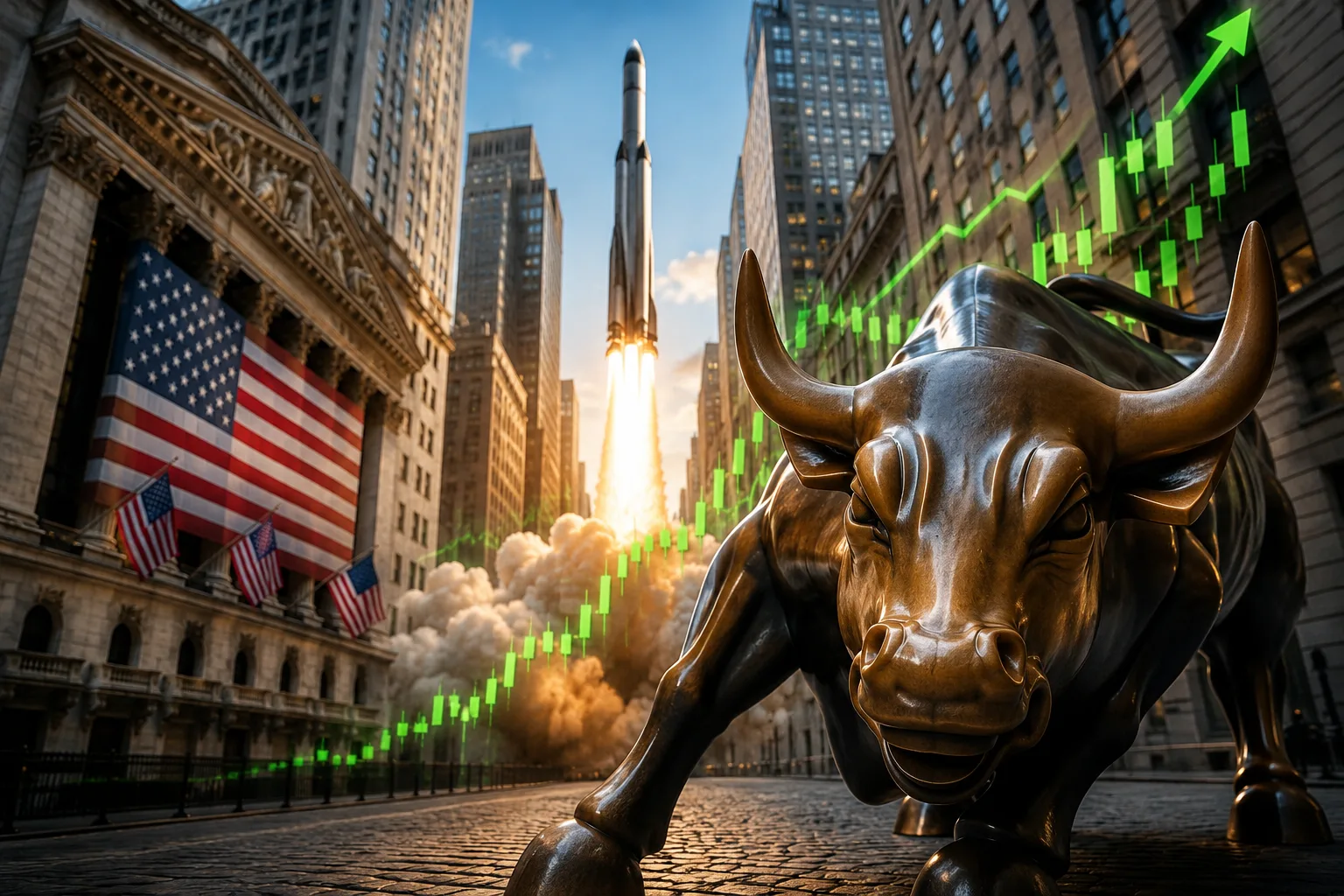
The trading floor had one of those rare days when the mood felt bigger than a daily move on a chart. SpaceX IPO fever pushed through Wall Street like a market story built for the streaming age, mixing rockets, retail traders, trillion-dollar ambition, and the old-school machinery of capital markets. U.S. stocks climbed as investors treated the company’s public debut as more than a single listing, reading it as a signal that risk appetite still had fuel. The excitement arrived at a moment when markets were already watching interest rates, geopolitical tension, oil prices, and the durability of the AI trade. For a market that has spent months flipping between caution and confidence, the SpaceX IPO gave investors a clean narrative: growth is still alive, and Wall Street still knows how to turn a big story into momentum.
The phrase “Wall Street rallied” can sound simple, but the story underneath was layered. It was not just about one stock popping on its first day, even if that headline stole the spotlight. The move reflected how deeply investors wanted a fresh catalyst after weeks of nervous positioning around inflation, central bank signals, and geopolitical risk. A historic market debut can act like a confidence test, and this one arrived with the kind of scale that forced traders, fund managers, and retail investors to pay attention. By the closing bell, the market was not only reacting to SpaceX; it was reacting to what the deal suggested about liquidity, sentiment, and the next phase of the public equity cycle.
SpaceX IPO Becomes Wall Street’s Main Event
The SpaceX IPO became the kind of market event that does not stay inside finance circles. It crossed into mainstream conversation because SpaceX sits at the intersection of space exploration, satellite internet, defense relevance, artificial intelligence infrastructure, and Elon Musk’s larger business universe. That combination gave the debut a cultural weight most listings never get, even in strong IPO years. Investors were not simply buying a rocket company; they were buying exposure to a future-facing story that feels connected to communications, national strategy, cloud-like connectivity, and deep-tech ambition. That is exactly why the listing dominated Wall Street’s attention and helped lift broader stock-market sentiment.
Market debuts matter because they reveal what investors are willing to pay for growth when a company finally steps into public view. In quieter periods, even quality IPOs can struggle if buyers are defensive or if valuations feel stretched. But when a major listing lands successfully, it can reset the tone for other companies waiting in the pipeline. SpaceX’s debut gave investors a reason to believe that large-scale growth stories can still attract demand, even with rates not exactly back to the easy-money era. That psychology is powerful, because markets often move first on belief and only later on the slower details of earnings, margins, and guidance.
For Wall Street banks, the deal also showed that the IPO machine still works when the asset is rare enough. The public market has been selective in recent years, rewarding some companies while punishing others that arrive with weak profitability or unclear paths to cash flow. A company like SpaceX carries enough brand power to break through that skepticism, but the broader lesson is still important. Investors may be cautious, yet they are not closed to risk when the story feels big, differentiated, and structurally important. That is why the SpaceX listing became both a celebration and a temperature check for the whole equity market.
Why Stocks Rose Around the SpaceX Debut
The stock market often rallies when investors can connect multiple bullish threads at once. On this day, SpaceX gave the market a headline catalyst, while hopes around geopolitical easing and steadier investor positioning helped support the move. When traders see a major IPO work, they often assume capital is still available for high-growth assets. That assumption can spill into technology shares, industrial names, financial stocks, and even speculative corners of the market. In other words, the debut did not need to lift every company directly; it only needed to improve the mood around risk.
The rally also reflected how modern markets respond to narrative compression. A single event can carry many meanings at once, especially when it involves a company with global recognition. SpaceX is not only associated with rockets; it is tied to satellite broadband, launch economics, government contracts, private space infrastructure, and potential future services that investors still debate aggressively. That range of possibilities gives the stock a “platform” quality, which is why traders may compare its market impact to earlier mega-cap technology moments. Even when analysts argue about valuation, the market can still reward the possibility of a company becoming a category-defining public giant.
Another reason stocks rose is that investors often use landmark IPOs as confirmation that liquidity has not disappeared. If large institutions, retail buyers, and global investors are all willing to chase a massive public offering, the message is clear: money is still looking for growth. That matters in a year when many investors have worried that rate uncertainty could keep capital locked in defensive positions. A strong debut suggests that cash on the sidelines can move quickly when the right asset appears. For traders, that can be enough to justify buying broader equity indexes, at least in the short term.
A New Test for the Mega-IPO Era
SpaceX’s market debut felt like a new test for the mega-IPO era because it challenged the idea that public listings had lost their shine. Over the past few years, many late-stage private companies have watched the public market with caution, worried that listing too early could expose them to volatility and tighter scrutiny. The success of a massive debut changes that conversation. It tells founders, bankers, and venture investors that public markets may still reward companies with enough scale and narrative strength. For readers tracking Stock Market trends, this is one of the most important signals from the event.
The deal also raised a bigger question about whether the next IPO cycle will be led by companies that feel almost too large for traditional listing playbooks. In the past, public investors often discovered fast-growing companies earlier in their journey. Today, many high-profile firms remain private for longer, building enormous valuations before ordinary investors ever get access. That creates tension because public buyers want upside, but they may be entering after private investors already captured the easiest gains. SpaceX’s debut sharpened that debate because it arrived with extraordinary scale and immediate market excitement.
Still, a blockbuster opening day does not automatically solve the deeper questions around mega-IPOs. Public markets demand regular reporting, clearer accountability, and constant valuation judgment. The excitement of day one eventually gives way to quarterly results, investor calls, regulatory filings, margin analysis, and comparisons with other mega-cap stocks. That shift can be brutal for companies whose stories are more futuristic than their current financials. SpaceX now has the advantage of massive visibility, but it also faces the pressure that comes with becoming a symbol of public-market ambition.
Retail Traders Wanted a Piece of the Story
One of the defining features of the debut was the presence of retail investors. The modern IPO is no longer just a polished roadshow for institutions in private rooms. Individual investors now follow allocation details, opening prices, brokerage access, and first-day trading with the same energy once reserved for meme stocks and major crypto launches. SpaceX had the perfect retail formula because it combined a famous founder, a futuristic industry, a recognizable brand, and years of pent-up demand. That kind of emotional connection can turn a listing into a social-market event, not just a finance transaction.
Retail interest matters because it can amplify early momentum and create a strong demand floor. When individual traders believe they are finally getting access to a company they have watched from the sidelines for years, they may be less likely to flip shares immediately. Some will treat the stock as a long-term holding, while others will chase the early volatility for quick gains. Both behaviors increase trading volume and keep the ticker at the center of market conversation. That attention can support the broader market because it makes equities feel exciting again after long stretches of macro-driven anxiety.
There is also a psychological layer that investors should not ignore. SpaceX represents a story many people already understand without needing a spreadsheet first. Rockets landing vertically, satellites connecting remote areas, and missions beyond Earth all create visual narratives that translate easily into public enthusiasm. That does not mean the valuation is automatically justified, but it explains why demand can become intense. In a market where attention is a real asset, few companies can generate attention as naturally as SpaceX.
The AI Trade Meets the Space Economy
The SpaceX rally also connected with another major market theme: the ongoing search for the next layer of the AI economy. Investors have spent years chasing semiconductor makers, cloud platforms, data-center operators, software firms, and power infrastructure tied to artificial intelligence demand. SpaceX adds a different angle because satellite networks, launch capacity, and orbital infrastructure could become part of future computing and communications systems. Even if those possibilities remain long term, markets often price the dream before the details are fully visible. That is why some traders saw the debut as an extension of the AI infrastructure trade, not just a space-sector story.
This matters because the AI rally has been criticized for becoming crowded and expensive. When too much money chases the same group of stocks, investors start looking for second-order beneficiaries that still feel early. SpaceX fits that search because it offers exposure to infrastructure beyond Earth, satellite connectivity, and potential future networks that could support data movement at global scale. The company’s story gives investors a fresh way to imagine the next phase of technology spending. That imagination can be risky, but it is also one of the engines that drives bull-market behavior.
At the same time, investors should separate technological potential from immediate financial performance. A company can be strategically important and still face margin pressure, capital intensity, execution risk, and regulatory complexity. Space is expensive, competitive, and politically sensitive, which means growth does not come with the same cost structure as a pure software company. The market may reward the long-term vision, but public investors will eventually demand evidence that the model can scale profitably. That tension between dream and discipline will shape how the stock trades after the first wave of excitement fades.
What the Rally Says About Investor Sentiment
The Wall Street rally showed that investor sentiment is not as fragile as some feared. Markets have been living with a long list of worries, including inflation stickiness, policy uncertainty, elevated valuations, and global conflict risk. Yet when a major catalyst appeared, buyers showed up quickly. That does not mean all risks disappeared, but it does show that investors are still willing to lean into growth when the setup feels compelling. In practical terms, the SpaceX IPO became a stress test for confidence, and the market passed it for now.
Sentiment is especially important because stock indexes can become self-reinforcing during high-attention moments. If a major debut works, traders may buy related sectors, then index funds and momentum strategies can add more pressure, and financial media coverage keeps the story alive. This loop can create a short-term lift that feels larger than the direct financial impact of the IPO itself. It also encourages companies waiting to list to consider whether the window is open. That is how one successful debut can influence the market calendar for months.
However, strong sentiment should not be confused with low risk. The same excitement that lifts stocks can also make investors overlook valuation discipline. When a company arrives with a massive market cap, even strong future growth may already be priced in. That is why first-day performance can be both bullish and dangerous. Investors need to enjoy the signal without assuming that every price move is a permanent vote of confidence.
Why Valuation Debate Will Not Go Away
The valuation debate around SpaceX will likely remain intense because the company sits in a rare category. It is not easy to compare it with traditional aerospace firms, telecom companies, defense contractors, cloud infrastructure plays, or high-growth technology stocks. Each comparison captures part of the story but misses another part. That makes valuation more subjective, which can increase volatility as analysts build different models. In a market debut this large, disagreement is not a side issue; it is part of the trading story.
Supporters will argue that SpaceX deserves a premium because it has built infrastructure few companies can match. They will point to reusable rocket technology, satellite broadband reach, government and commercial demand, and the possibility of future space-based services. Skeptics will focus on capital spending, execution delays, competition, regulatory risk, and the challenge of turning vast ambition into consistent earnings. Both sides can be right about different time horizons. That is what makes the stock fascinating for markets and complicated for investors.
For public investors, the key question is whether SpaceX can grow into its valuation without relying only on excitement. A first-day surge can reward early buyers, but long-term performance depends on revenue growth, cash generation, operational efficiency, and credible guidance. The market will want proof that the company can manage its expansion while balancing ambitious projects with financial discipline. That is a hard balance for any public company, especially one operating in a capital-intensive industry. The first trading day was the opening scene, not the final verdict.
Impact on Other Stocks and IPO Candidates
SpaceX’s debut could influence other stocks by resetting investor appetite for large, high-growth listings. Companies in AI, fintech, defense technology, space infrastructure, and advanced manufacturing will likely study the market reaction closely. If the rally continues, bankers may become more confident pushing forward with delayed IPO plans. Venture capital firms may also view the debut as evidence that the exit window is improving after a more cautious period. That could bring more high-profile names into the public market, giving investors a busier IPO calendar.
The impact may also spread to listed companies seen as indirect beneficiaries or rivals. Satellite firms, launch suppliers, defense contractors, communications infrastructure names, and advanced hardware companies can all become part of the “SpaceX halo” trade. Sometimes these proxy moves are grounded in real business relationships, while other times they are simply the market searching for anything connected to the theme. Investors should be careful with that distinction because sympathy rallies can fade quickly. Still, the first wave of enthusiasm often creates opportunities for traders who understand where attention is moving.
For the broader IPO market, the lesson is not that every company can now list at a huge valuation. SpaceX is unusual because it had years of global recognition before going public. Many private companies do not have that kind of brand power, institutional demand, or strategic importance. But the debut still matters because it proves that public investors will support exceptional companies when the story is strong enough. That could help reopen the door for quality listings, even if weaker names still struggle.
Macro Risks Still Matter Behind the Hype
Even with the rally, macro risks remain part of the background. The Federal Reserve’s rate path still matters for equity valuations because higher rates can pressure long-duration growth stocks. Inflation data still matters because it influences consumer spending, corporate margins, and bond yields. Oil prices and geopolitical developments still matter because they can shift risk appetite quickly. A blockbuster IPO can dominate a trading day, but it cannot permanently cancel the macro cycle.
This is especially relevant for investors tempted to treat the SpaceX move as a clean green light for all risk assets. Markets can celebrate one day and reassess the next if fresh data changes the interest-rate outlook. Growth stocks are particularly sensitive to discount-rate assumptions because much of their value comes from future earnings expectations. If yields rise sharply, even the most exciting companies can face pressure. That is why a disciplined investor should see the rally as a signal, not a guarantee.
Geopolitics adds another layer because space, defense, communications, and national security are closely linked. SpaceX’s importance could be a strength, especially if demand from governments and strategic customers remains durable. But it also means the company operates in a world where regulation, export controls, defense policy, and international tensions can shape its future. Public investors will need to become comfortable with risks that are more complex than standard consumer-tech variables. That complexity may support a premium for strategic relevance, but it can also create sudden volatility.
Practical Insight for Investors Watching the Rally
For investors, the practical takeaway is to avoid treating first-day excitement as a full investment thesis. A hot debut can be meaningful, but it should be only the beginning of the research process. Investors need to understand the company’s revenue mix, margin trajectory, capital needs, debt profile, governance structure, competitive landscape, and long-term addressable markets. They also need to decide whether they are buying a trade, a multi-year growth story, or simply fear of missing out. Those are different decisions, and confusing them is how many investors get hurt after headline-driven rallies.
Long-term investors may want to watch how the stock behaves after the initial lockup dynamics, analyst coverage, and first earnings cycle. That period often reveals whether demand is durable or mostly event-driven. If institutions continue building positions after the hype cools, the stock may develop a more stable base. If early buyers rush to take profit, volatility could rise and challenge the bullish narrative. Patience can be valuable because the best entry point for a famous company is not always the loudest day in the market.
Traders, on the other hand, may focus on momentum, volume, options activity, and related sector moves. A major IPO can create short-term setups across the market, especially in stocks that investors view as thematic peers. But those trades require risk controls because excitement can reverse when liquidity thins or when early gains attract sellers. The smarter approach is to define time horizon before entering the trade. In a market this emotional, clarity matters more than confidence.
The Bigger Market Message
The bigger message from Wall Street’s rally is that public markets still crave stories with scale. Investors can analyze spreadsheets all day, but markets also move on belief, imagination, and the sense that a company represents the future. SpaceX delivered that feeling in a way few companies can. Its debut reminded Wall Street that the IPO market is not dead; it was waiting for a company big enough to make investors look up. That alone gives the event a place in the broader story of 2026 financial trends.
The rally also showed how the boundaries between sectors are getting blurrier. A space company can trade like a technology company, a defense asset, a communications platform, an AI infrastructure proxy, and a growth-stock symbol at the same time. That makes modern market analysis more complicated, but also more interesting. Investors cannot rely only on old sector labels when companies increasingly sit across multiple economic themes. SpaceX’s debut captured that shift perfectly because it was less about one industry and more about the market’s hunger for transformational assets.
For Wall Street, the event may become a reference point for future mega-listings. Bankers will study how demand was built, how retail participation was handled, how pricing was framed, and how the first trading session played out. Companies considering public listings will ask whether they can create similar momentum or whether SpaceX was simply a once-in-a-generation exception. Investors will ask whether the deal marks the start of a healthier IPO cycle or just a spectacular one-off. The answer will unfold over time, but the market has already received its first signal.
Conclusion: A Rally Built on Risk Appetite
The Wall Street rally around the SpaceX IPO was not just a reaction to a successful listing. It was a broader statement about risk appetite, investor imagination, and the market’s willingness to reward companies that feel connected to the next decade of growth. SpaceX gave traders a rare event with enough scale to shift sentiment across equities, from technology names to IPO candidates and thematic infrastructure plays. The excitement does not erase valuation risk, macro uncertainty, or the tough questions that come with public-market scrutiny. But it does show that when the right story arrives, Wall Street can still rally with conviction.
For investors, the smart move is to respect both sides of the story. The debut was historic, the demand was real, and the market reaction showed that confidence is still alive. At the same time, first-day gains are only one chapter in a much longer test of execution, profitability, governance, and durability. SpaceX now has to prove that its public valuation can be supported by results, not just symbolism. That tension is exactly why the SpaceX IPO will remain one of the most important stock-market stories to watch in the months ahead.