
Global Market Volatility Sparks Investor Risk Shift
 Vortixel
7 minutes read
Vortixel
7 minutes read
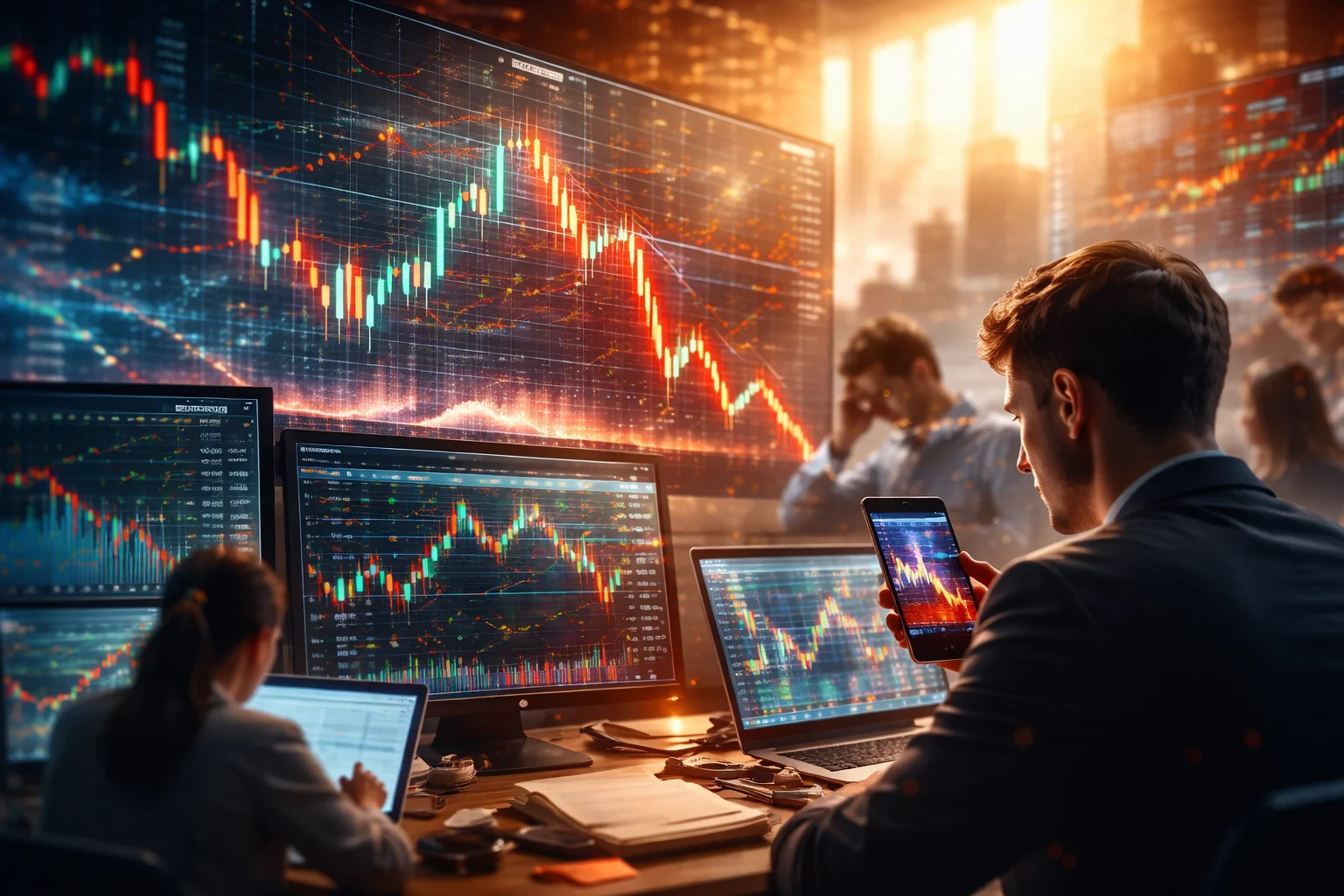
Introduction: A New Era of Market Uncertainty
The global market volatility seen throughout early 2026 is no longer just a short-term reaction to isolated events, but a clear signal of deeper structural shifts happening across the global economy. Investors who once relied on predictable cycles and steady macroeconomic signals are now facing a landscape filled with uncertainty, rapid change, and unexpected disruptions. From geopolitical tensions to tightening monetary policies and evolving technological trends, the market is entering a phase where adaptability matters more than ever. This shift has forced both institutional and retail investors to rethink strategies, reassess risk tolerance, and stay hyper-aware of global developments. The idea of “safe bets” is becoming increasingly blurred as even traditionally stable sectors show signs of fluctuation. In this environment, understanding volatility is no longer optional, but essential for survival in modern financial markets.
What’s Driving Global Market Volatility in 2026
Several key factors are contributing to the rise of global market volatility, and they are all interconnected in complex ways. One of the biggest drivers is geopolitical instability, particularly ongoing tensions in the Middle East that continue to influence oil prices and global supply chains. When energy costs surge, it triggers a domino effect across industries, increasing production costs and reducing consumer purchasing power. At the same time, central banks around the world, including the Federal Reserve and the European Central Bank, are maintaining tight monetary policies in an effort to control inflation. These policies, while necessary, have made borrowing more expensive and slowed down economic growth in multiple regions. Additionally, the rapid integration of artificial intelligence into various industries has created both opportunities and uncertainties, as markets struggle to accurately price the long-term impact of AI-driven transformation. The combination of these factors creates a volatile environment where markets react quickly and often unpredictably to new information.
Investor Behavior Is Changing Fast
In response to this volatility, investor behavior is undergoing a noticeable transformation. Gone are the days when long-term holding strategies alone could guarantee steady returns without significant risk. Today’s investors are becoming more dynamic, frequently adjusting their portfolios to respond to short-term market movements while still keeping an eye on long-term goals. There is also a growing trend toward diversification, not just across asset classes, but across regions and industries. Investors are increasingly exploring emerging markets, alternative assets like commodities and cryptocurrencies, and even niche sectors that show resilience in uncertain times. Another major shift is the rise of data-driven decision-making, where investors rely heavily on real-time analytics, AI tools, and predictive models to guide their strategies. This evolution reflects a broader understanding that traditional methods are no longer sufficient in a rapidly changing financial ecosystem.
The Role of Central Banks and Interest Rates
Central banks play a crucial role in shaping global market volatility, and their actions in 2026 are under intense scrutiny. Interest rate decisions, in particular, have a direct impact on market behavior, influencing everything from stock valuations to currency strength. With inflation still a concern in many parts of the world, central banks have adopted a cautious approach, opting to keep rates higher for longer periods. While this helps stabilize prices, it also creates pressure on businesses and consumers alike. Companies face higher borrowing costs, which can limit expansion and reduce profitability, while consumers deal with increased loan and mortgage rates. This dual pressure contributes to slower economic growth and heightened market uncertainty. Investors are closely monitoring every statement and policy update from central banks, knowing that even minor changes can trigger significant market reactions.
Sector Winners and Losers in a Volatile Market
Not all sectors are affected equally by market volatility, and understanding these differences is key for investors looking to navigate the current landscape. Technology continues to be a major focus, particularly companies involved in artificial intelligence and digital infrastructure. While these sectors offer high growth potential, they are also subject to sharp fluctuations as expectations shift rapidly. On the other hand, energy and commodities have gained renewed attention due to rising prices and supply concerns. These sectors often act as hedges against inflation, making them attractive during uncertain times. Meanwhile, traditional industries such as manufacturing and retail are facing challenges due to increased costs and changing consumer behavior. Financial institutions are also navigating a complex environment, balancing the benefits of higher interest rates with the risks of reduced lending activity. This uneven performance across sectors highlights the importance of strategic allocation and careful analysis.
Global Supply Chains and Economic Fragility
Another major contributor to global market volatility is the ongoing fragility of global supply chains. Despite efforts to stabilize and diversify supply networks after the disruptions of the early 2020s, many industries remain vulnerable to external shocks. Geopolitical conflicts, trade restrictions, and logistical challenges continue to create bottlenecks that affect production and distribution. These disruptions not only increase costs but also create uncertainty about future availability of goods and materials. Businesses are responding by reshoring operations, investing in local production, and building more resilient supply chains. However, these adjustments take time and often involve significant costs, which can further impact market stability. For investors, understanding supply chain dynamics is becoming increasingly important, as it directly influences company performance and overall market trends.
The Rise of Risk Management Strategies
In a volatile environment, risk management has become a top priority for investors of all sizes. Rather than chasing high returns, many are focusing on preserving capital and minimizing losses. This shift is reflected in the growing popularity of strategies such as hedging, asset allocation, and the use of derivatives to protect against downside risk. There is also increased interest in defensive assets, including gold, government bonds, and stable dividend-paying stocks. These assets may not offer the highest returns, but they provide a level of stability that is highly valued during uncertain times. Additionally, investors are paying closer attention to macroeconomic indicators, geopolitical developments, and market sentiment to anticipate potential risks. This proactive approach to risk management is essential for navigating the complexities of today’s financial markets.
Retail Investors Enter a New Phase
Retail investors are also playing a significant role in shaping global market volatility. With greater access to trading platforms, financial education, and real-time data, individual investors are more active and influential than ever before. However, this increased participation comes with its own set of challenges. Retail investors often react quickly to market news and trends, which can amplify volatility, especially in smaller or more speculative markets. Social media and online communities further accelerate the spread of information, sometimes leading to herd behavior and rapid price movements. Despite these challenges, retail investors are becoming more sophisticated, adopting strategies that were once reserved for professionals. This evolution is contributing to a more dynamic and unpredictable market environment.
Technology and AI Reshaping Market Dynamics
The integration of artificial intelligence in finance is another factor driving market changes in 2026. AI is being used for everything from algorithmic trading to risk assessment and portfolio management. These technologies enable faster decision-making and more accurate predictions, but they also introduce new risks. Automated trading systems can react to market signals in milliseconds, sometimes leading to sudden and extreme price movements. Additionally, the widespread adoption of AI raises questions about transparency, regulation, and the potential for systemic risks. As technology continues to evolve, its impact on market behavior will only become more significant. Investors who understand and leverage these tools will have a competitive advantage, but they must also be aware of the associated risks.
What This Means for the Future of Investing
Looking ahead, the current wave of global market volatility is likely to shape the future of investing in profound ways. The traditional boundaries between asset classes, regions, and industries are becoming less defined, creating both opportunities and challenges. Investors will need to adopt a more flexible and adaptive approach, continuously updating their strategies to reflect changing conditions. Long-term success will depend not only on identifying growth opportunities but also on managing risks effectively. Education, technology, and access to information will play a crucial role in this process, empowering investors to make informed decisions. As the market continues to evolve, those who can navigate uncertainty with confidence and discipline will be best positioned to succeed.
Conclusion: Navigating the Storm
The rise of global market volatility in 2026 marks a turning point for investors around the world. It is a reminder that markets are inherently dynamic and that change is the only constant. While volatility can be intimidating, it also creates opportunities for those who are prepared to adapt and think strategically. By understanding the factors driving market movements, embracing new technologies, and prioritizing risk management, investors can turn uncertainty into an advantage. The road ahead may be unpredictable, but with the right mindset and tools, it is possible to navigate even the most challenging market conditions.