
US Inflation Surge Drives Consumer Confidence to Record Low
 Vortixel
7 minutes read
Vortixel
7 minutes read
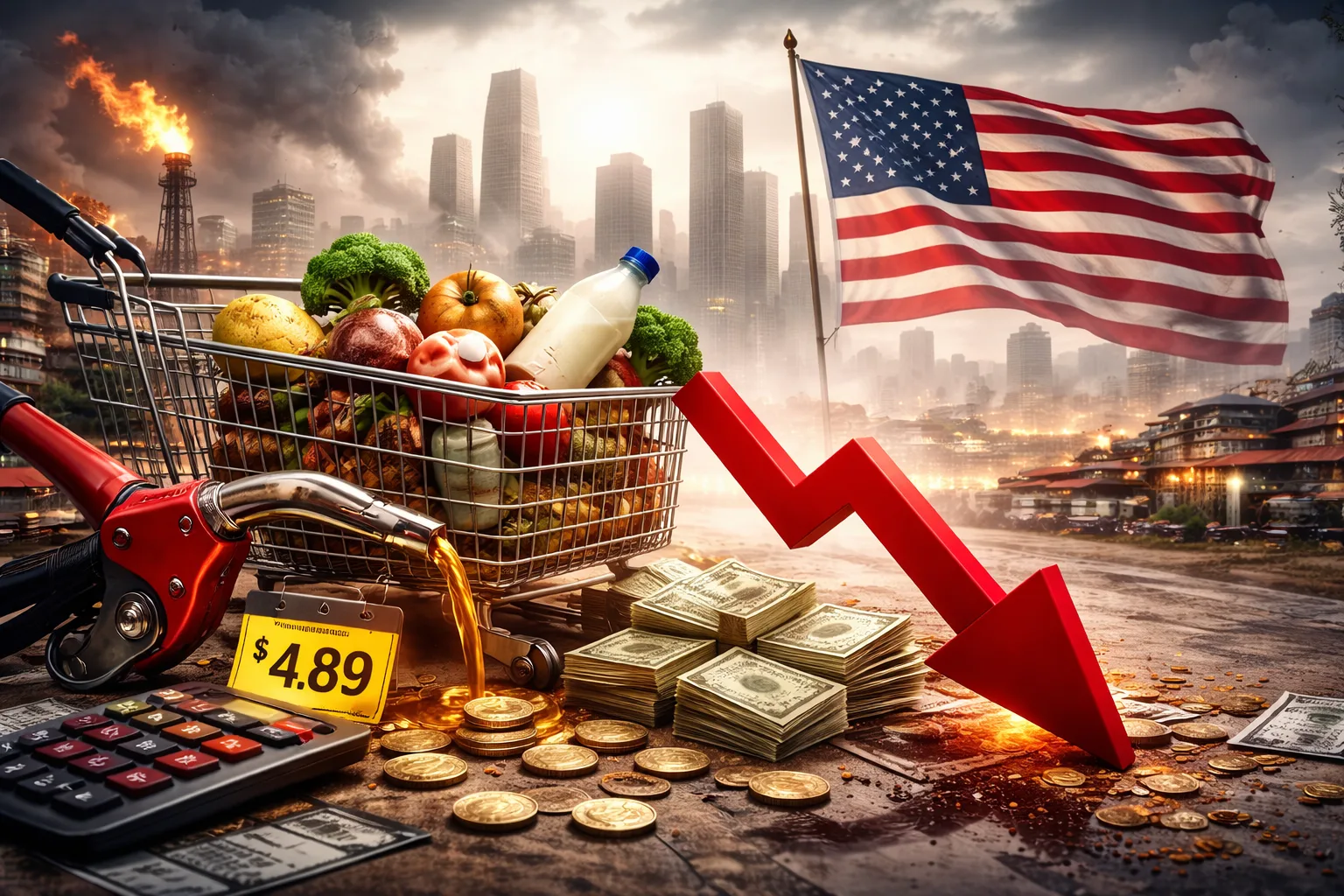
Introduction: A Perfect Storm of Inflation and Fear
In April 2026, the United States economy sent one of its clearest warning signals yet: consumer sentiment collapsed to its lowest level in history, while inflation expectations surged sharply. This isn’t just another economic headline—it’s a shift in how millions of Americans feel about their financial future. When confidence drops this hard, it doesn’t stay on paper. It hits spending, investment, and ultimately, the entire global market ecosystem.
According to the latest data from the University of Michigan survey, the Consumer Sentiment Index plunged to 47.6, down from 53.3 in March, marking the lowest reading ever recorded in over 70 years of tracking . This dramatic fall signals deep anxiety across households, fueled by rising inflation, surging energy prices, and geopolitical tensions that are reshaping economic expectations almost overnight.
For Gen Z investors, digital entrepreneurs, and global market observers, this moment is critical. The combination of rising inflation and collapsing consumer sentiment is not just a macroeconomic issue—it’s a signal of shifting behavior, new risks, and emerging opportunities.
What Is Consumer Sentiment and Why It Matters
Before diving deeper, it’s important to understand why consumer sentiment is such a powerful indicator. At its core, consumer sentiment reflects how people feel about their personal finances, job prospects, and the overall economy. It directly influences spending behavior, which accounts for a major portion of the U.S. GDP.
When confidence is high, people spend more, invest more, and take financial risks. When it crashes, the opposite happens—people cut spending, delay purchases, and prioritize savings. This shift can slow down economic growth significantly.
What makes the April 2026 drop so alarming is not just the number itself, but the speed and scale of the decline. An 11% drop in just one month reflects widespread panic, not gradual concern .
Inflation Returns as the Main Villain
At the center of this economic storm is one word: inflation. After a relatively stable period, inflation in the U.S. surged again in early 2026, reaching around 3.3% year-over-year, the highest level since 2024 .
But the real issue isn’t just current inflation—it’s expectations. Consumers now expect inflation to rise to 4.8% over the next year, a massive jump from 3.8% the previous month . This is one of the largest monthly increases in recent years and signals growing distrust in the Federal Reserve’s ability to control prices.
Why does this matter? Because inflation expectations can become self-fulfilling. If people expect prices to rise, they change behavior—demanding higher wages, spending earlier, or hoarding goods—pushing inflation even higher.
Energy Prices: The Hidden Trigger
Behind the inflation spike lies a powerful driver: energy prices. The ongoing geopolitical conflict in the Middle East has disrupted global oil supply, pushing gasoline prices above $4 per gallon in the U.S. .
In fact, gasoline prices surged by more than 20% in a single month, accounting for a major portion of inflation increases . This has a cascading effect across the economy:
- Transportation costs rise
- Food prices increase due to higher logistics costs
- Manufacturing expenses climb
- Airline tickets become more expensive
Energy is the backbone of modern economies, and when it spikes, everything else follows. This explains why consumers are reacting so strongly—not just to abstract inflation numbers, but to real, daily price increases.
The Iran Conflict and Global Uncertainty
Another key factor shaping sentiment is geopolitical instability, particularly the conflict involving Iran. The disruption of critical oil routes has amplified global uncertainty and intensified fears about long-term economic stability.
Survey data shows that many consumers directly blame the conflict for worsening economic conditions . This is important because sentiment is not just about numbers—it’s about perception. When people feel the world is unstable, their financial confidence drops, regardless of actual income or employment status.
Even though a temporary ceasefire has been discussed, analysts warn that uncertainty will remain high. Supply chains are still disrupted, and energy markets remain volatile.
A Broad-Based Collapse Across All Demographics
What makes this situation even more concerning is that the drop in consumer sentiment is not isolated to a specific group. It cuts across:
- Income levels
- Age groups
- Political affiliations
This indicates a systemic issue rather than a localized economic problem. According to survey data, personal financial expectations dropped by 11%, while business outlook expectations fell by around 20% .
This kind of uniform decline is rare and often associated with major economic turning points, such as recessions or financial crises.
Spending Behavior Is Already Changing
When sentiment collapses, behavior follows. One of the earliest signs is a decline in consumer spending, especially on big-ticket items like cars, electronics, and home appliances.
The data shows that buying conditions for durable goods have worsened significantly, driven by high prices and uncertainty . This is a red flag for several industries:
- Retail
- Automotive
- Technology
- Real estate
For businesses, this means lower demand, tighter margins, and potentially slower growth. For investors, it signals increased volatility and the need for more cautious strategies.
Financial Markets React: Mixed Signals
Interestingly, financial markets have shown mixed reactions to these developments. While stock markets remain volatile, bond yields have increased, reflecting rising inflation expectations and tighter monetary conditions.
This creates a complex environment where:
- Stocks face pressure from weaker consumer demand
- Bonds adjust to higher inflation risks
- Commodities, especially energy, continue to rise
Investors are increasingly shifting toward safe-haven assets, such as gold and defensive sectors, as uncertainty grows.
The Federal Reserve’s Dilemma
The Federal Reserve now faces one of its toughest challenges in recent years. On one hand, inflation is rising, which typically requires higher interest rates. On the other hand, consumer confidence is collapsing, which suggests economic slowdown.
This creates a policy dilemma:
- Raise rates → Risk deeper economic slowdown
- Cut rates → Risk worsening inflation
So far, the Fed has taken a cautious approach, signaling limited room for aggressive rate cuts. This means the current environment of high rates and high uncertainty may persist longer than expected.
Gen Z Perspective: A New Economic Reality
For Gen Z, this economic environment feels different from previous generations. Many are entering the workforce or building businesses in a time of:
- Persistent inflation
- Global instability
- Rapid technological change
Unlike older generations, Gen Z is more digitally native and globally connected, meaning they are quicker to react to economic signals. This could amplify market movements, especially in sectors like crypto, tech stocks, and digital assets.
At the same time, Gen Z tends to prioritize financial flexibility, side hustles, and diversified income streams—strategies that may prove valuable in uncertain times.
Global Impact: Not Just an American Problem
Although this crisis is centered in the United States, its effects are global. The U.S. economy is deeply interconnected with global markets, meaning shifts in American consumer behavior can ripple across:
- Asia-Pacific trade flows
- European manufacturing
- Emerging market currencies
Higher U.S. inflation and weaker consumer demand can lead to:
- Reduced global exports
- Currency volatility
- Tighter global financial conditions
This is why global investors are closely watching U.S. sentiment data—it’s often an early signal of broader economic trends.
What Happens Next? Key Scenarios
Looking ahead, there are several possible scenarios:
1. Stabilization Scenario
If energy prices stabilize and geopolitical tensions ease, consumer sentiment could recover gradually. Inflation expectations may also decline, giving the Fed more flexibility.
2. Prolonged Uncertainty
If conflicts persist and inflation remains high, sentiment could stay low for months, increasing the risk of economic slowdown or even recession.
3. Sudden Recovery
In a best-case scenario, rapid policy action or geopolitical breakthroughs could restore confidence quickly. However, this is currently the least likely outcome.
Key Takeaways for Investors and Businesses
This moment offers several important lessons:
- Inflation expectations matter as much as inflation itself
- Consumer sentiment is a leading indicator of economic behavior
- Geopolitical events can rapidly reshape market dynamics
- Diversification and risk management are more important than ever
For businesses, understanding consumer psychology is crucial. For investors, staying adaptable and informed is the key to navigating volatility.
Conclusion: A Turning Point for the Global Economy
The combination of rising inflation and record-low consumer sentiment marks a critical turning point for the global economy in 2026. This is not just a temporary fluctuation—it’s a signal of deeper structural challenges that could shape markets for years to come.
As uncertainty continues, one thing is clear: the era of predictable growth is over, at least for now. What replaces it is a more complex, dynamic environment where information moves fast, risks evolve quickly, and opportunities emerge for those who are ready to adapt.
For Market Vortixel readers, this is the time to stay sharp, stay informed, and most importantly, stay ahead.