
G7 Moves to Stabilize Global Economy Amid Conflict
 Vortixel
7 minutes read
Vortixel
7 minutes read
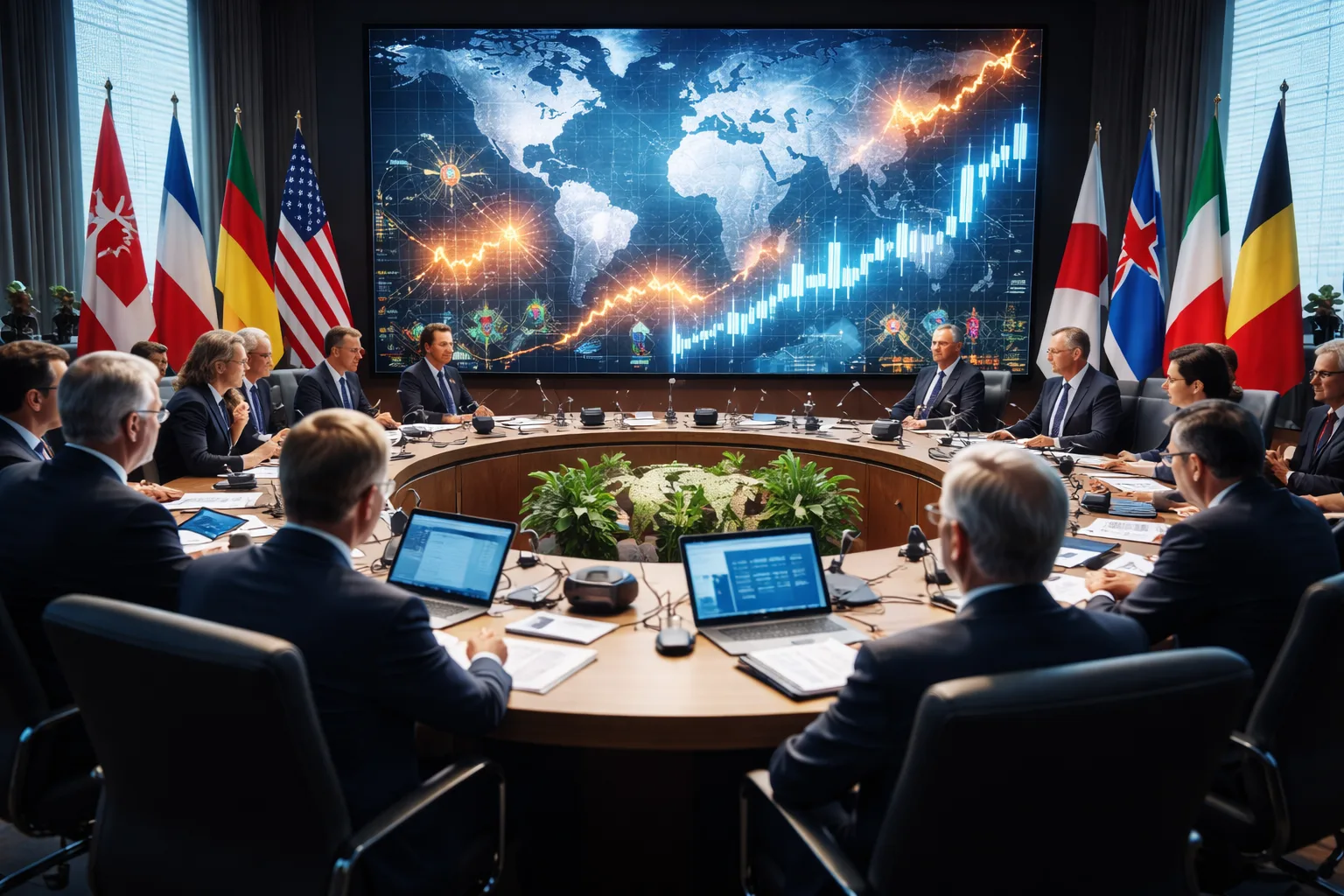
Global Economy on Edge as G7 Steps In
The global economy is once again entering a fragile phase, and this time, the pressure is coming from a dangerous mix of geopolitics, energy shocks, and financial uncertainty. In response, the G7 nations—the world’s most influential advanced economies—have stepped forward with a unified mission: stabilize the global market before things spiral further out of control. The urgency is real, and the stakes are even higher than what most casual observers might realize. What we are witnessing is not just another economic adjustment, but a coordinated attempt to prevent a potential global slowdown that could affect billions of people worldwide.
Recent developments show that G7 finance ministers have agreed to take collective action to stabilize the global economy amid escalating conflict involving the United States, Israel, and Iran. This move comes at a time when markets are reacting sharply to geopolitical instability, especially in energy sectors and supply chains. The tone of the meeting signals something important: even the most powerful economies are concerned that the current situation could evolve into something much bigger if left unchecked.
What Exactly Is the G7 and Why It Matters
Before diving deeper, it’s important to understand the weight behind the G7 alliance. The Group of Seven includes the United States, United Kingdom, Germany, France, Italy, Japan, and Canada—countries that together control a massive share of global GDP and financial influence. Their decisions ripple across markets, affecting everything from oil prices to stock indices and even currency stability.
Historically, the G7 has acted as a crisis-response unit for the global economy. Whether it was the 2008 financial crisis or pandemic-related disruptions, this group often plays a central role in shaping coordinated economic strategies. Today’s situation is no different, except for one key factor: the current crisis is driven heavily by geopolitical tensions rather than purely financial instability.
The Trigger: Conflict and Its Economic Shockwaves
The ongoing conflict involving major global powers has created a ripple effect that extends far beyond the battlefield. One of the most immediate impacts is the surge in energy prices, particularly oil, which remains a backbone of global economic activity. When energy prices rise sharply, everything else follows—transportation costs increase, manufacturing becomes more expensive, and inflation begins to climb.
Reports indicate that disruptions in global supply chains and energy markets are already being felt. The Strait of Hormuz, a critical route for oil shipments, has become a focal point of concern. Any disruption there can send shockwaves through global markets within hours. This is exactly why G7 leaders emphasized the importance of maintaining free navigation and stabilizing supply routes.
At the same time, uncertainty around the duration of the conflict is making things worse. Policymakers are operating in a “wait and see” mode, unsure whether the situation will de-escalate or intensify. This kind of uncertainty is toxic for markets, as investors tend to pull back, reduce risk exposure, and wait for clearer signals.
Energy Crisis: The Silent Threat Behind Everything
If there’s one theme that keeps coming up in every major economic discussion right now, it’s energy. The current crisis is not just about conflict—it’s about how that conflict is reshaping global energy dynamics. Rising oil prices are not just a temporary inconvenience; they are a structural risk that can trigger long-term economic instability.
In fact, G7 countries have already discussed coordinated measures to stabilize energy markets, including potential strategic reserve releases and supply chain adjustments. These moves are aimed at preventing extreme price spikes that could lead to runaway inflation.
Japan, for example, has taken a proactive step by announcing a $10 billion support package to strengthen energy supply chains in Asia. This is a clear indication that the crisis is not being treated as a short-term issue but as a long-term structural challenge that requires serious investment and coordination.
IMF Warning: A Global Recession Is Not Off the Table
While the G7 is working to stabilize the situation, global institutions like the IMF are sounding the alarm. According to recent projections, the global economy could slow significantly, with growth potentially dropping to around 3.1% in 2026, and even lower in worst-case scenarios.
In extreme conditions, where conflict persists and energy prices remain elevated, global growth could fall to around 2%, which is widely considered the threshold for a global recession. This is not just a theoretical risk—it’s a scenario that policymakers are actively trying to avoid.
The IMF has also warned that inflation could rise sharply, forcing central banks to tighten monetary policy even further. This creates a dangerous cycle: higher interest rates slow down economic activity, which can lead to job losses and reduced consumer spending.
G7 Strategy: Coordination Over Chaos
One of the key takeaways from the G7 meeting is the emphasis on coordination. Instead of each country acting independently, the focus is on synchronized policies that can amplify impact and reduce unintended consequences. This includes:
Key Strategic Moves by G7
- Stabilizing energy supply chains globally
- Maintaining open trade routes and avoiding export restrictions
- Coordinating monetary policy responses
- Providing targeted financial support where needed
- Strengthening global financial resilience
This approach is critical because isolated actions often lead to inefficiencies. For example, if one country restricts exports while another increases imports, it can create imbalances that worsen the situation. The G7 is trying to avoid exactly that kind of fragmentation.
Market Reaction: Between Hope and Fear
Financial markets are currently in a state of mixed sentiment. On one hand, the involvement of the G7 provides a sense of reassurance that global leaders are taking action. On the other hand, the underlying risks remain significant, and investors are well aware of that.
Stock markets have shown signs of volatility, with sharp movements driven by news related to the conflict and economic data releases. Energy stocks are benefiting from higher oil prices, while sectors sensitive to interest rates—like tech and real estate—are facing pressure.
Currency markets are also reacting, with safe-haven assets like the US dollar gaining strength. This reflects a broader trend: when uncertainty rises, investors move toward assets perceived as more stable.
Why This Matters for Everyday People
It’s easy to think of global economic discussions as something distant, but the reality is that these developments have a direct impact on everyday life. When energy prices rise, it affects fuel costs, electricity bills, and even food prices. When inflation increases, purchasing power declines, making it harder for households to maintain their standard of living.
The actions taken by the G7 are not just about stabilizing markets—they are about preventing these negative effects from becoming widespread. The goal is to keep the global economy functioning smoothly enough to avoid major disruptions in daily life.
The Bigger Picture: A Shift in Global Power Dynamics
Beyond the immediate crisis, there’s a deeper shift happening in the global economic landscape. The rise of emerging economies and alternative alliances is gradually changing the balance of power. While the G7 remains influential, it is no longer the only major player on the global stage.
This adds another layer of complexity to the current situation. Any attempt to stabilize the global economy must now consider a broader range of stakeholders, including countries outside the G7 framework. This is why coordination efforts are becoming more challenging but also more necessary.
What Comes Next: Scenarios to Watch
Looking ahead, there are several possible scenarios that could shape the future of the global economy:
1. De-escalation Scenario
If tensions ease and energy markets stabilize, the global economy could recover relatively quickly. Growth may slow but remain positive, and inflation could gradually decline.
2. Prolonged Conflict Scenario
If the conflict continues, we could see sustained high energy prices, persistent inflation, and slower economic growth. This is currently the most likely scenario based on available data.
3. Worst-Case Scenario
In a severe escalation, global growth could drop to recession levels, triggering widespread economic disruptions. This is the scenario that G7 leaders are trying hardest to avoid.
Conclusion: A Critical Moment for Global Stability
The decision by the G7 to act collectively is a clear sign that the global economy is at a critical juncture. The combination of geopolitical tension, energy instability, and financial uncertainty has created a perfect storm that requires immediate and coordinated action.
While the situation remains uncertain, one thing is clear: the next few months will be crucial in determining the direction of the global economy. The effectiveness of G7 strategies, combined with developments in the conflict, will shape not only market trends but also the economic realities faced by people around the world.
In a fast-moving world where headlines change by the hour, staying informed is more important than ever. The story of how the G7 responds to this crisis is not just about economics—it’s about the future of global stability itself.