
Wall Street Eyes Big Tech and Fed Moves
 Vortixel
8 minutes read
Vortixel
8 minutes read
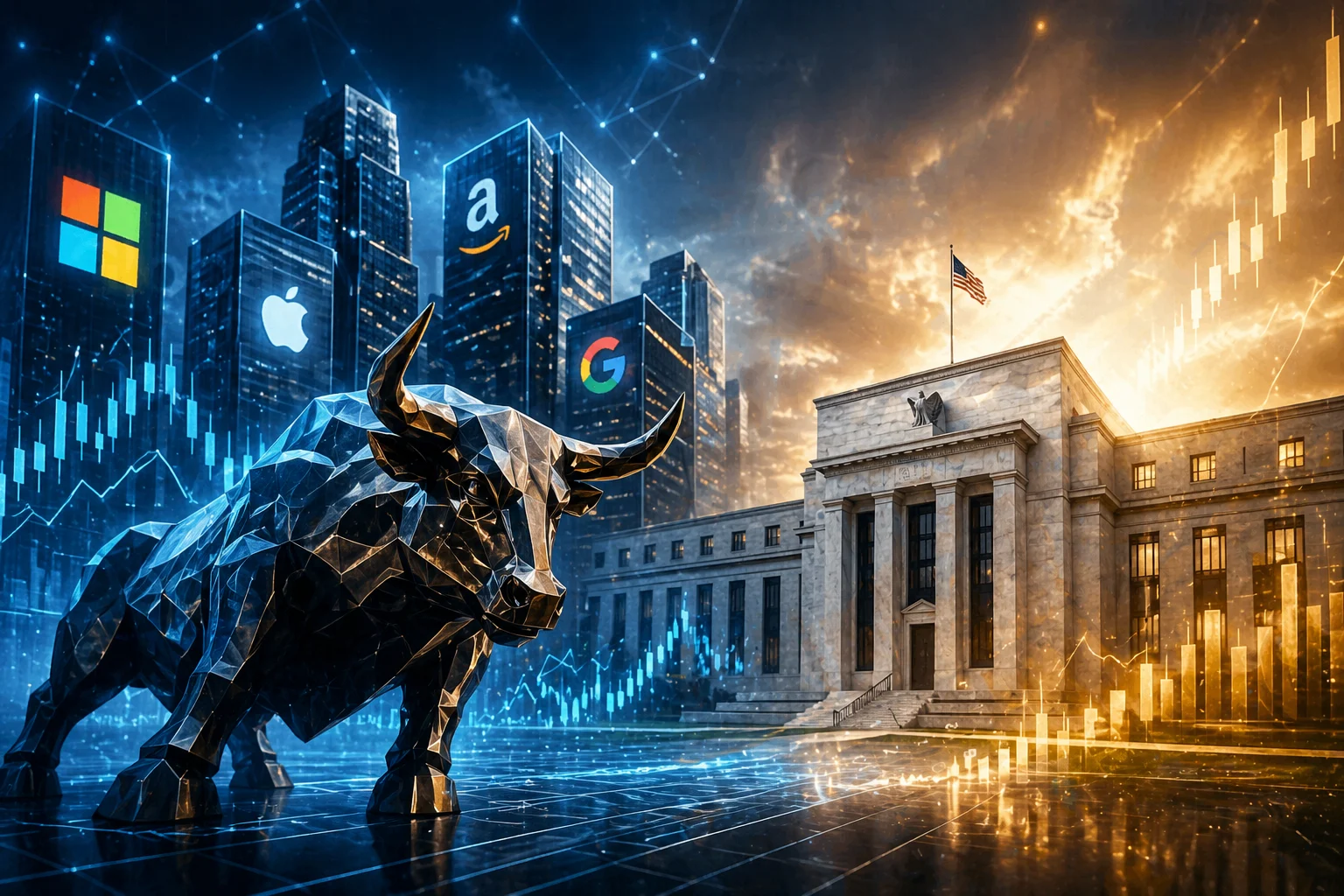
Wall Street is entering one of the most important weeks of the year, and global investors know it. Markets are now locked in on two giant forces that can reshape sentiment in hours: earnings from the biggest technology companies in the world and the latest direction from the Federal Reserve. When those two stories collide in the same week, traders, institutions, retail investors, and even international markets all start moving differently.
This moment matters because the modern stock market is heavily influenced by a small group of mega-cap technology names. Companies like Apple, Microsoft, Alphabet, Amazon, Meta, and Nvidia now carry massive weight in major indexes such as the S&P 500 and Nasdaq. If these firms deliver strong revenue, optimistic forecasts, and continued momentum in artificial intelligence, markets can rally quickly. If they disappoint, billions in market value can vanish in a single session.
At the same time, the Federal Reserve remains the most powerful financial institution influencing liquidity, borrowing costs, and investor psychology. Even if no rate cut happens immediately, every sentence from the Fed chair can move stocks, bonds, currencies, gold, and crypto. That is why this week is more than just another earnings season. It is a direct test of whether the 2026 market rally still has fuel.
Why Wall Street Is Watching Big Tech Again
The dominance of Big Tech is not new, but it has become even more intense in recent years. Investors are no longer valuing these companies only for hardware sales, ad revenue, or software subscriptions. They are pricing them as infrastructure leaders for the AI economy.
Microsoft continues to benefit from enterprise cloud growth and AI integrations across productivity tools. Alphabet is balancing advertising recovery while expanding AI products in search and cloud. Amazon is expected to show strength in e-commerce efficiency and AWS demand. Meta has transformed from a metaverse skepticism story into an AI advertising machine.
When these companies report earnings, Wall Street looks beyond headline numbers. Analysts focus on five major areas:
1. Revenue Growth Quality
Not all growth is equal anymore. Investors want recurring, durable revenue streams. A company that grows because of one-time promotions may not get rewarded. But a company that grows through subscriptions, cloud contracts, or ad efficiency often receives a premium valuation.
2. AI Monetization
The market has already rewarded many firms for simply saying “AI.” That phase is over. Now investors want proof. Are AI tools generating real sales? Are customers paying more? Are margins improving? If not, stocks may lose momentum.
3. Forward Guidance
Sometimes earnings beat expectations, but stocks still fall. Why? Because future guidance matters more than past performance. If management warns of slowing demand, rising costs, or weaker margins, Wall Street reacts fast.
4. Capital Expenditures
Mega tech firms are spending enormous amounts on data centers, chips, and AI infrastructure. Investors support spending when returns look clear. But if expenses rise too quickly without monetization, concerns grow.
5. Margin Discipline
In 2026, efficiency remains a key theme. Markets reward companies that can grow revenue while controlling costs. The era of unlimited spending is gone.
Why The Fed Still Controls Market Mood
Even in a technology-driven market, monetary policy still matters. The Federal Reserve influences how expensive money becomes. That affects everything from mortgage rates to startup funding to stock valuations.
When rates are high, borrowing becomes more expensive. Consumers spend less, businesses slow expansion, and investors become more selective. Growth stocks often feel pressure because future profits are discounted more heavily.
When rates are expected to fall, markets usually react positively. Lower rates can boost risk appetite, help housing, improve corporate financing, and raise valuations.
But in 2026, the Fed faces a difficult balancing act.
Inflation has cooled from earlier peaks, but it has not fully disappeared. Energy prices remain volatile. Wage pressures continue in some sectors. Geopolitical tensions can quickly lift commodity prices. Meanwhile, economic growth has stayed more resilient than many expected.
That means the Fed cannot move too aggressively or too slowly. Every policy meeting now becomes a market-moving event.
What Investors Want to Hear From Jerome Powell
Federal Reserve Chair Jerome Powell remains one of the most watched voices in finance. Markets are not only watching the decision itself, but also tone, wording, and confidence level.
Here are the signals investors want:
1. Confidence on Inflation Progress
If Powell sounds comfortable with inflation trends, markets may price in future cuts more confidently.
2. No Surprise Hawkish Shift
If the Fed suddenly signals rates may stay high much longer, risk assets could drop.
3. Balanced Economic Outlook
Too much optimism may imply fewer cuts. Too much caution may imply recession risk. Markets often prefer balance.
4. Data Dependence
The Fed often says future decisions depend on incoming data. Investors listen carefully for how strict or flexible that stance sounds.
Why This Week Feels Bigger Than Normal
Normally, earnings season and Fed week are each powerful enough alone. But when both happen together, volatility tends to increase.
Here is why:
- Tech stocks heavily influence indexes
- Fed policy influences valuations
- Bond yields react quickly
- Options trading volume spikes
- Global markets mirror US sentiment
- Retail traders jump into momentum plays
That creates a feedback loop. Strong earnings plus dovish Fed language can send markets sharply higher. Weak earnings plus hawkish commentary can create a broad selloff.
Nasdaq Faces the Biggest Pressure
Among major indexes, the Nasdaq often reacts the most during these moments. It has heavier exposure to growth and technology names. If AI optimism remains intact, Nasdaq can outperform. If expectations are too high, it can correct sharply.
That is the challenge of modern markets. Great companies can still see falling stock prices if expectations become unrealistic.
For example:
- Strong revenue but slower guidance = selloff
- Profit beat but rising costs = mixed reaction
- AI growth but weak margins = caution
- Good quarter but expensive valuation = profit taking
This is why traders say markets price the future, not the past.
The AI Trade Is Being Tested
One of the biggest themes of 2025 and 2026 has been the AI trade. Investors poured money into semiconductor firms, cloud platforms, cybersecurity providers, and software names connected to artificial intelligence.
Now the market wants evidence.
Can AI sustain revenue growth across sectors?
Will enterprise customers keep spending?
Can margins remain healthy despite huge infrastructure costs?
Will regulation slow expansion?
This earnings cycle may provide some answers.
If Big Tech proves AI is becoming a real profit engine, the rally could broaden further. If results disappoint, investors may rotate into defensive sectors such as healthcare, utilities, and consumer staples.
How Bond Markets Fit Into the Story
Stocks get headlines, but bond markets often lead the real signal.
If Treasury yields rise after the Fed meeting, it may mean investors expect higher rates for longer. That can pressure growth stocks.
If yields fall, markets may interpret it as softer policy expectations or slowing growth concerns.
Many professional investors monitor the 2-year and 10-year Treasury yields more closely than stock headlines during Fed week.
Because bond yields affect:
- Equity valuations
- Mortgage rates
- Corporate borrowing
- Dollar strength
- Emerging market flows
So while social media may focus on tech earnings, institutional desks are watching bonds minute by minute.
How Global Markets React
Wall Street does not move alone. A major US market shift often reaches Asia and Europe within hours.
If Big Tech rallies strongly:
- Asian chipmakers may rise
- European tech stocks may gain
- Risk appetite improves globally
- Dollar trends may shift
If the Fed surprises hawkishly:
- Emerging markets may weaken
- Commodities can become volatile
- Global equities may turn cautious
- Currency markets reprice rapidly
That is why even investors outside America care deeply about this week.
Retail Investors Are More Active Than Ever
Another major force in 2026 markets is retail participation. Individual traders now respond instantly through broker apps, live streams, newsletters, and social platforms.
Retail money can amplify moves, especially in:
- AI stocks
- Options-heavy names
- Meme momentum trades
- Leveraged ETFs
- Crypto-related equities
This creates faster price reactions than older market cycles. Moves that once took days now happen in minutes.
Best-Case Scenario for Bulls
For optimistic investors, the dream setup looks like this:
- Big Tech beats estimates
- AI demand remains strong
- Forward guidance improves
- Fed sounds patient and flexible
- Bond yields stay stable
- Consumer spending remains healthy
If that happens, indexes could push to new highs.
Worst-Case Scenario for Bears
For cautious investors, risks include:
- Earnings miss expectations
- AI spending looks excessive
- Guidance weakens
- Fed sounds tougher on inflation
- Treasury yields jump
- Oil prices remain elevated
That combination could trigger sharp downside pressure.
Why Expectations Matter More Than Headlines
One common mistake among casual investors is assuming “good news means stocks rise.” Markets are more complex.
If a stock already rallied 30% before earnings, strong results may already be priced in. If investors expected perfection, even excellent numbers can disappoint.
Likewise, a stock can rise after weak earnings if results were “less bad than feared.”
This is why expectations, positioning, and sentiment matter just as much as raw numbers.
What Smart Investors Watch This Week
Instead of chasing headlines emotionally, disciplined investors often focus on:
1. Guidance Trends
Are executives becoming more confident or cautious?
2. Yield Reaction
What are Treasury markets saying?
3. Breadth
Are only mega caps rising, or is the rally broad?
4. Sector Rotation
Is money moving into cyclicals, defensives, or small caps?
5. Dollar Strength
A strong dollar can pressure multinational earnings.
The Bigger 2026 Market Narrative
Beyond one week, this moment represents a deeper question:
Can the market continue climbing with valuations already elevated while rates remain restrictive and geopolitical risks unresolved?
If earnings growth remains strong, yes. If growth slows while rates stay high, markets become more fragile.
That is why this week matters beyond short-term traders. It helps define the second half of 2026.
Final Take
Wall Street’s focus on Big Tech and the Federal Reserve is not hype. It reflects the two most powerful forces shaping modern markets: corporate earnings leadership and monetary policy direction.
Big Tech must prove that AI excitement can turn into durable profits. The Fed must show it can guide inflation lower without damaging growth. Investors want clarity on both fronts, but markets rarely deliver certainty.
That means volatility is likely, headlines will move fast, and sentiment may swing daily. For experienced investors, that creates opportunity. For impatient traders, it creates risk.
One thing is clear: when Big Tech speaks and the Fed responds, the whole market listens.