
Global Stocks Turn Volatile as Investors Stay Alert
 Vortixel
8 minutes read
Vortixel
8 minutes read
Introduction: A Market That Refuses to Sit Still
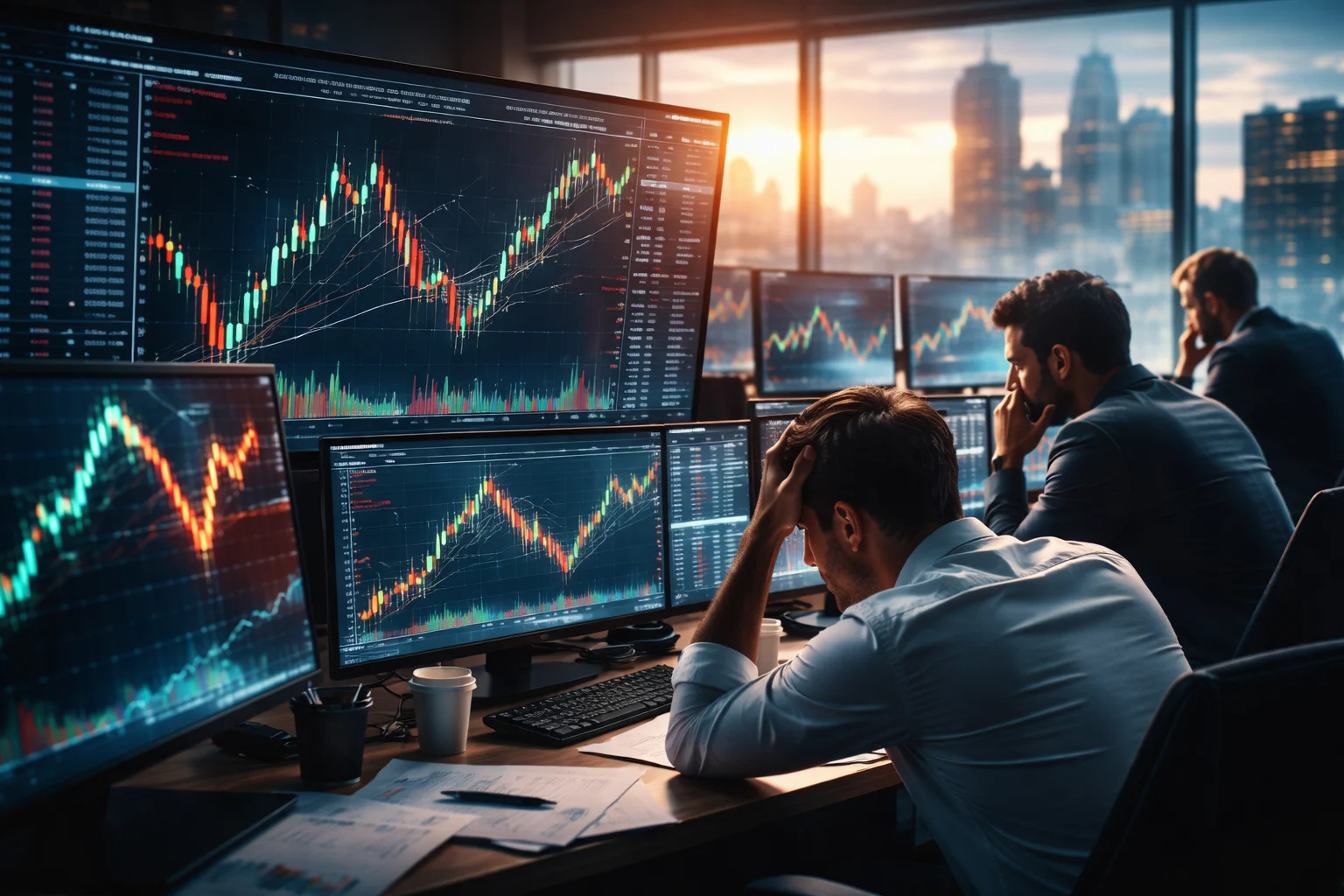
Global stocks are entering a volatile phase, and investors across the world are no longer moving with confidence—they are moving with caution. In recent weeks, financial markets have shown sharp swings, driven by a mix of geopolitical tensions, economic uncertainty, and shifting monetary policies. What used to be predictable cycles of growth and correction have now turned into rapid, unpredictable fluctuations that keep both institutional and retail investors on edge. The keyword here is uncertainty, and it is shaping every major decision in global finance right now. From Wall Street to Asian markets, volatility is no longer an exception; it is becoming the new normal.
This shift is not happening in isolation. It is tied to a larger narrative about how the global economy is evolving in 2026. With ongoing geopolitical conflicts, energy supply disruptions, and inflation pressures still lingering, investors are forced to constantly reassess risk. The result is a market environment where confidence can vanish in hours, replaced by defensive strategies and capital preservation tactics. Global stocks volatility is now one of the most searched and discussed topics among analysts, and for good reason—it directly impacts wealth, business expansion, and economic stability.
Why Global Stocks Are Fluctuating So Rapidly
The current volatility in global stock markets is not caused by a single factor, but rather a combination of interconnected issues. One of the biggest drivers is geopolitical instability, particularly tensions in key regions that influence energy supply chains and trade routes. When uncertainty arises in these areas, markets react almost instantly, with investors pulling back from riskier assets and moving toward safer investments like gold or government bonds. This creates sudden drops in stock prices, followed by partial recoveries as new information emerges.
Another major factor is the ongoing adjustment of monetary policies by central banks. After years of aggressive rate hikes to control inflation, many central banks are now walking a fine line between maintaining stability and avoiding economic slowdown. This balancing act creates mixed signals in the market, leading to inconsistent investor behavior. Some interpret policy moves as positive signs of control, while others see them as warnings of deeper economic issues. As a result, stock markets experience sharp swings rather than steady trends.
Additionally, global economic data has been sending conflicting messages. While some regions report resilience in employment and consumption, others show signs of slowdown and reduced industrial output. These mixed signals make it difficult for investors to form a clear outlook, contributing to the overall volatility. Stock market fluctuations 2026 are heavily influenced by this lack of consensus, making it harder to predict long-term trends.
The Role of Geopolitics in Market Instability
Geopolitical tensions are playing a central role in shaping current market dynamics. Conflicts in energy-rich regions have raised concerns about supply disruptions, leading to spikes in oil prices. These spikes, in turn, affect inflation expectations and corporate profitability, both of which are critical factors for stock valuations. When energy costs rise, companies face higher operational expenses, which can reduce earnings and impact stock prices.
Trade relations between major economies are also under scrutiny. Any sign of trade restrictions or policy shifts can trigger immediate reactions in global markets. Investors are particularly sensitive to developments involving major economic powers, as these relationships influence supply chains, currency stability, and overall economic growth. In this environment, even minor political developments can lead to significant market movements.
Moreover, geopolitical uncertainty often leads to increased market speculation. Traders attempt to anticipate outcomes based on incomplete information, which amplifies volatility. This creates a feedback loop where speculation drives price movements, and those movements, in turn, influence further speculation. The result is a market that reacts not only to actual events but also to expectations and rumors.
Investor Behavior: From Aggressive Growth to Defensive Strategy
One of the most noticeable changes in 2026 is how investors are adapting to this volatile environment. In previous years, many investors focused on aggressive growth strategies, targeting high-risk, high-reward opportunities. However, the current market conditions have prompted a shift toward more defensive approaches. Capital preservation has become a priority, and investors are increasingly allocating funds to safer assets.
This shift is evident in the growing demand for sectors considered more stable, such as healthcare, utilities, and consumer staples. These industries tend to perform better during uncertain times because they provide essential goods and services. At the same time, high-growth sectors like technology and emerging markets are experiencing more pronounced fluctuations, as they are more sensitive to changes in economic outlook and investor sentiment.
Retail investors are also becoming more cautious. With access to real-time information and trading platforms, they are reacting quickly to market changes, sometimes contributing to short-term volatility. Social media and online forums play a role in shaping sentiment, leading to rapid shifts in buying and selling behavior. This democratization of trading has added another layer of complexity to market dynamics.
Central Banks and Their Influence on Market Direction
Central banks remain one of the most influential forces in global markets. Their decisions on interest rates, liquidity, and economic guidance have a direct impact on investor confidence and market stability. In 2026, central banks are facing a difficult challenge: controlling inflation without triggering a recession. This delicate balance requires careful communication and strategic policy adjustments.
When central banks signal potential rate cuts, markets often respond positively, as lower interest rates can stimulate economic activity and support stock prices. However, if these signals are interpreted as a response to weakening economic conditions, the reaction can be negative. This dual interpretation contributes to the volatility seen in global markets.
Additionally, differences in policy approaches among major economies create further uncertainty. While some countries may adopt more accommodative policies, others maintain tighter controls. These differences affect currency values and capital flows, influencing global investment patterns. Investors must navigate this complex landscape, adjusting their strategies based on evolving central bank actions.
Sector Performance: Winners and Losers in a Volatile Market
Not all sectors are affected equally by market volatility. Some industries are better positioned to withstand uncertainty, while others are more vulnerable to rapid changes. Understanding these differences is crucial for investors looking to navigate the current environment.
The energy sector, for example, has seen significant gains due to rising oil prices. Companies involved in oil and gas production benefit from higher prices, which boost revenues and profitability. However, this sector is also highly sensitive to geopolitical developments, making it both an opportunity and a risk.
Technology stocks, on the other hand, have experienced mixed performance. While long-term growth prospects remain strong, short-term fluctuations are more pronounced due to their sensitivity to interest rates and investor sentiment. As borrowing costs change, valuations of tech companies can shift rapidly, leading to increased volatility.
Financial institutions are also in focus, as they are directly impacted by interest rate changes and economic conditions. Banks may benefit from higher rates through increased lending margins, but they also face risks related to loan defaults and economic slowdown. This dual impact makes the financial sector a key indicator of overall market health.
Global Market Outlook: What Lies Ahead
Looking ahead, the outlook for global stock markets remains uncertain. While some analysts expect stabilization in the coming months, others warn that volatility could persist due to ongoing geopolitical and economic challenges. The key factors to watch include central bank policies, inflation trends, and developments in global conflicts.
There is also a growing emphasis on long-term resilience rather than short-term gains. Investors are increasingly focusing on fundamentals, such as company earnings, balance sheets, and sustainable growth strategies. This shift could lead to a more stable market environment over time, but it requires patience and disciplined investment approaches.
Technological advancements and innovation continue to play a role in shaping market trends. Companies that can adapt to changing conditions and leverage new technologies are more likely to succeed in a volatile environment. This creates opportunities for investors who are willing to look beyond short-term fluctuations and focus on long-term potential.
Strategies for Navigating Market Volatility
In a market defined by uncertainty, having a clear strategy is essential. Investors are adopting various approaches to manage risk and capitalize on opportunities. Diversification remains one of the most effective strategies, as it spreads risk across different asset classes and sectors. By not relying on a single investment, investors can reduce the impact of market fluctuations.
Another important strategy is maintaining a long-term perspective. While short-term volatility can be unsettling, markets have historically shown resilience over time. Staying focused on long-term goals helps investors avoid impulsive decisions driven by temporary market movements.
Risk management is also crucial. Setting clear limits on potential losses and regularly reviewing investment portfolios can help mitigate risks. Investors are increasingly using tools such as stop-loss orders and hedging strategies to protect their capital.
Finally, staying informed is more important than ever. Access to reliable information and analysis allows investors to make better decisions in a rapidly changing environment. Understanding the factors driving market movements helps in anticipating potential risks and opportunities.
Conclusion: A New Era of Market Dynamics
The current phase of global stocks volatility marks a significant shift in how financial markets operate. Uncertainty, once considered a temporary challenge, is now a defining feature of the market landscape. Investors must adapt to this new reality, embracing strategies that prioritize resilience and informed decision-making.
As the global economy continues to evolve, the ability to navigate volatility will become a key determinant of success. Those who can balance risk and opportunity, while staying grounded in long-term fundamentals, are more likely to thrive in this environment. The market may be unpredictable, but it also offers opportunities for those who are prepared to face its challenges.