
AI Boom Under Pressure: Rising Energy Costs Threaten 2026 Growth
 Vortixel
8 minutes read
Vortixel
8 minutes read
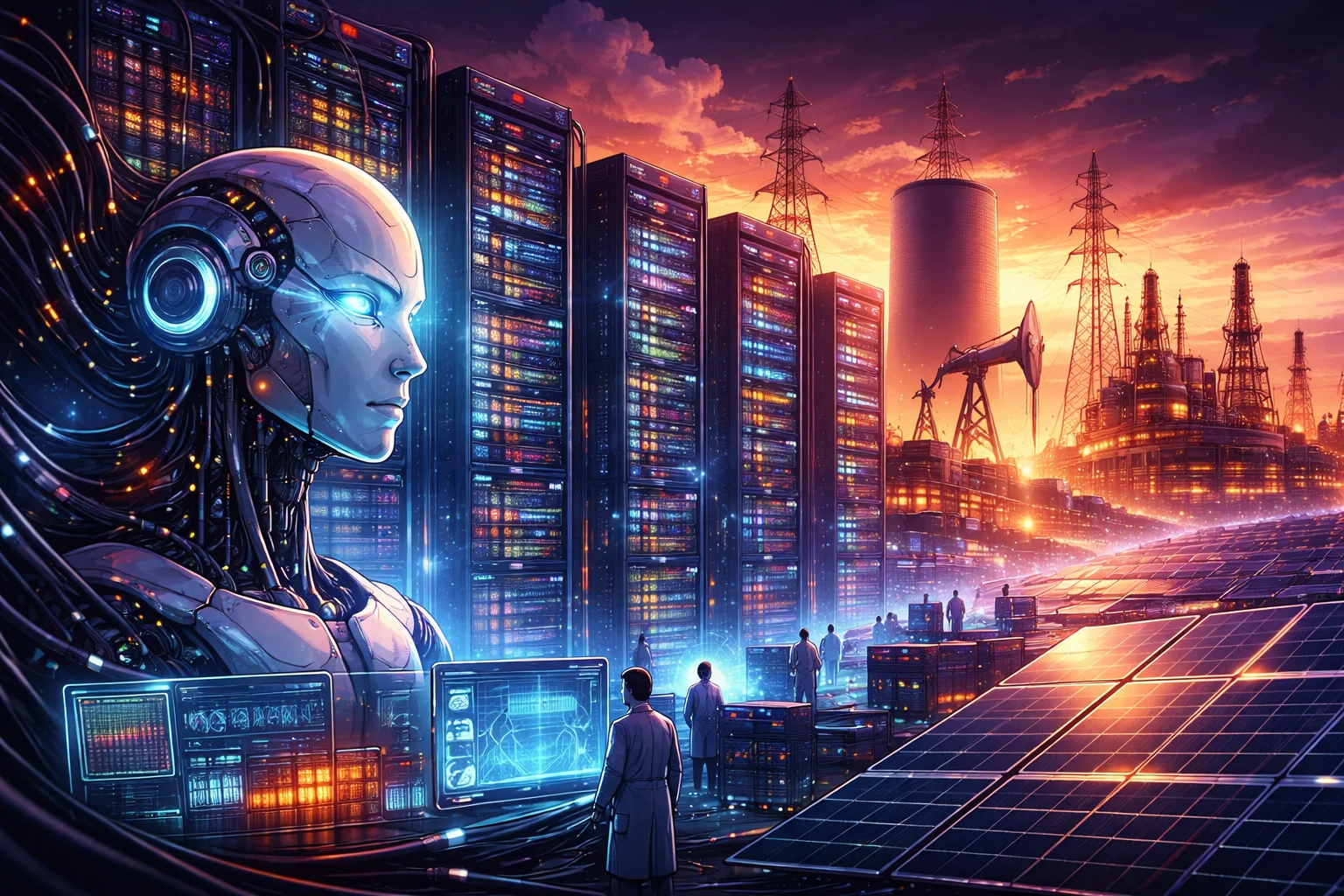
The Fragile Foundation of the AI Boom
The AI boom in 2026 has been one of the most explosive technological waves in recent history, transforming industries at a speed that few could have predicted just a few years ago. From automated customer service systems to advanced predictive analytics and generative AI tools, businesses across the globe are rapidly integrating artificial intelligence into their operations. However, beneath this surge of innovation lies a growing concern that is beginning to reshape the narrative: soaring energy costs. As data centers expand and computational demands skyrocket, the infrastructure powering AI is facing unprecedented strain, raising serious questions about sustainability, profitability, and long-term scalability.
The rise of AI has always been tied to computing power, and computing power, in turn, relies heavily on electricity. Every model trained, every dataset processed, and every real-time query executed consumes energy at scale. What was once a manageable cost is now becoming a major financial and operational burden, especially as global energy markets experience volatility driven by geopolitical tensions and supply constraints. The result is a complex challenge where the future of AI innovation is increasingly dependent on energy economics, not just technological breakthroughs.
Why AI Is So Energy Intensive
To understand why rising energy costs threaten AI growth, it is essential to look at how AI systems actually operate. Modern AI models, particularly large language models and deep learning architectures, require enormous computational resources to function. Training a single advanced AI model can take weeks or even months on clusters of high-performance GPUs, consuming massive amounts of electricity in the process. Even after deployment, these systems continue to draw power through constant inference requests, data storage, and system maintenance.
Data centers, which form the backbone of the AI ecosystem, are among the largest consumers of electricity globally. These facilities not only power servers but also require extensive cooling systems to prevent overheating. As AI adoption accelerates, companies are building larger and more complex data centers, further amplifying energy demand. In 2026, the scale of these operations has reached a point where even small fluctuations in energy prices can significantly impact operational costs.
Another critical factor is the increasing complexity of AI models. As competition intensifies, companies are racing to build more powerful and accurate systems, often at the expense of efficiency. Larger models require more parameters, more training data, and more computational cycles, all of which translate into higher energy consumption. This creates a feedback loop where innovation drives energy demand, and energy costs, in turn, influence the pace of innovation.
Global Energy Crisis Meets AI Expansion
The global energy landscape in 2026 is far from stable. Ongoing geopolitical tensions, particularly in energy-rich regions, have disrupted supply chains and driven up prices for oil, gas, and electricity. At the same time, the transition to renewable energy, while necessary for long-term sustainability, has introduced short-term challenges related to infrastructure, storage, and grid reliability. These factors have combined to create a volatile energy market that directly impacts industries dependent on high energy consumption, including AI.
For AI companies, this volatility translates into uncertainty. Budget forecasts become harder to predict, investment decisions become riskier, and profit margins are squeezed. Startups, in particular, are feeling the pressure, as they often lack the financial resilience of larger tech giants. The cost of training and deploying AI models can quickly become prohibitive, limiting innovation and reducing the number of new entrants in the market.
Even major tech companies are not immune. While they have the resources to absorb higher costs, the scale of their operations means that even a slight increase in energy prices can result in billions of dollars in additional expenses. This has led to a growing emphasis on energy efficiency and cost optimization, as companies seek to maintain their competitive edge without compromising financial performance.
The Real Cost of AI: Beyond Innovation
The conversation around AI has often focused on its transformative potential, but the real cost of AI is becoming increasingly difficult to ignore. Energy consumption is not just a financial issue; it is also an environmental one. The carbon footprint of large-scale AI operations is significant, raising concerns about sustainability and corporate responsibility. As governments and regulators push for stricter environmental standards, companies may face additional pressure to reduce their energy usage and emissions.
This creates a delicate balancing act. On one hand, there is a strong demand for more advanced AI capabilities. On the other hand, there is a growing need to minimize environmental impact and control costs. Companies must navigate this landscape carefully, finding ways to innovate without overextending their resources or contributing to environmental degradation.
The rising cost of energy is also influencing how AI is priced and delivered. Businesses that rely on AI services may see higher costs passed down to them, potentially slowing adoption rates. This could have a ripple effect across industries, as companies reconsider their investment in AI technologies based on cost-benefit analyses.
How Tech Giants Are Responding
In response to these challenges, leading technology companies are taking proactive steps to mitigate the impact of high energy costs on AI development. One of the most prominent strategies is the investment in renewable energy. Many companies are building or partnering with solar and wind farms to secure a more stable and sustainable energy supply. This not only reduces dependence on volatile energy markets but also aligns with environmental goals.
Another key approach is improving energy efficiency. This includes optimizing hardware, developing more efficient algorithms, and redesigning data center architectures. For example, new generations of AI chips are being designed to deliver higher performance with lower power consumption. Similarly, software innovations are focusing on reducing the computational requirements of AI models without sacrificing accuracy.
Cloud providers are also playing a crucial role. By centralizing AI workloads and optimizing resource allocation, they can achieve economies of scale that reduce overall energy consumption. This allows businesses to access powerful AI capabilities without bearing the full cost of infrastructure and energy usage.
The Rise of “Green AI”
As the industry adapts, a new concept is gaining traction: Green AI. This approach emphasizes the development of AI systems that are not only powerful but also energy-efficient and environmentally sustainable. Researchers and engineers are exploring ways to reduce the computational footprint of AI models, such as through model compression, efficient training techniques, and alternative architectures.
Green AI represents a shift in priorities. Instead of focusing solely on performance metrics, companies are beginning to consider the broader impact of their technologies. This includes energy consumption, carbon emissions, and overall sustainability. In 2026, this shift is becoming more pronounced, driven by both economic pressures and societal expectations.
The adoption of Green AI is not without challenges. It requires significant investment in research and development, as well as a willingness to rethink established practices. However, the potential benefits are substantial, including lower costs, reduced environmental impact, and a more sustainable path for future innovation.
Startups vs Big Tech: A Growing Divide
The impact of rising energy costs on AI is not evenly distributed. While large tech companies have the resources to invest in energy solutions and efficiency improvements, smaller startups often struggle to keep up. This is creating a widening gap between established players and new entrants, potentially limiting competition and innovation in the industry.
Startups typically rely on external funding and cloud services, both of which are affected by energy costs. As expenses rise, investors may become more cautious, leading to reduced funding and fewer opportunities for growth. This could result in a more consolidated market, where a handful of dominant companies control the majority of AI development.
At the same time, some startups are finding opportunities in this challenge. By focusing on energy-efficient solutions and niche applications, they can differentiate themselves and carve out a competitive advantage. This highlights the dynamic nature of the AI industry, where challenges can also create new avenues for innovation.
What This Means for the Future of AI
The intersection of AI growth and energy costs is shaping the future of the industry in profound ways. While the current challenges are significant, they also serve as a catalyst for change. Companies are being forced to rethink their strategies, prioritize efficiency, and explore new technologies that can sustain long-term growth.
In the coming years, we can expect to see continued investment in renewable energy, advancements in hardware and software efficiency, and a greater emphasis on sustainability. The concept of Green AI is likely to become a standard rather than an exception, influencing how AI systems are designed and deployed.
At the same time, the industry must address the risk of inequality, ensuring that smaller players have the opportunity to participate and innovate. This may require new models of collaboration, funding, and resource sharing that can level the playing field.
Conclusion: Innovation at a Crossroads
The AI boom in 2026 is at a critical juncture. While the potential for innovation remains immense, the rising cost of energy presents a formidable challenge that cannot be ignored. The future of AI will depend not only on technological advancements but also on the ability to manage resources effectively and sustainably.
As companies navigate this evolving landscape, one thing is clear: the era of unlimited growth is over. The next phase of AI development will be defined by efficiency, resilience, and responsibility. Those who can adapt to these new realities will not only survive but thrive, shaping the future of technology in a world where energy is as valuable as data.